Lockouts · Sunderland
Seized & Jammed Lock Opening in Sunderland
The shop's lever handle goes down as usual, but the latch inside the mortise case never pulls back.
In plain words
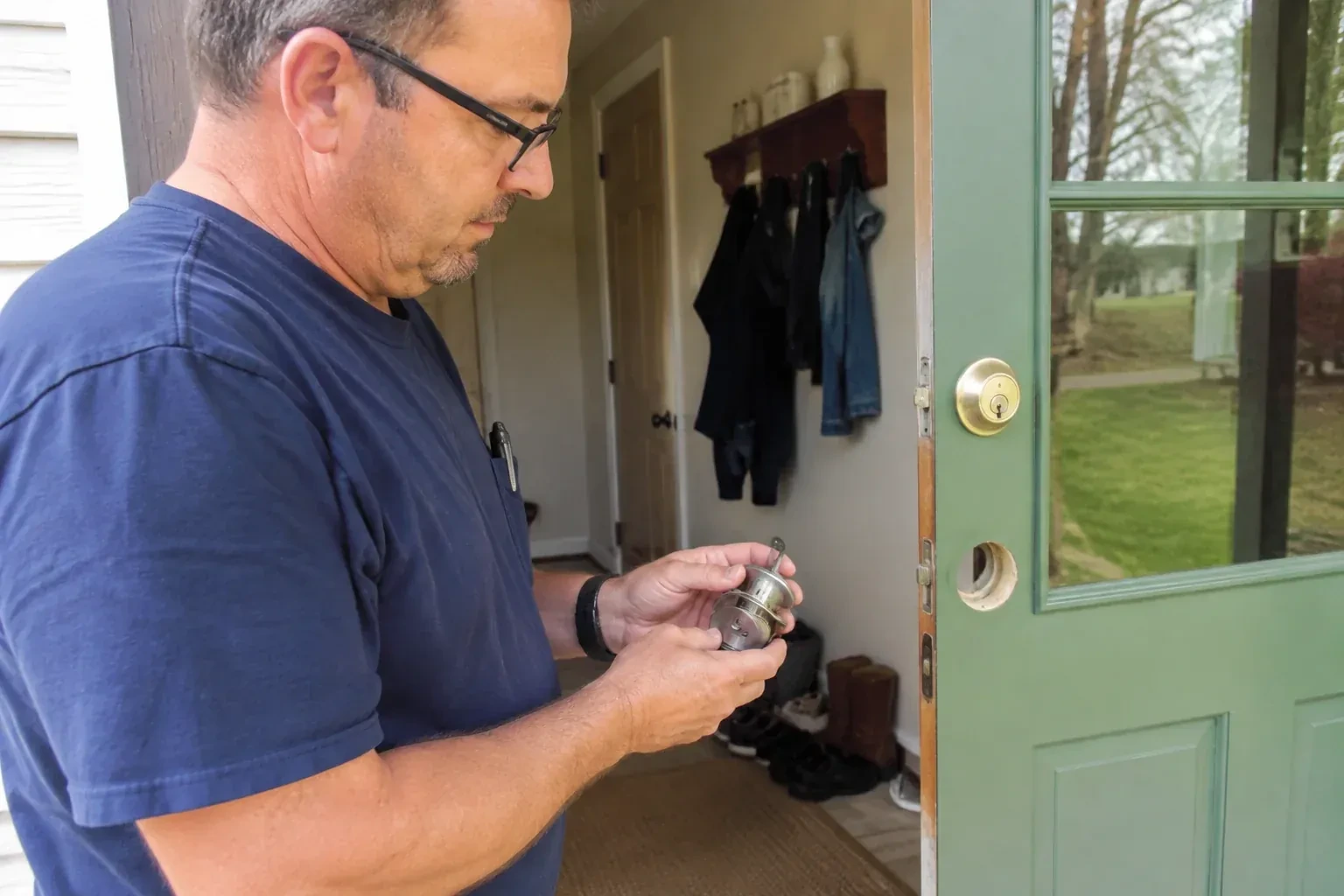
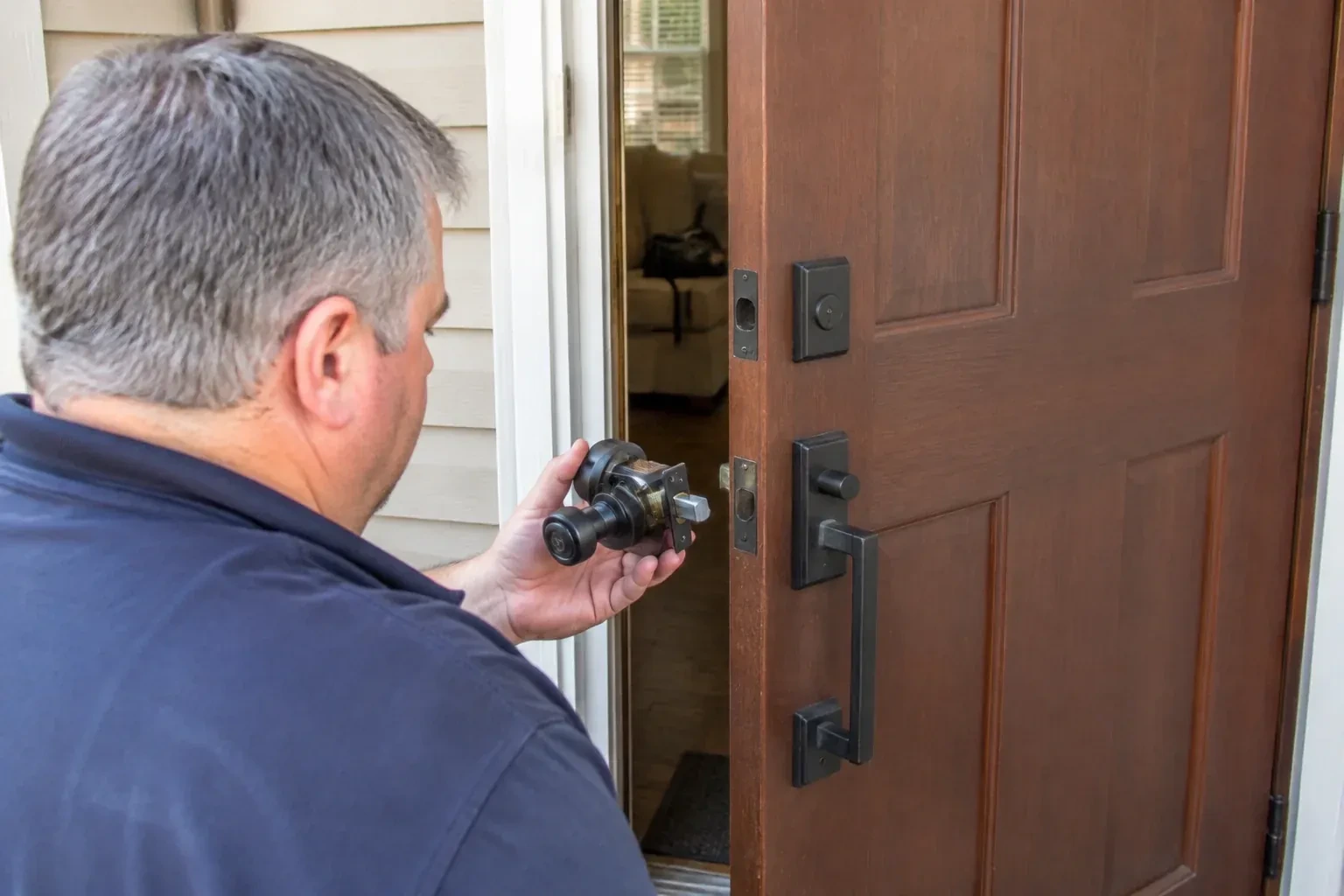
A jammed lock looks like one problem from outside and is usually one of three inside. The cylinder itself may have seized, packed with grit, corrosion or old grease. The link between cylinder and bolt, the tailpiece or cam, may have broken, which is why a key can spin without doing anything. Or the lock may be healthy and the bolt simply pinned against the strike by a door that has moved. Seized and jammed lock opening starts by telling those apart, because the right answer for one would damage the hardware in another. Once the culprit is known, the door is opened and the cause is repaired.
How the visit goesThe shop's lever handle goes down as usual, but the latch inside the mortise case never pulls back. Staff are waiting on the sidewalk with their coffees, the door is locked, and the handle is simply moving air.
Seized & Jammed Lock Opening
How the visit goes
Whose door, and which door
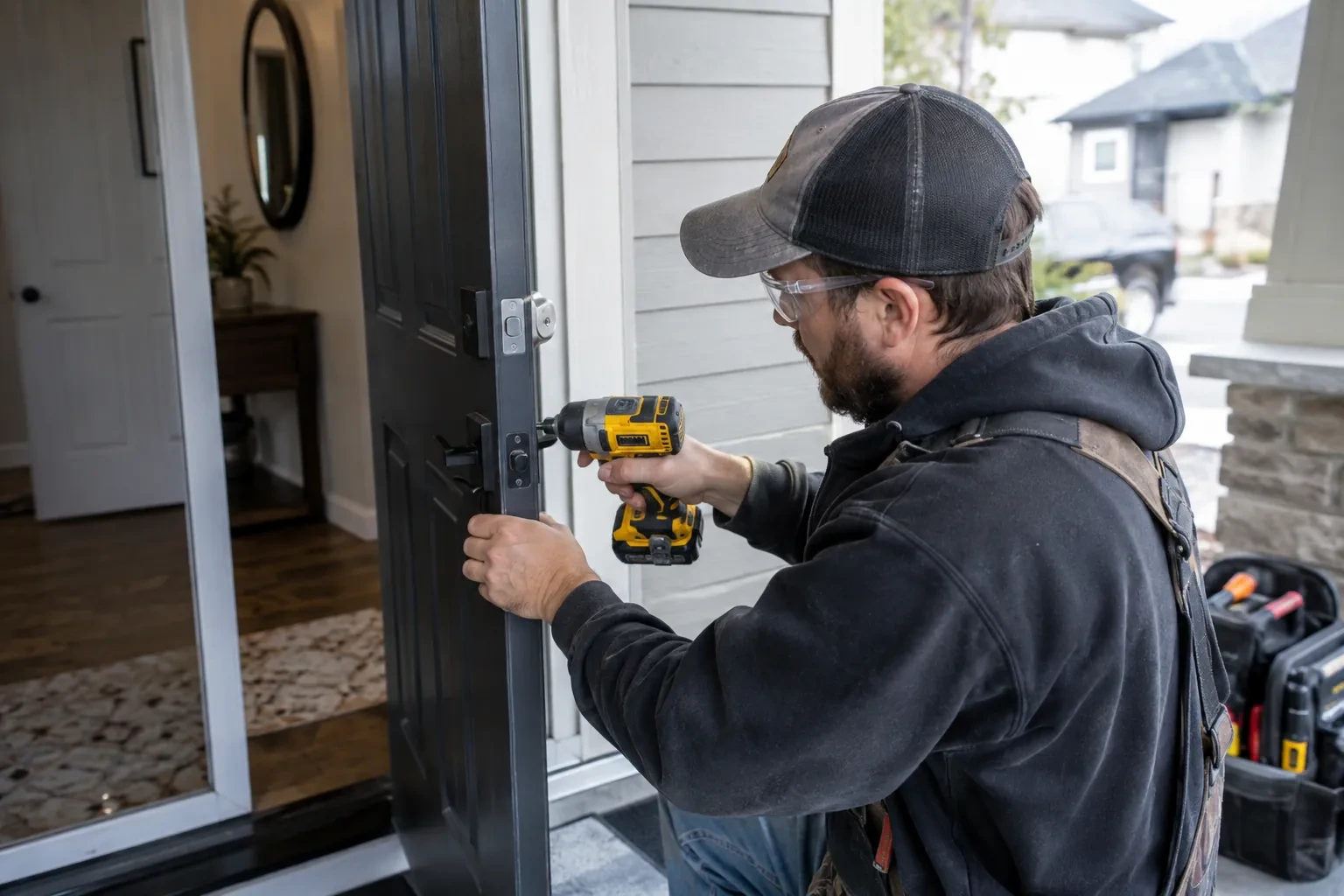
The first check is the person, not the lock. The locksmith confirms that whoever is asking for the opening is entitled to it, usually with photo identification that matches the address, or a lease, deed, property-management record or a manager who can vouch for you. For a business, a key holder or the person named on the lease is enough. If everything that proves it is behind the jammed door, the check is finished once you are inside and before the locksmith leaves. Then a short walk to the other entrances: a second door on the same key gives a comparison lock and sometimes a gentler way in.
Freeing a seized cylinder without forcing it
A plug that will not turn is coaxed, not wrenched. The locksmith flushes the keyway with an electronic contact cleaner to lift out grit and old residue, then applies a penetrating lubricant sparingly, since too much simply carries dirt deeper. The key is worked in small movements, in and out and a few degrees each way, letting the pins settle back into their stacks. If the cylinder cap has loosened, it is snugged so the plug sits square. As the plug begins to move, tension is kept light so nothing inside is bent. Once the door is open, the cylinder is removed for proper cleaning rather than left with lubricant masking the wear.
Keeping the cylinder clean and dry
A serviced cylinder stays that way with very little effort. At the interval and with the product that cylinder's maker specifies, a short burst of lock lubricant into the keyway followed by a few turns of the key is enough; stay with that one product, since mixing lubricants makes a paste. Household oils, penetrating sprays and silicone meant for hinges belong nowhere near the pins, because they thicken and attract grit. Wipe the key before it goes in on a muddy or salty day. If the lock ever starts to drag, a puff of lubricant is the first response, and a call is the second.
Seized & Jammed Lock Opening
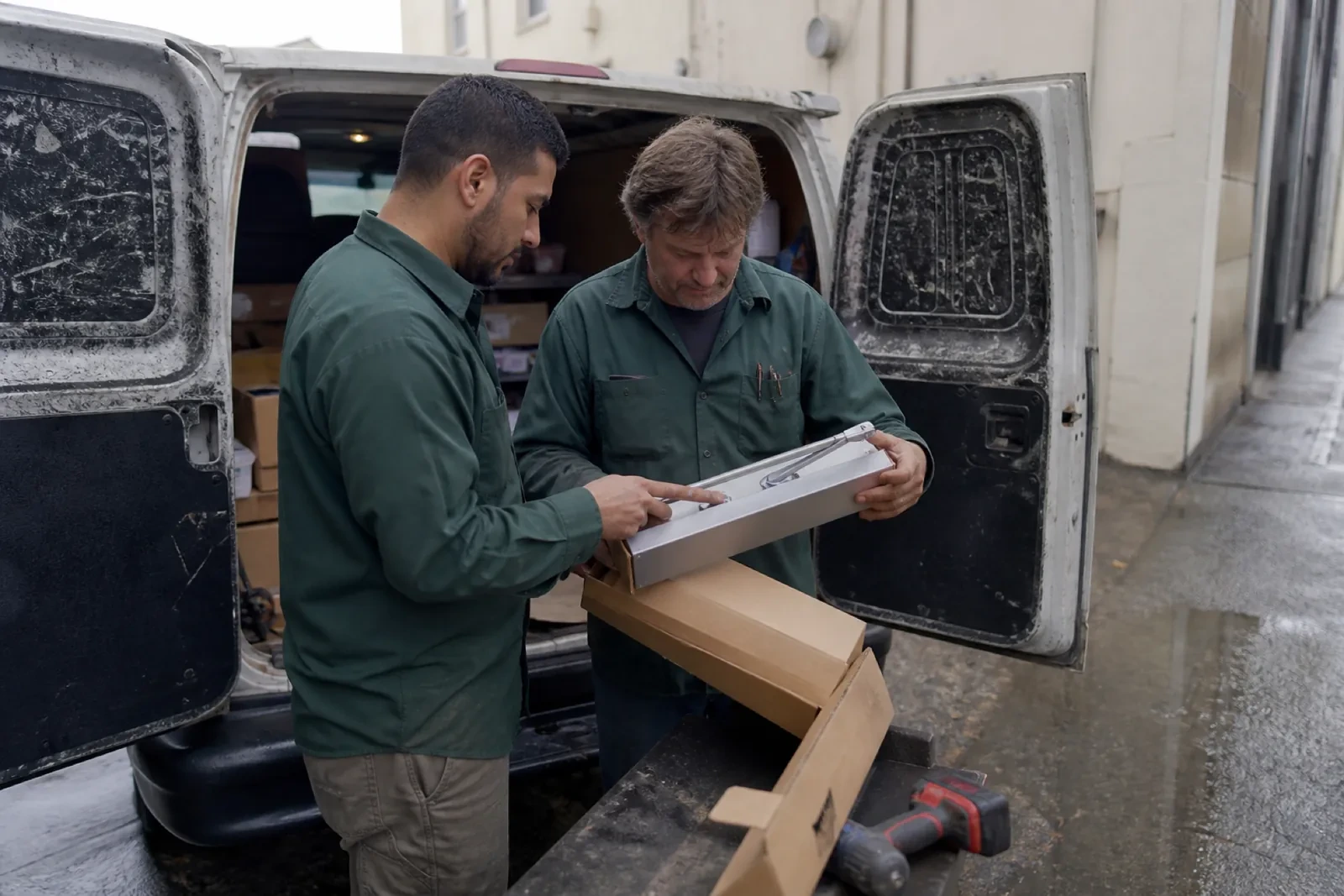
In the van
Lock de-icer
Replacement cylinder
Plug follower and repinning kit
Long hinge screws
Strike plate and hinge shims
Seized & Jammed Lock Opening
What affects the quote
Upgrades you choose on the spot
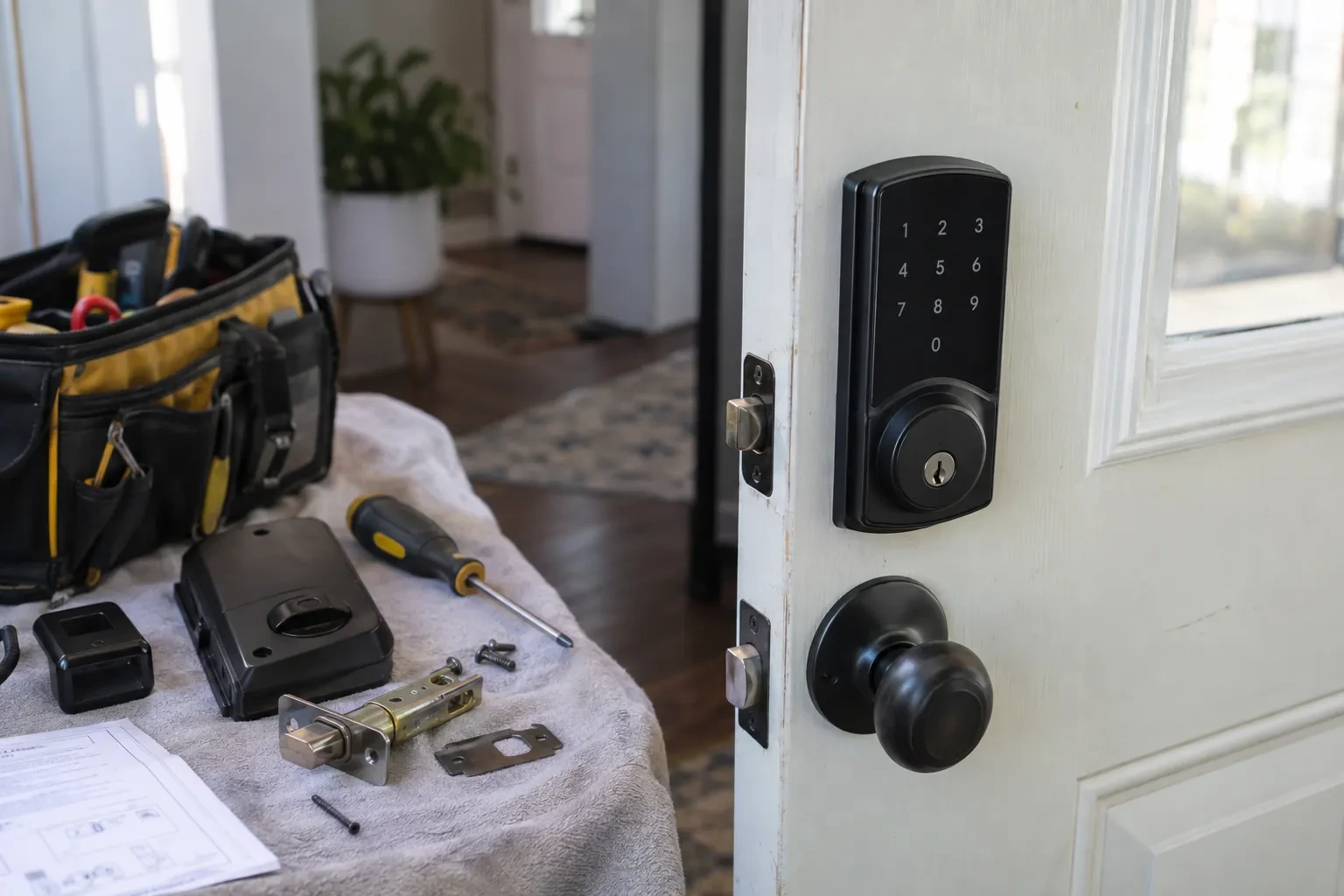
A keyhole cover, a storm door latch, a reinforced strike or a new deadbolt are optional extras some people add while the locksmith is there, each shown as its own line.
Cutting fresh keys
If a worn key was part of the trouble, keys cut from the code or a fresh master are counted individually, so say how many the household or staff need.
Mortise and commercial hardware
Drawing a mortise case, replacing a hub or spring and regreasing the contact points is more involved than a cylinder service, and storefront and exit hardware are quoted accordingly.
What to have ready
- Does the key go fully in and refuse to turn, or turn without moving the bolt?
- Is there another door you can use in the meantime?
- Was the door painted, re-hung or fitted with new weatherstripping recently?
Seized & Jammed Lock Opening: questions
QuestionsWhy is it always the shaded side of the building that seizes?
The face of a building that never sees direct sun stays colder and damper, so ice in a keyway lasts days longer there and condensation sits in the cylinder rather than drying off. Wind-driven rain and snow tend to hit the same face. Those doors deserve a keyhole cover, a storm door where one fits, and a lubricant check before the season turns, and they are often the first lock a locksmith asks about.
Can a seized lock be opened without damaging it?
In most cases, yes. A bolt held by the door is freed by relieving the pressure on the door. A cylinder clogged with grit or ice is cleaned and thawed until it turns. A failed tailpiece is bypassed and replaced. The lock stays on the door with its finish and your existing keys. A plug or shell that is worn, damaged, or eaten through by corrosion or earlier forcing is what has to be replaced, and that is explained before any work starts.
How long does a jammed lock opening take?
It depends on which family the jam belongs to. A bolt bound by the door is often freed in minutes and the adjustment afterwards takes a little longer. A seized cylinder needs patient cleaning before it turns and a bench service after, and a frozen one needs thawing time. A tailpiece swap is short once the door is open; a mortise case service is longer. The locksmith gives a sense of the time once the cause is identified at the door.
Related services
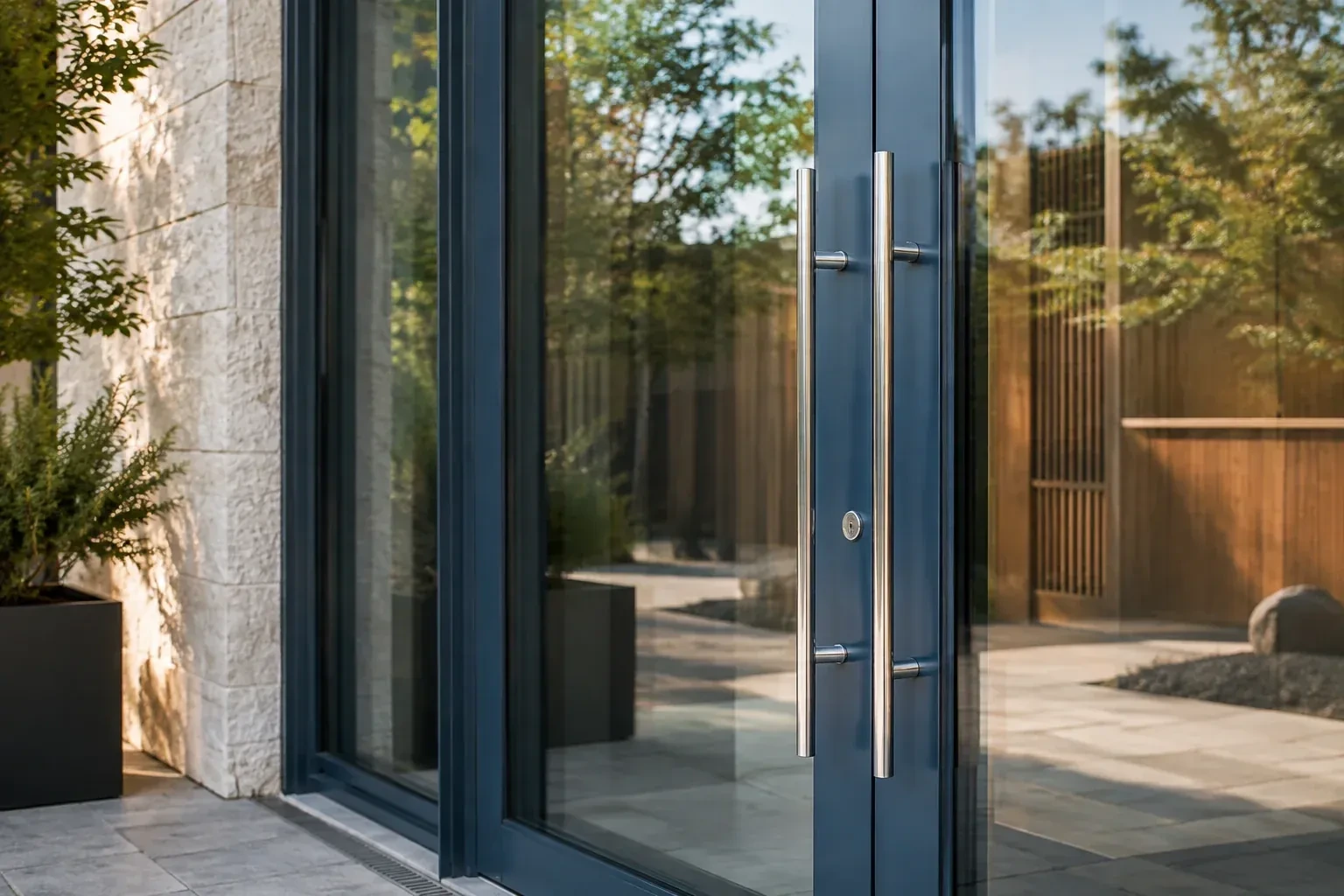
- Business Lockout ServiceIt is ten to nine, three staff are on the sidewalk with their coffees, and the key that has opened the glass front door for six years will not turn.
- Broken Key ExtractionThat key had been bending a little for years, and you kept straightening it.
- Break-In Damage Lock RepairThe shop's aluminum door has a bent meeting stile and the hookbolt is jammed half out.