Locksmith in Vallentyne, OntarioSecure the frame,not only the lock
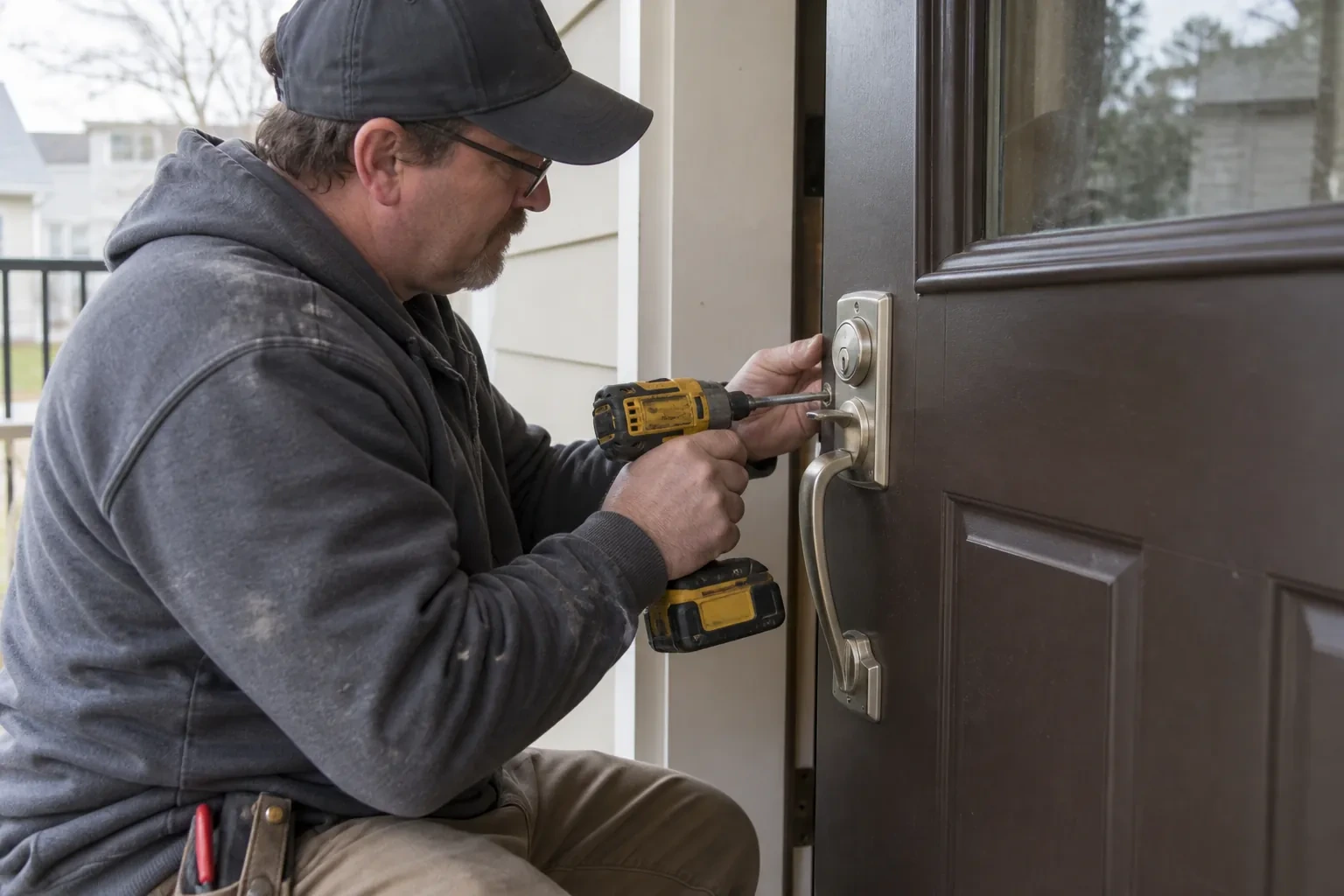
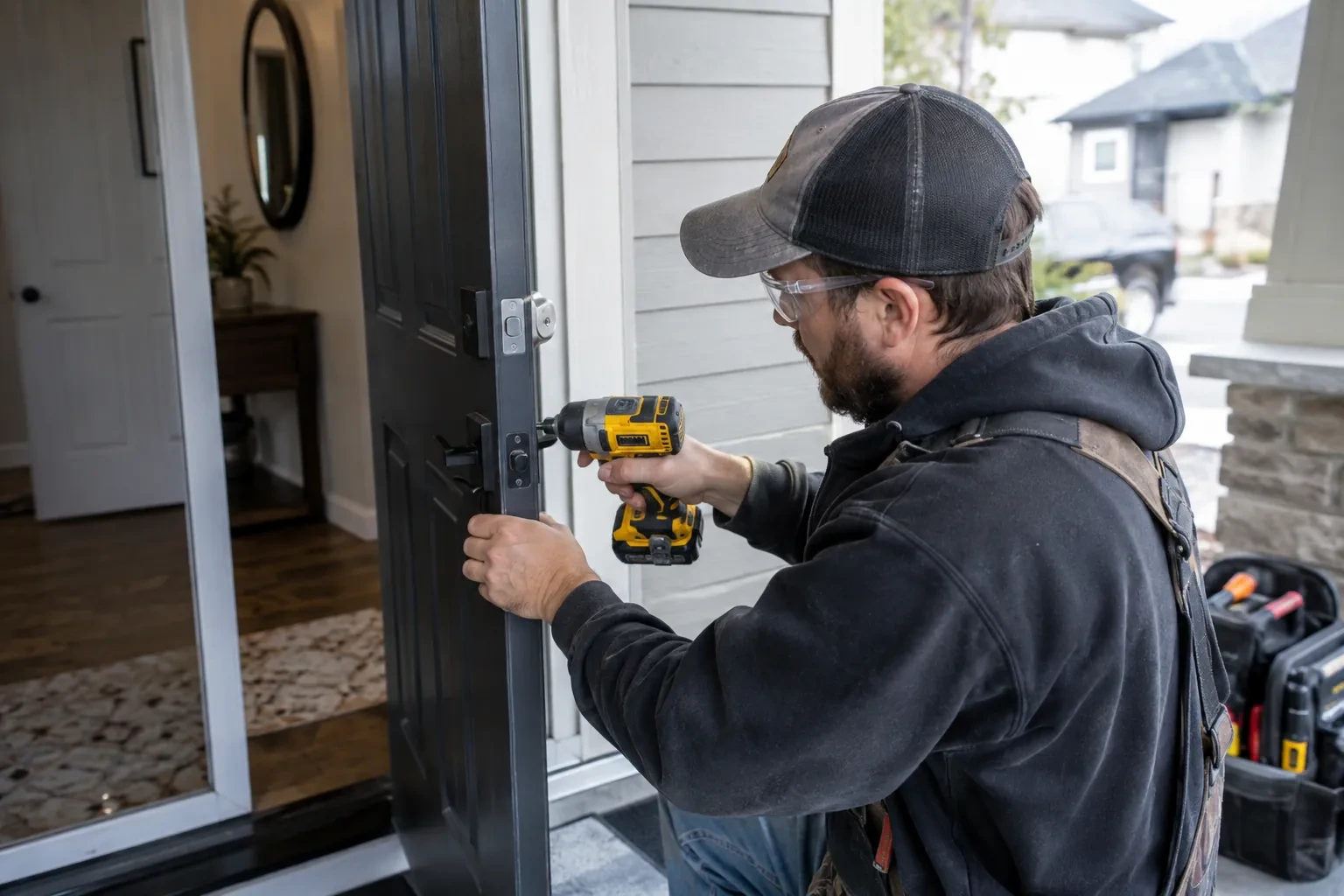
Doors in Vallentyne usually give at the frame long before the lock fails. A reinforced strike, longer screws into the stud and a properly set deadbolt do more than a new cylinder alone. We look at the whole door edge, then recommend the upgrade that actually raises the bar. This page also covers Vroomanton.
Doors in Vallentyne usually give at the frame long before the lock fails. A reinforced strike, longer screws into the stud and a properly set deadbolt do more than a new cylinder alone. We look at the whole door edge, then recommend the upgrade that actually raises the bar. This page also covers Vroomanton.
Careful work on every kind of lock.
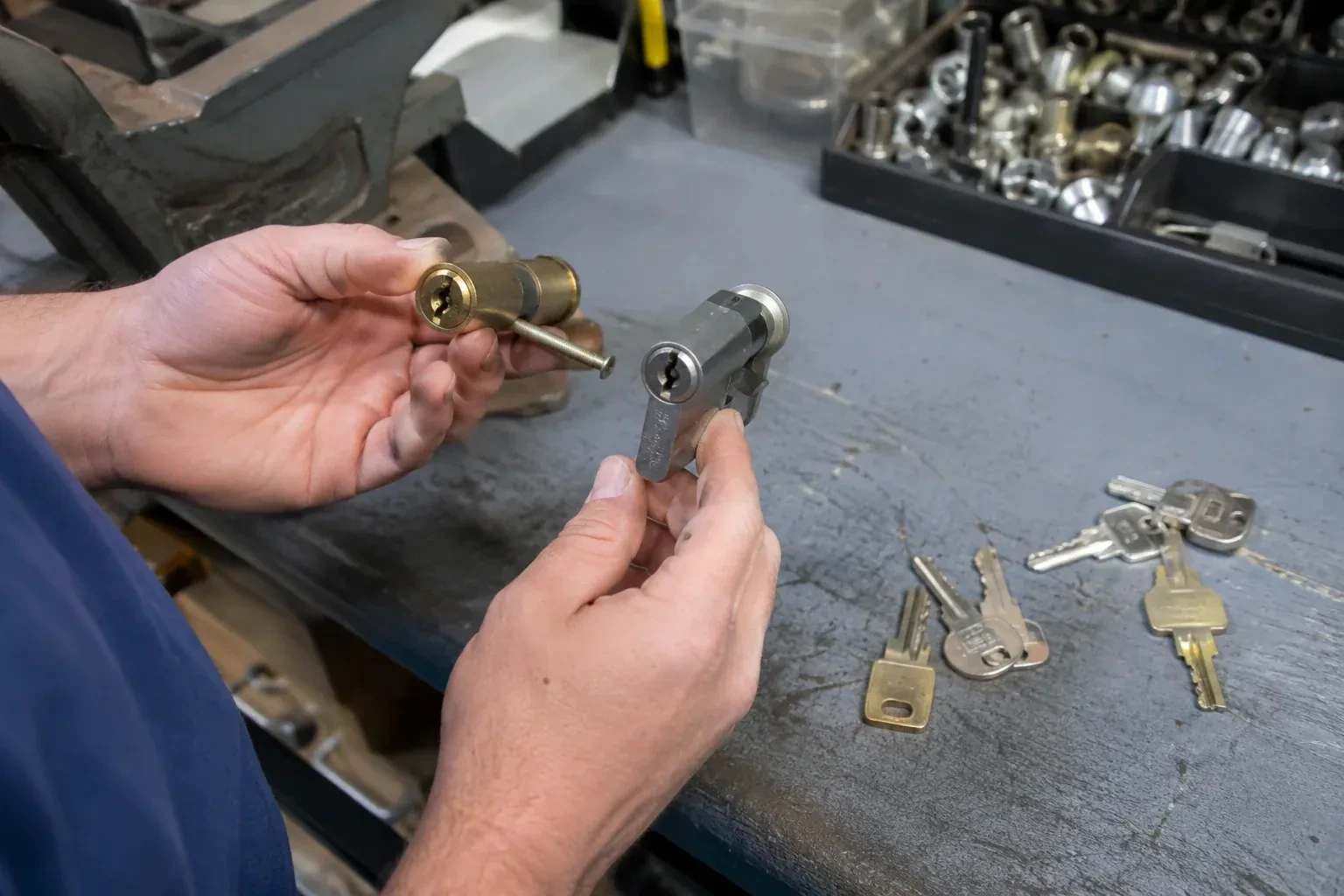
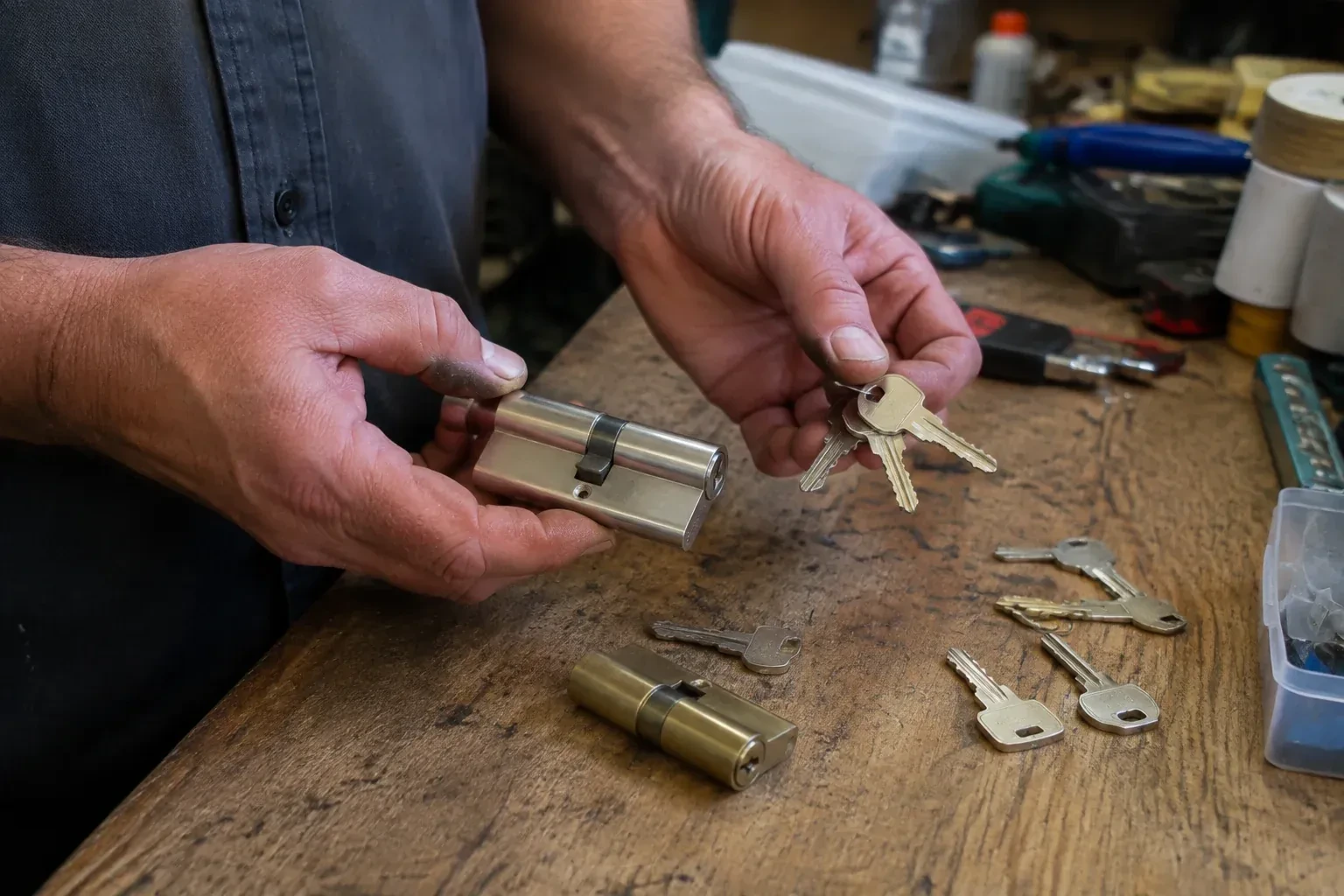
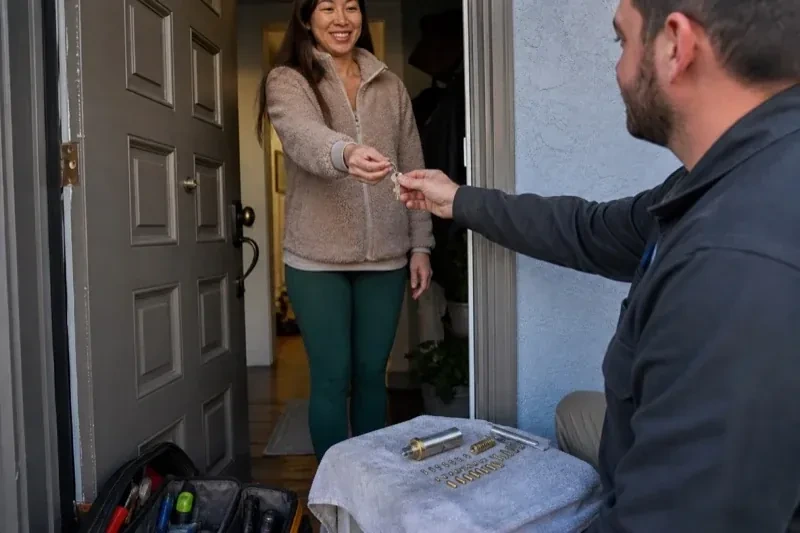
Rekeying is our favourite answer in Vallentyne because it keeps good hardware in service. The lock stays, the pins change, the old keys stop working and the new ones are cut on the spot. It suits a move, a lost key or a staff change, costs less than replacement, and leaves the door looking exactly as it did.
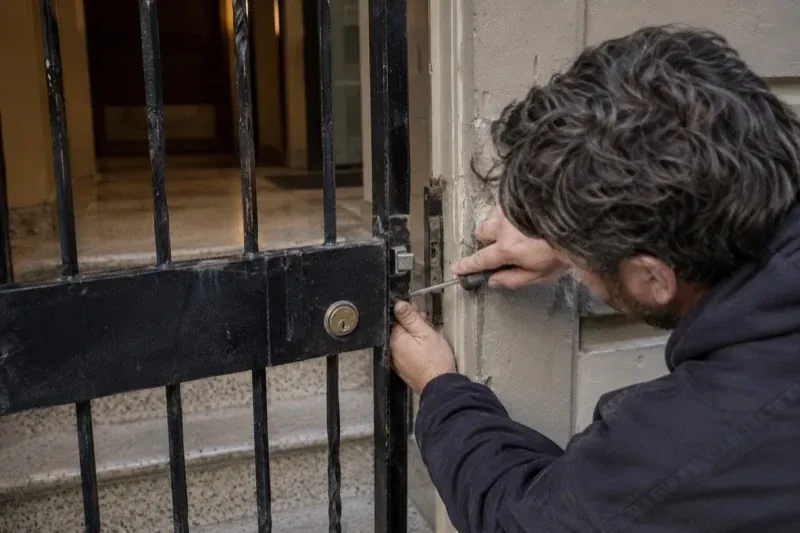
Emergency lockouts in Vallentyne are handled calmly. We ask you to have proof that the home, business or vehicle is yours ready for when we arrive, choose the least invasive way to open the door, and check the lock afterward so it keeps working. If the keys are gone for good, we can rekey while we are there so the lost set is no longer a worry.
15years in business
24/7open every day
Clear about who can get in. After any rekey or replacement we tell you exactly which keys work and how many copies exist. Key control is the point, and you should have the full picture.
Careful with the building. We protect floors and finishes, work around your day where we can, and treat a shop or office with the same care as a home.
The choice explained in your terms. Rather than product names, we talk about what each option means for you: who has access, how it copes with weather, how easy it is to change later.
Lock work in Vallentyne is rarely just one thing. A lockout often reveals a worn cylinder; a rekey is a good moment to fix a strike that never lined up. The services below are described one at a time, but a locksmith at your door will happily point out anything else worth doing while he is there.
About 64% of homes in Brock were built in 1980 or earlier, according to the 2021 Census.
Older homes
Basement and side entries on older homes were often fitted long after the house was built, with whatever lock was on hand. Bringing those doors up to the standard of the front entry, and onto the same key, is a common and satisfying job.
Single-detached houses make up about 87% of homes in Brock (2021 Census).
Mostly houses
Detached houses collect hardware from every renovation. A locksmith visiting one often finds three keyways, two finishes and one door that never latched right. Sorting all of that into a consistent, working set is a satisfying afternoon's work.
Getting past an ordinary lock is a skill many people have. Getting past a high security lock is loud, slow and uncertain, which is exactly the point. The services here make your door the one an intruder decides is not worth it.
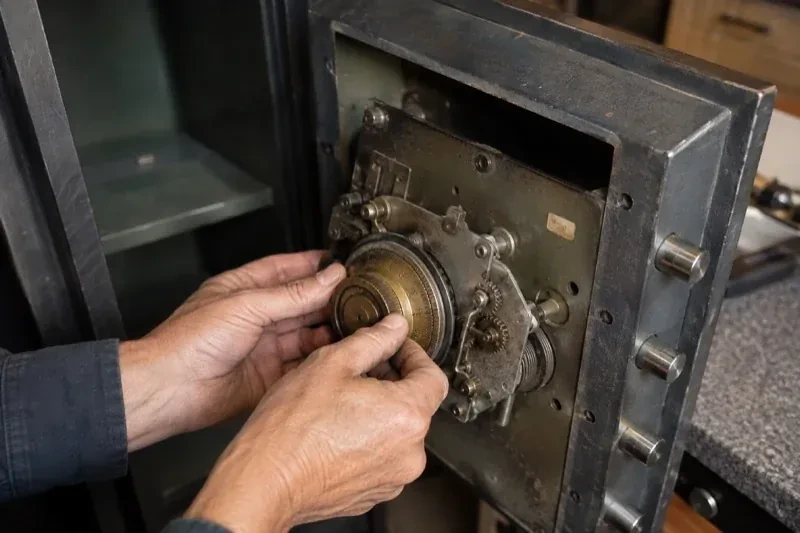
Decades of daily use have left the law firm's old dial safe drifting: the numbers line up close to where they should, never quite enough to drop the bolt.
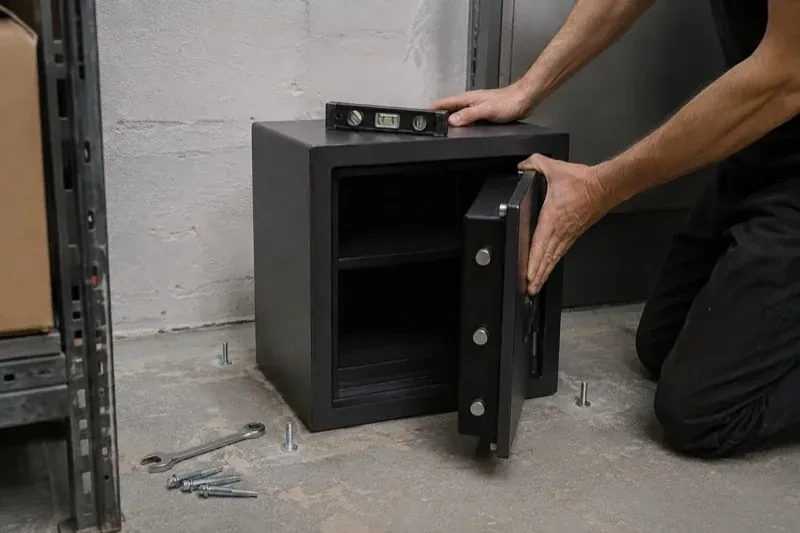
Behind the filing cabinets sits a heavy floor safe nobody ever bolted down, left exactly as the last owner set it. It opens fine, but a determined pair of hands could simply tip it into a van.
Which fix fits?
The key slides in and turns all the way round, but the bolt stays put.
WhyA smart lock fitted by a locksmith keeps a way in that works when the battery or network fails, a mechanical key on many models or an external battery contact on key-free ones.
A visitor buzzes from the panel downstairs, someone presses the button by the door, and nothing happens.
WhyGate hardware tends to struggle most in the season that stresses it hardest, and a cylinder or closer that has been sluggish all autumn rarely improves once the weather turns.
The team has grown past the point where one shared key still makes sense.
WhyEvery replacement key starts with a simple question: is this your car to key?
How a visit goes
Describe the property, the hardware and what has changed, and the visit starts from what you have seen.
1
2
3
01
Walking the building together
We visit each door on the plan and talk about who uses it, how often and at what hours. Wiring routes and power are checked at the same time.
02
Installing readers and locks
Readers, electric strikes or maglocks and the controller go in with cables hidden where the building allows. Every door is tested for release and re-locking.
03
Setting up users and handover
We add the first users, show your administrator how to add and remove people, and leave written notes so the system is yours to run.
Good days. Start with a turn.
1/9Home Lockout Service
The key slides in and turns all the way round, but the bolt stays put. There is no click, no resistance, just a key spinning in a lock that has stopped listening to it after years of daily use.
Overnight the deadbolt froze, and this morning the key would only turn partway. One more push and it sheared off flush with the face of the cylinder. There is nothing left to grip, and the cold is not helping.
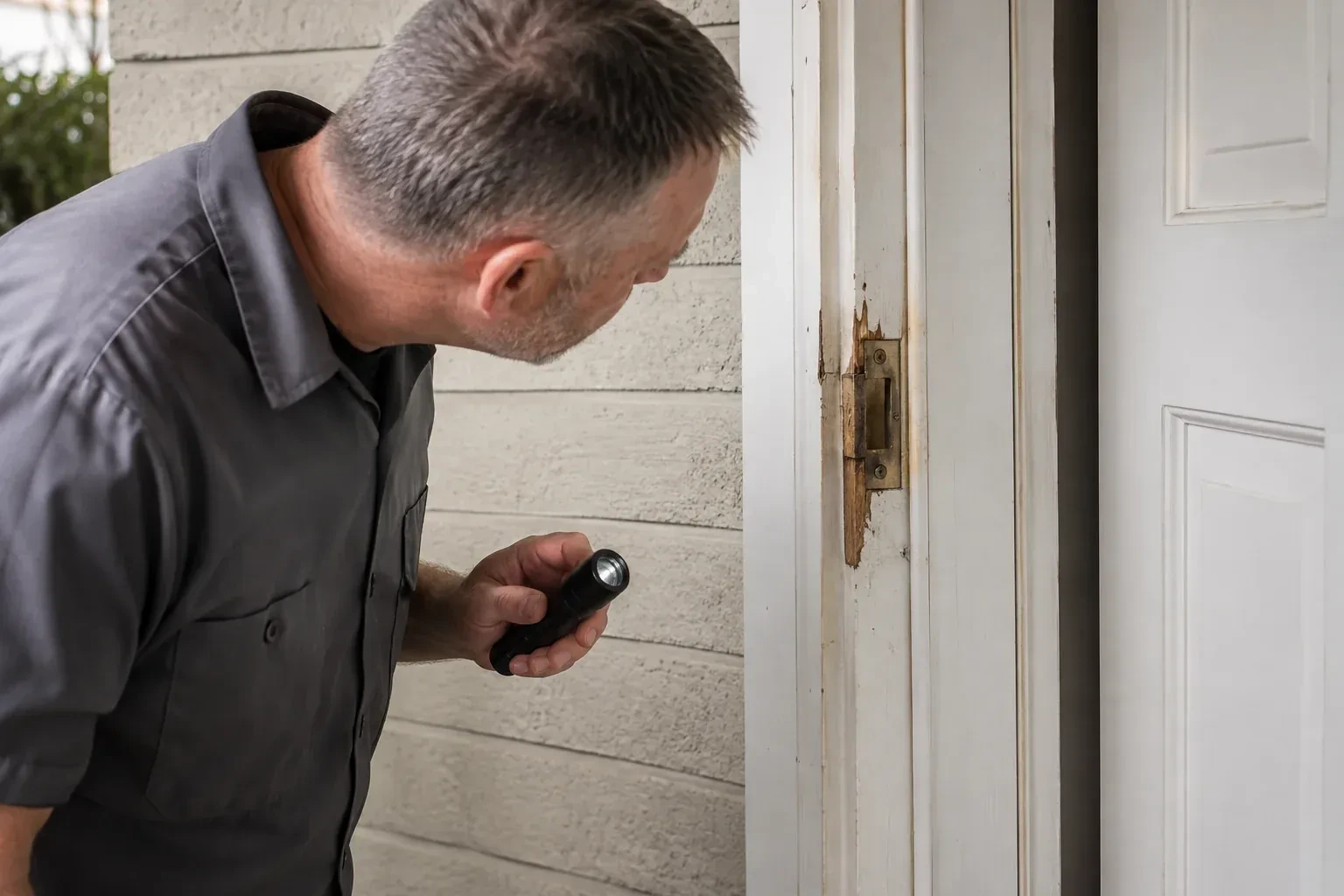
Someone tried the back door while you were away. The jamb is splintered around the strike, the bolt is bent, and the knob turns with a grinding feel. Everything held, barely, and you want hardware that would do better next time.
After a wet summer the entry door sits lower in its frame. The lock works perfectly when the door is open, but with it shut you have to lift the handle and shoulder the door to get the deadbolt to throw.
The kids get home before you do and the spare key has been lost twice this school year. A keypad they can tap, plus a message to your phone when the door opens, would take a daily worry off the list.
A visitor buzzes from the panel downstairs, someone presses the button by the door, and nothing happens. The electric strike on the lobby door used to click open on cue; now it stays silent, and residents are propping the entry with a folded flyer instead.
The team has grown past the point where one shared key still makes sense. New hires need a way in before a manager arrives, and the current setup cannot tell one person's entry from another's.
Your toddler is buckled in the back seat, the doors locked when you shut yours, and your keys are on the front seat beside your phone. It is hot, the child is starting to fuss, and you need help this minute, not a discussion.
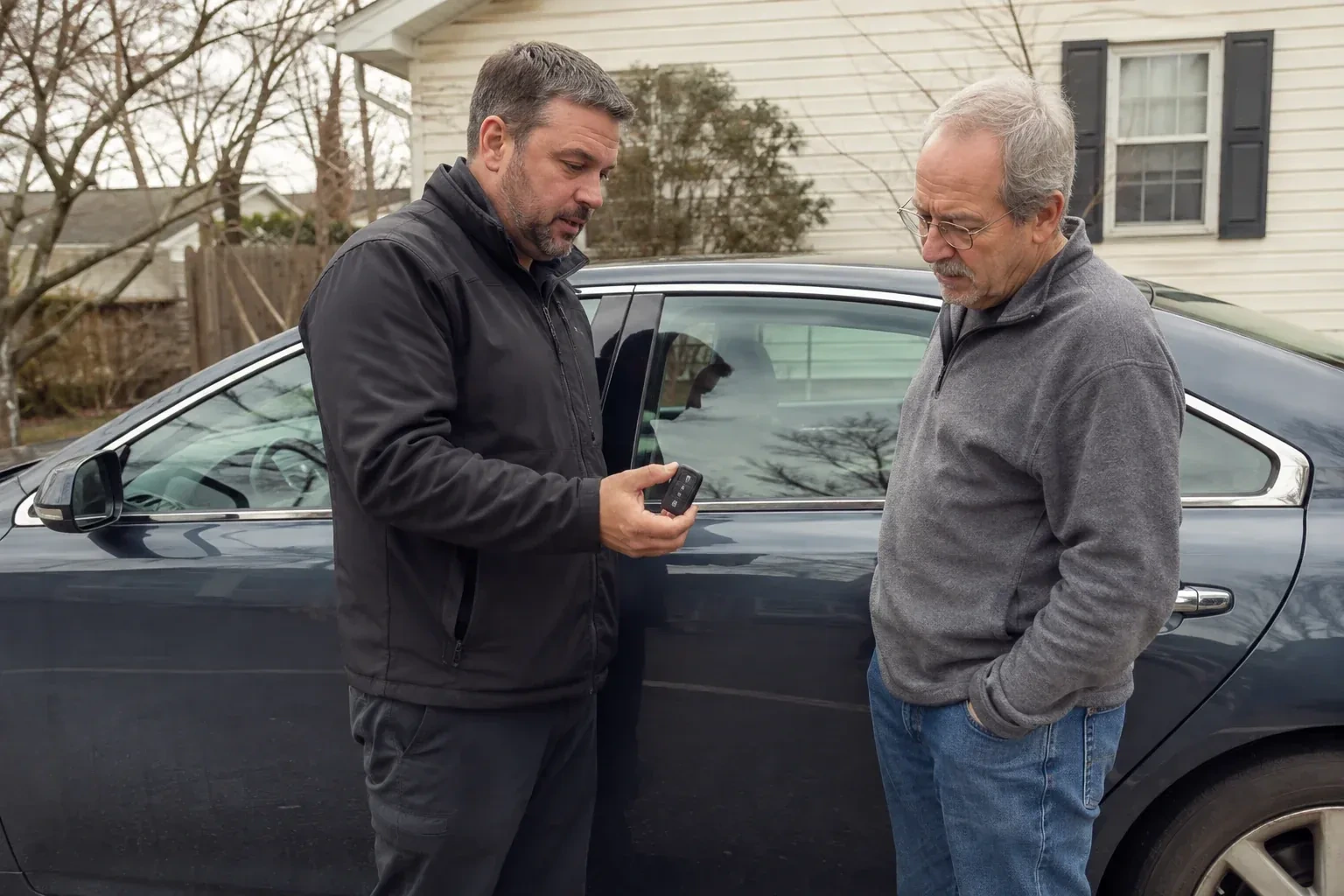
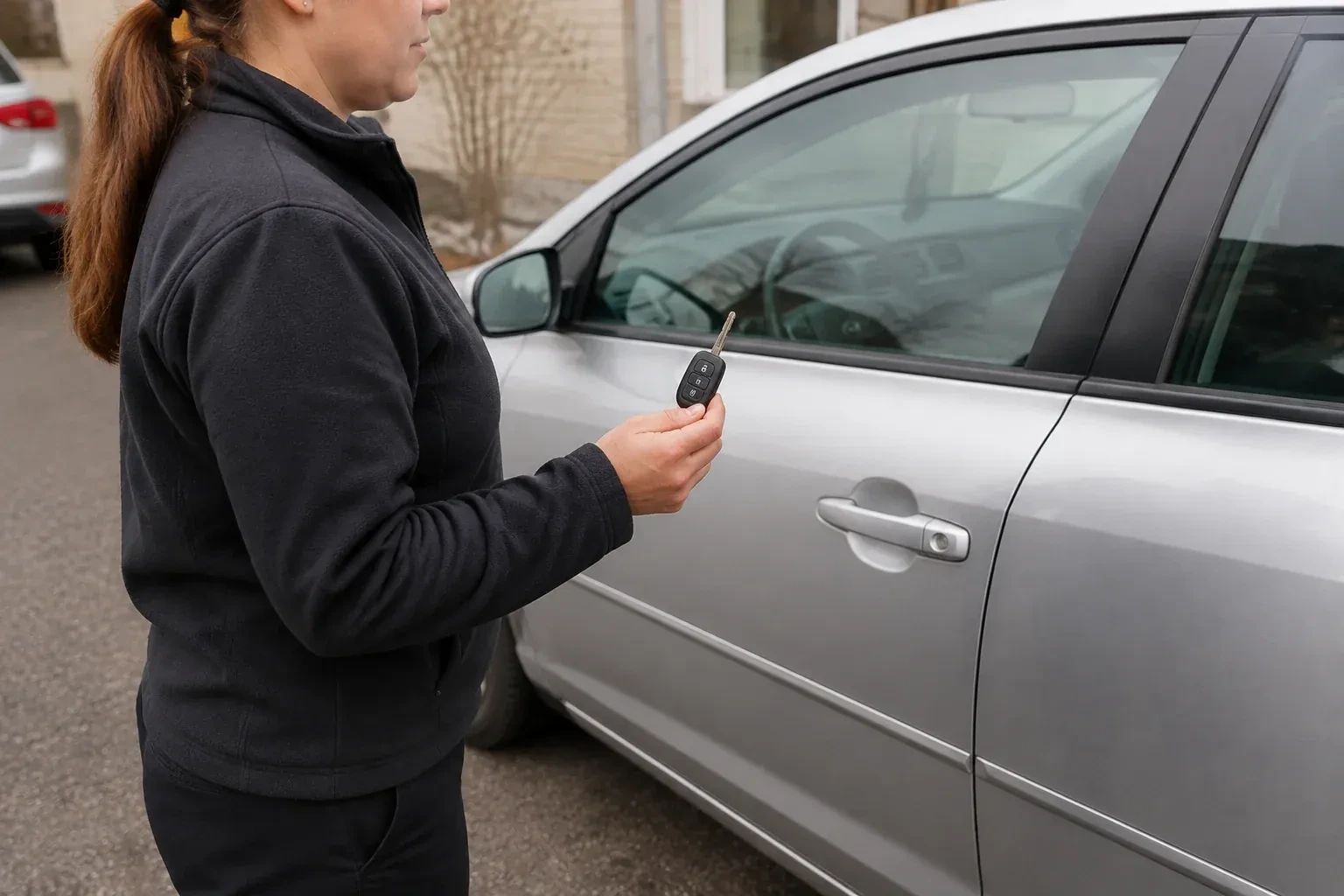
The fob went through the washing machine in a jacket pocket. It came out clean and completely silent. Nothing unlocks, the push-button start ignores it, and the little metal blade hidden inside only opens the driver's door.
How should I look after my lock so it stays reliable?
A little attention twice a year is enough. Follow your lock's own care instructions: many take a puff of dry graphite or PTFE lubricant worked in with the key, some a specified liquid product instead; general-purpose oils collect grit. Retire keys that have worn thin and cut fresh ones from a crisp original or the code. Snug up hinge and strike screws each spring and fall as the door moves with the humidity. A key that starts needing a wiggle is an early warning worth acting on.
What happens if the piece cannot be removed?
It is rare, and it is discussed before anything changes. A glued, jammed or corroded-in fragment can usually still be reached by taking the cylinder off the door and working the plug out from the back. If even that fails, the cylinder is drilled where plug meets housing, sacrificed and replaced on the spot with new keys cut, so the door locks normally by the time the locksmith leaves.
What happens to the old lock?
It is yours. Some people keep a sound old cylinder as a spare or move a decent deadbolt to a shed or garage door, and the locksmith can rekey it to the house key for that purpose. Worn or damaged hardware is taken away for recycling if you prefer. Either way, the old keys should be gathered up and discarded so nobody confuses them with the new set.
Can a modern cylinder be fitted to my old mortise lock?
Often, on cases that already take a threaded cylinder. Mortise cylinders are made in standard thread sizes and lengths with different cam shapes, and a new one is selected to match the case and the door thickness. That gives you keys cut on a machine and the option of keying the door alike with the rest of the house. A bit-key case has no cylinder to swap; its keys are made on the bench instead.
Can I install a smart lock myself?
Many people do, and on a door that already closes perfectly with the standard holes the instructions are manageable. Where a locksmith earns their place is everything around the box: recognizing a bolt that drags before it wears out a motor, enlarging or filling holes cleanly, fitting a reinforced strike, rekeying the override so the old key retires, and setting up the account and codes in a way that is easy to manage later. If you have started and hit a snag, that is a normal call too.
What should I have ready before the locksmith arrives?
It helps to know which gate or door is affected, roughly how old the lock or closer is, and what exactly is happening: dragging, slamming, refusing a key, or a buzzer that stopped releasing the door. If the entry is shared, a rough idea of how many households or units currently need a working key speeds up the visit considerably. For a building entry, having contact information for a property manager or condo board on hand is useful if a decision needs their sign-off.
What's the difference between an electric strike and a magnetic lock?
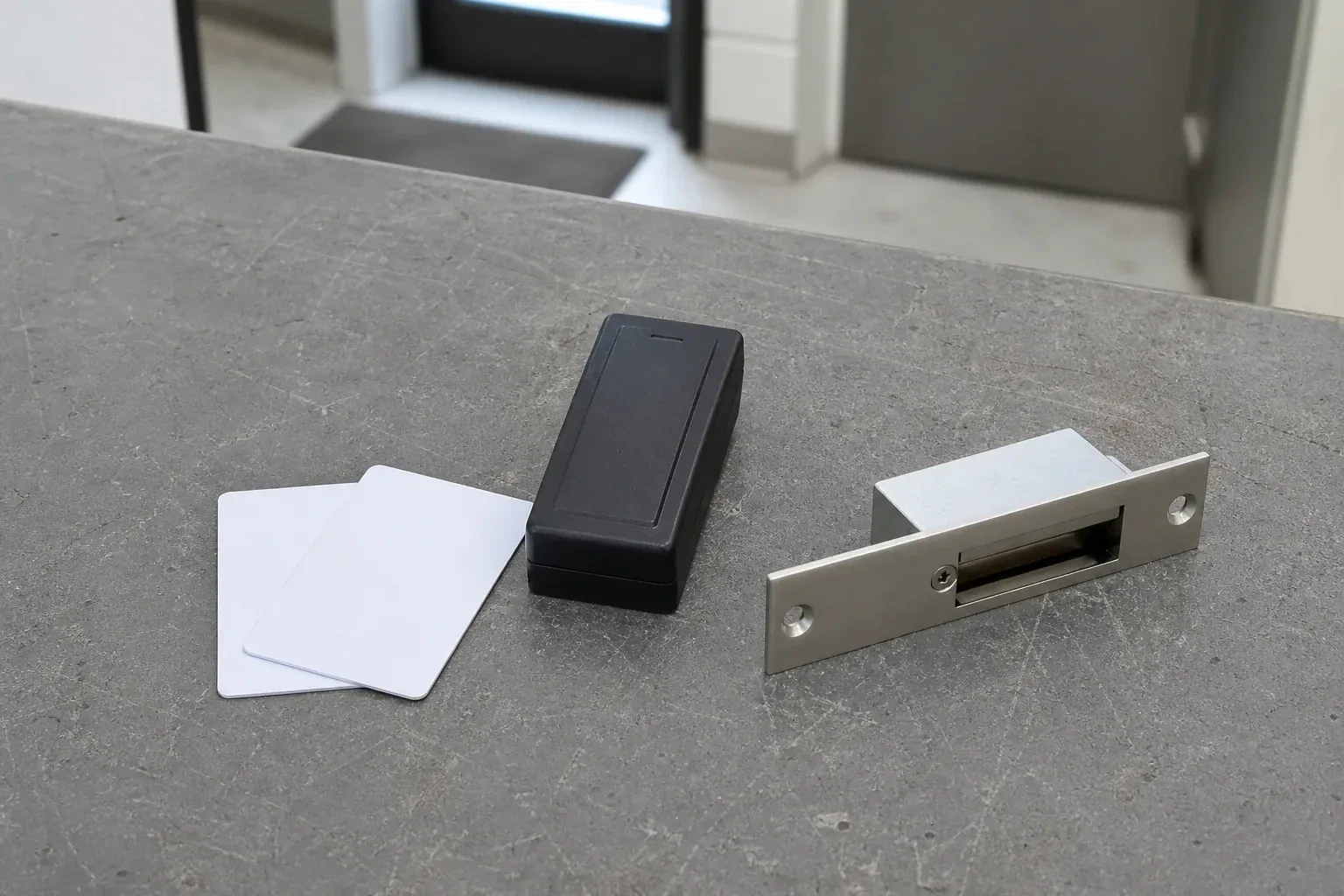
An electric strike fits into the existing door frame and works with the door's own latch or bolt, releasing it briefly for a valid credential while otherwise behaving like an ordinary strike plate. A magnetic lock instead clamps the door shut with an electromagnet mounted at the head of the frame, and it is always installed with a request-to-exit device so someone leaving is never held up looking for a way out.
My wallet, permit and everything else are locked inside. What then?
That is the ordinary case, and there is a routine for it. Tell the locksmith on the phone so the plan is agreed in advance. Often the plate can be matched to a photo of the permit on your phone, a family member can bring identification, or a fleet manager can confirm a company vehicle. Otherwise the door is opened and the documents in the glovebox are checked against your identification before the locksmith leaves.
How long should I allow for the visit?
It depends on the starting point. Adding a spare to a car with a working key is often the shortest kind of visit. An all-keys-lost job on a newer vehicle takes longer, because the car has to be opened, the lock decoded, the immobilizer reset and any security timer waited out. Milling a high-security blade and pairing a proximity fob add their own steps. The locksmith gives you a realistic window once the VIN and the situation are known.
Request a visit
Rekeying is our favourite answer in Vallentyne because it keeps good hardware in service. The lock stays, the pins change, the old keys stop working and the new ones are cut on the spot. It suits a move, a lost key or a staff change, costs less than replacement, and leaves the door looking exactly as it did.