Locksmith
Useful things to know
Let's clear a few things up
What if my wallet and every document are locked inside?
That is the most common version of a lockout, and there is a routine for it. Tell the locksmith on the phone so the plan is agreed before arrival. Often a neighbour can confirm you live there, a digital copy of a lease or bill is on your phone, or a property manager can vouch for you. Where none of that is available, the locksmith opens the door and completes the identification check with the documents inside before leaving.
An employee left and never returned their keys. Should we rekey?
It is the sensible step, and a lockout visit is a convenient moment for it. Rekeying keeps your existing cylinders and changes the pins so a new key operates them and the unreturned one does nothing. If your doors use interchangeable cores, swapping the core takes minutes. Bring every door that shared the old key onto the new one, count the fresh keys into named hands and start a register so the next departure is a line in a book rather than a call.
Can the piece be pushed out from the other side?
On a standard door cylinder the keyway is closed at the back by the plug and the tailpiece, so there is no straight path through. What a locksmith can do is remove the cylinder, take off the cap, and push the plug out of its housing with a follower, which frees the fragment from behind. That is done on the bench, not by forcing anything from the inside of the door.
Should I call the police before the locksmith?
Yes. Call the emergency number if there is any chance the intruder is still there, and the non-emergency line of your local police service otherwise. A break and enter is reported by phone rather than through the online forms used for minor property damage. Ask for the occurrence number, since your insurer will want it. Once the police have released the scene, or told you they are not attending, the locksmith can begin.
Why is it always the shaded side of the building that seizes?
The face of a building that never sees direct sun stays colder and damper, so ice in a keyway lasts days longer there and condensation sits in the cylinder rather than drying off. Wind-driven rain and snow tend to hit the same face. Those doors deserve a keyhole cover, a storm door where one fits, and a lubricant check before the season turns, and they are often the first lock a locksmith asks about.
Do I need to be there for the whole visit?
An authorised adult should be present at the start, for identification and to agree the list of doors and the number of keys, and at the end, to test every key and take the count. In between, the work happens at the doors and on the van, so you are free to get on with your day inside. A property manager or a family member with your authorisation can stand in if you cannot be there.
I am a landlord. Should I rekey between tenants?
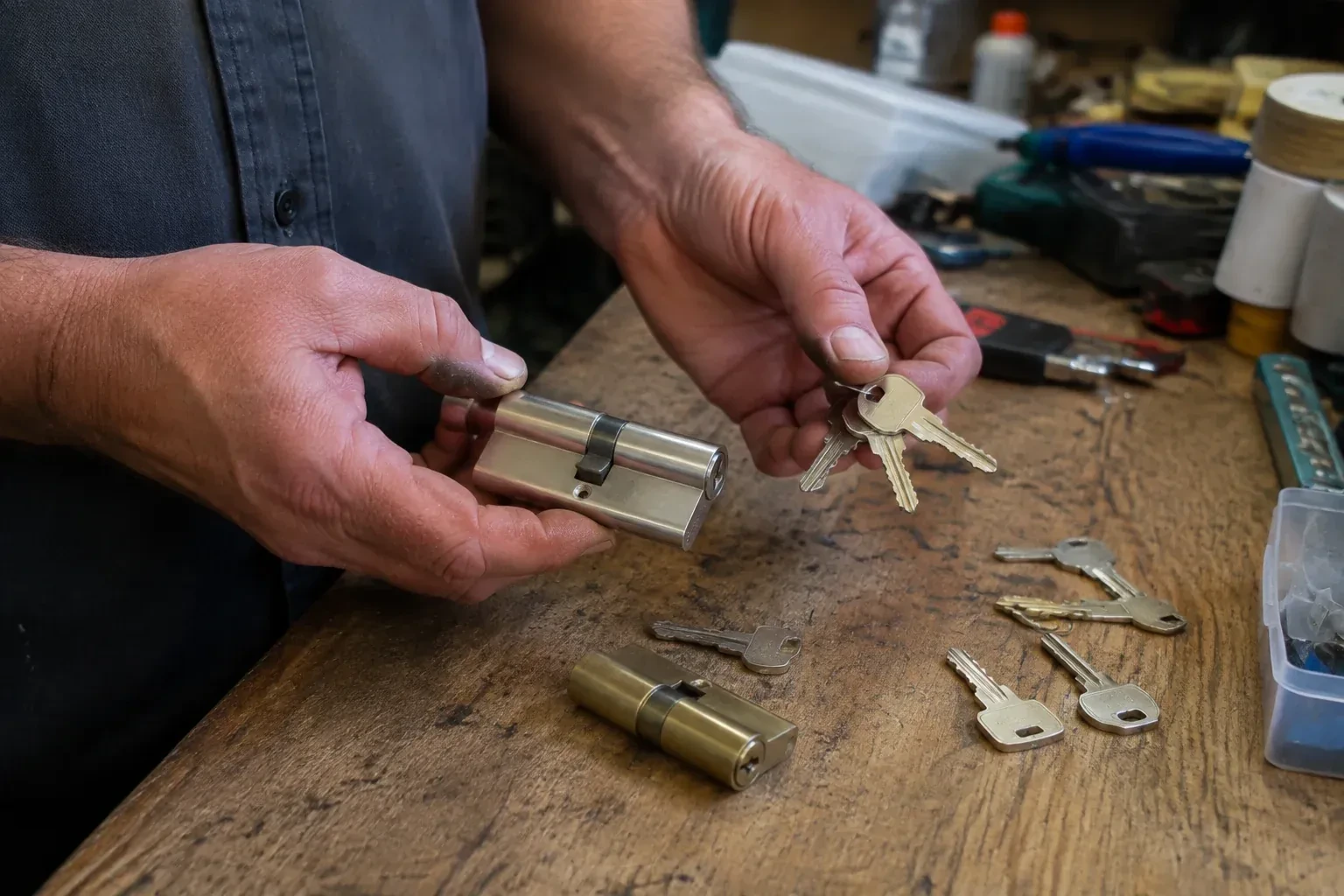
Many landlords do, and it removes the question of whether every copy came back. The locksmith rekeys the unit's cylinders so the incoming tenant holds the only working keys, cuts the copies you want, and notes the count for your move-in record. Because provincial tenancy rules expect the tenant to be handed replacement keys whenever a landlord changes a lock, the visit ends with keys for both of you and a clear list of which doors were done.
Do I need a deadbolt on the door from the garage into the house?
It is worth having. The door between an attached garage and the living space is in practice often the softest way in, since a garage door left open leaves a passage knob as the only barrier. A thumb-turn deadbolt there costs a few minutes a day and closes that gap.
Is it possible to upgrade just the exterior locks now and handle interior doors later?
Yes, and it is a common way to spread the work out. Exterior doors carry the security load, so starting there with a graded deadbolt and a reinforced strike covers the part that matters most first. Interior locks, passage sets, privacy locks on bathrooms and bedrooms, can be scheduled for a later visit without affecting anything already done, and the locksmith can note what was fitted so the second visit matches it.
My home is a designated heritage property. Does that change anything?
It reinforces the choice to service rather than replace. Where a property carries a heritage designation, changes affecting listed features can need extra sign-off, and original door hardware is occasionally among those features. A rebuilt mortise case with its original trim is preservation rather than alteration, and the locksmith's written record of what was retained and what was replaced is useful for your file.
What happens when the batteries die?
The lock warns you well before that point, with a light or tone at the keypad and, on connected models, a message to your phone. If the warnings are missed, a keyed model's mechanical override still opens the door, while a key-free model instead has two small contacts on the outside where a nine-volt battery gives it enough power to accept a code. The locksmith shows you each route your model offers and where the spare batteries and the key should live.
What is a good option for a gate that delivery drivers or a maintenance crew need occasional access to?
A keypad or a lockbox with a rotating code works well there, since access can be shared without handing out a physical key that has to come back later. A weather-rated cylinder with a separate access key is another option if the property already runs on a keyed system. The locksmith can talk through how often the code should change and who on site should know it, so the gate stays convenient without staying open to everyone.
How many keys do I get when the lock is changed?
Two keys is standard, cut from blanks matched to the new lock and tested in the door before the visit ends. Additional keys for another household member, or for someone who collects mail while you travel, are cut on the spot if you ask, rather than needing a separate stop at a hardware store afterward.
When does a locksmith decide to drill a safe instead of opening it another way?
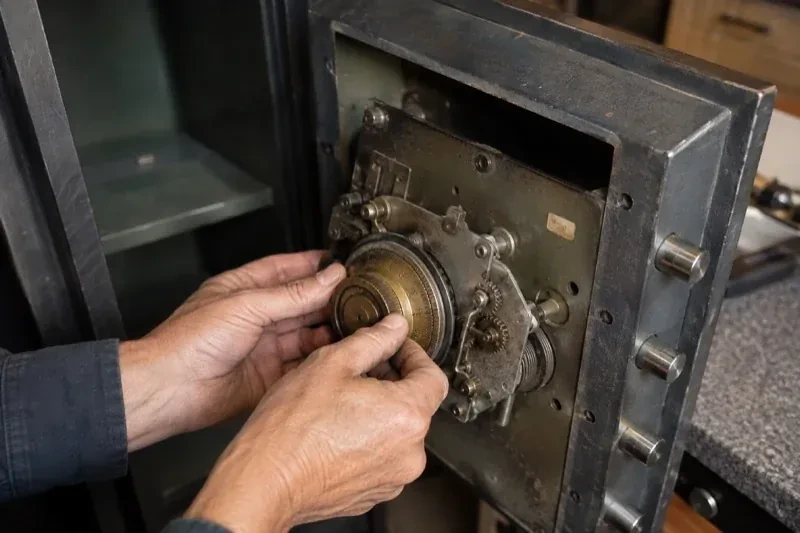
Drilling is chosen when the gentler options for that specific lock, manipulation and decoding on a mechanical dial, or a manufacturer reset or override on an electronic one, are unavailable or have not worked, rather than following one fixed order on every safe. It is also the answer when the lock has genuinely failed, such as a seized wheel pack or a dead circuit board with no working override. The decision is explained before drilling starts, not discovered afterward.
How do I prepare the room before a servicing visit?
Clearing a working space in front of the safe, moving anything stacked against or on top of it, and having a rough idea of when it was last serviced all help the visit start smoothly. If the combination or code is still known, having it on hand avoids needing to open the unit by other means first. Nothing more elaborate than that is generally needed beforehand.
Is a smart lock more secure than a high security mechanical lock?
They solve different problems. A keypad or smart lock manages who can enter and when, and many have no keyway to pick. A high security mechanical lock resists physical attack and controls key copying without batteries, apps or connectivity. Many businesses use both: electronic access on high-traffic doors and high security cylinders on rooms that must hold regardless of power. The locksmith helps you match the tool to each door rather than choosing one philosophy.
Will rekeying affect our alarm system or card readers?
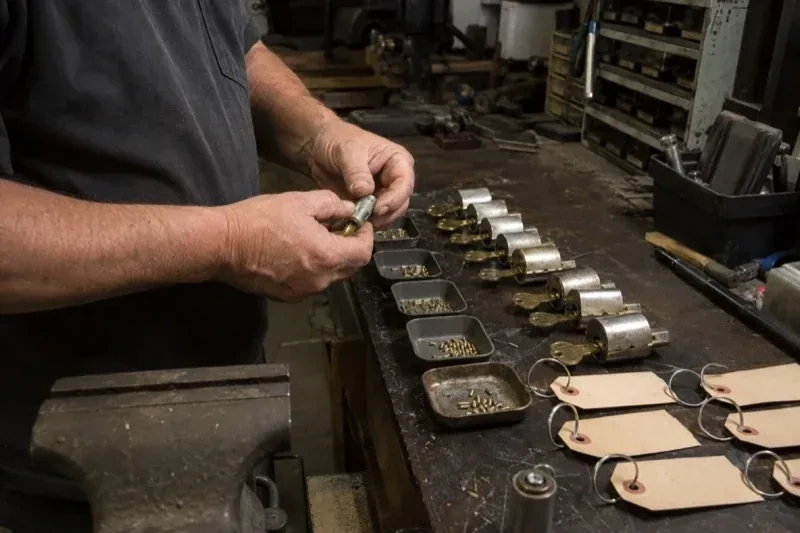
Mechanical rekeying leaves electronics alone: alarm panels, card readers and keypads keep their codes and credentials. What changes is the list of people holding keys, and it is worth updating the alarm company's keyholder list and retiring the codes of anyone who has left at the same time, since keys and codes usually walk out together. Where a door has both a card reader and a keyed override, the override cylinder is rekeyed with the rest.
Can cleaners or contractors get limited access without a master key?
Yes. A change key or a narrow sub-master covering only the areas they service is the usual approach, rather than handing over a level that reaches further than the job requires. Where the property uses keypad or card access alongside mechanical keys, a time-limited or role-specific electronic credential can serve the same purpose without a physical key changing hands at all.
Is a keypad code as secure as a card or fob?
A keypad code needs no card to lose, but a code shared among several people is effectively no longer individual, and a forgotten code left active is a common weak point. A card or fob tied to one named person avoids that particular issue, since it is switched off individually rather than reset for everyone at once. Many businesses use a code for general areas and a card wherever entry needs to be traceable to one person.
Who is responsible for keeping the hardware compliant?
The building owner or the party the owner assigns, often a facilities manager, is responsible for keeping exit hardware in working order and for the fire door assembly testing that goes with it. A locksmith installs and services the hardware and can keep records on the owner's behalf, but the ongoing duty to maintain the assembly sits with whoever holds the building.
What happens to keys held by former employees or contractors?
Once a cylinder is replaced or rekeyed, any key that was not reissued for the new combination simply stops working on that door. This is the direct answer to a key that walked out with someone who left the business, and it is worth doing across every door that key used to open, not only the one that prompted the call.
Is an older car easier or harder to open than a new one?
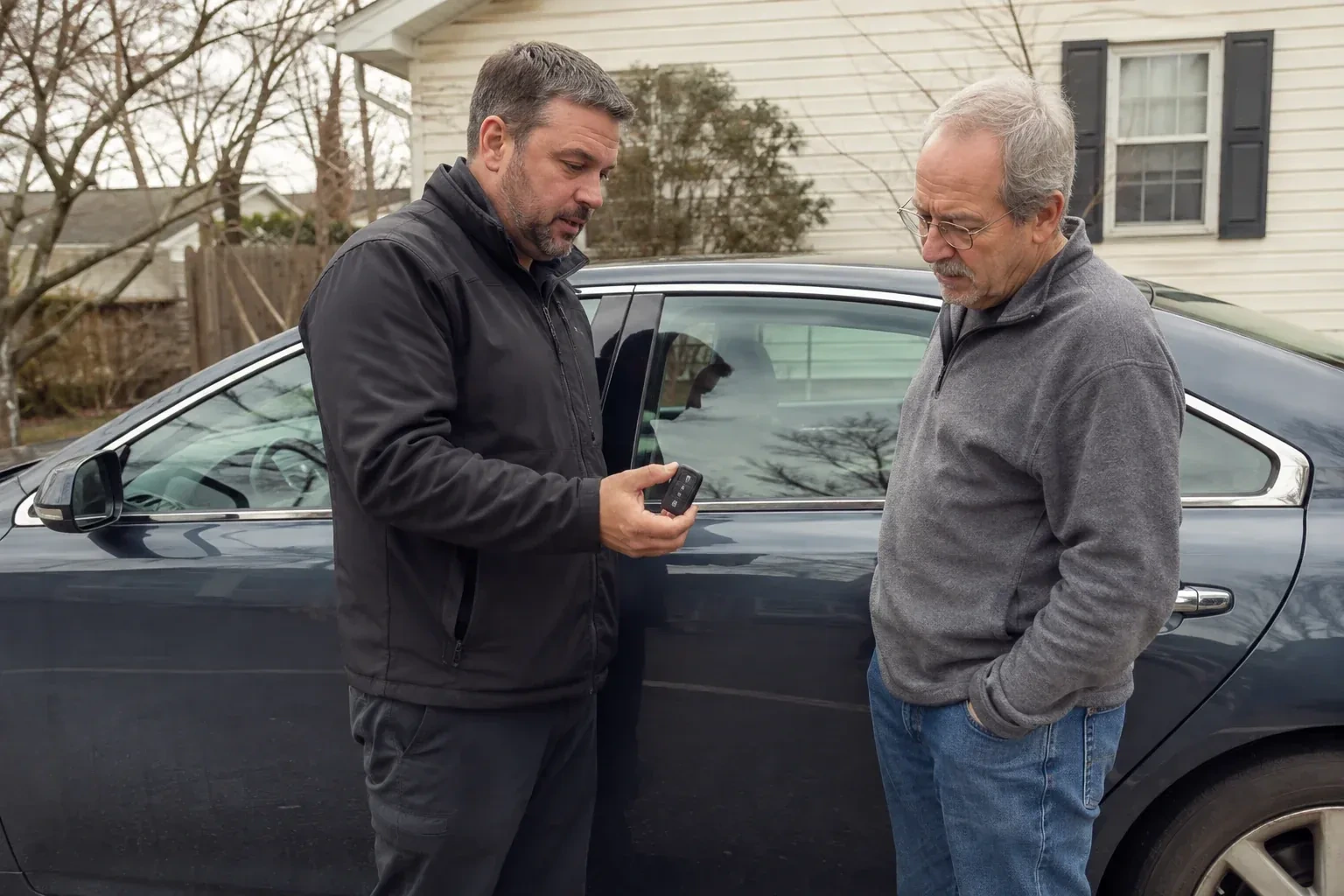
Different rather than easier. An older car usually has a cylinder in every door and simple linkages, so picking or decoding the lock is routine. A newer car may hide its cylinder, has doors full of electronics that call for wedge-and-reach rather than anything inside the door, and adds an immobiliser to any lost-key work. Either way the locksmith chooses the method by the model, not by guesswork.
After a break-in the doors and ignition are on different keys. Can that be fixed?
Yes. When a door lock is forced and replaced, or an ignition is swapped, the car can end up needing two blades. A locksmith can rekey the replacement cylinder to match the surviving one, so a single key operates every lock again, and cut new keys to that combination. The transponder side is unchanged by the lock work, so your existing programmed keys carry on starting the car once the blades match.
Can a spare be made if the vehicle has an aftermarket alarm or remote starter installed?
Generally yes, though it is worth mentioning any aftermarket system when you call, since a factory immobilizer that has been wired into a third-party alarm or remote starter sometimes behaves differently from the standard setup the locksmith expects. Knowing this in advance lets the visit account for it rather than discovering it partway through programming.
Can you tell me which fob to buy before you arrive?
Often, yes, once the vehicle's identification number, model year and trim are known, since those details narrow down which fob part is actually compatible. Buying the wrong part number is a common reason a programming attempt goes nowhere, so confirming compatibility before ordering saves a returned part and a second visit.
My key turns and the engine cranks, but it won't start. Is that this?
That pattern, the starter turning the engine over without it catching, often points to the key or immobilizer rather than a fuel or ignition-timing fault. A flashing security light on the dashboard while this happens adds to that picture. A diagnosis, checking whether the vehicle actually recognizes the key's chip, is what confirms which one it is before any programming begins.
What is the difference between this and being locked out of my car?
A lockout is about getting into a vehicle that is closed against you; ignition lock repair is about the mechanism the key turns once you are already inside or once the door is open. The two sometimes happen together, a stuck ignition can follow a lockout, but a working ignition and a locked door are separate problems with separate tools and separate visits to arrange.
My key turns but the door will not open. What does that usually mean?
A key that spins without effect points to the connection behind the cylinder rather than the cylinder itself: the linkage rod that carries the turning motion to the latch has likely slipped off its clip or broken. Reconnecting or replacing that rod typically restores normal operation.
Could a key from one motorcycle ever accidentally open a different one?
It is uncommon but not impossible, since wafer locks have a limited number of combinations and manufacturers reuse keyway profiles across models. This is one reason manufacturers space their depth increments further apart than the lock's tolerances strictly require, to cut down on accidental matches. It is also why a locksmith reads the specific lock in front of them rather than assuming a key that looks similar will behave the same way.