High security · Georgina
Safe Installation & Servicing
Behind the filing cabinets sits a heavy floor safe nobody ever bolted down, left exactly as the last owner set it.
In plain words
Safe installation and servicing starts with a plain question: what needs protecting, and from what. A till float and a box of paper contracts fail in completely different ways, so a burglary rating and a fire rating are chosen separately rather than assumed from one label. Once the right unit is picked, it is set in its final spot, leveled, and anchored into the floor or wall so it cannot be carried off. The lock, whether a dial or a keypad, is set to a combination or code only the owner holds, then cycled and tested before anyone signs off on the job.
How the visit goesA dinner service ends with a stack of bills and a handful of credit slips, and right now they sit in an unlocked cash box on a shelf until morning, because nobody has gotten around to anything sturdier.
Safe Installation & Servicing
How the visit goes
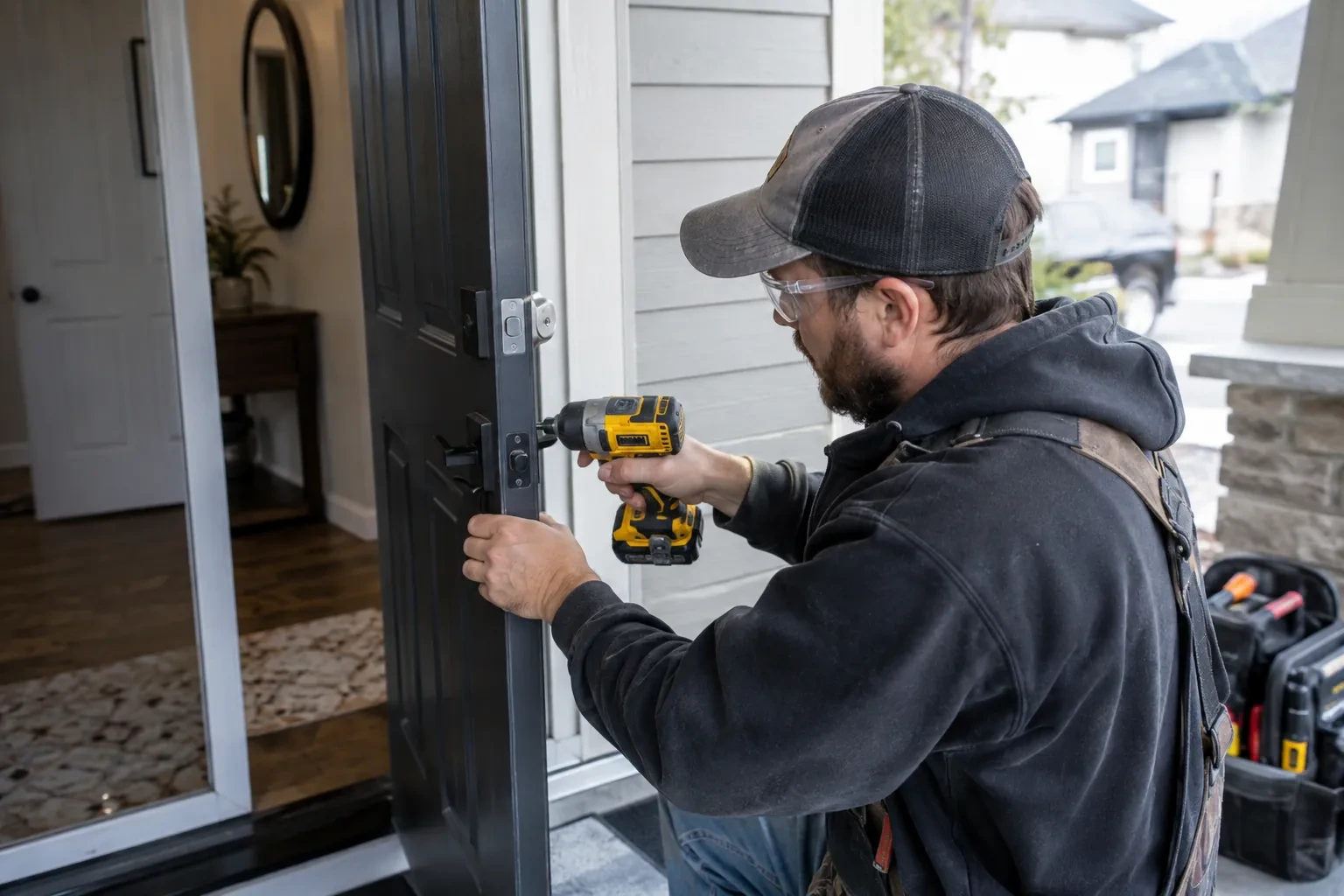
Getting a heavy unit to its final spot
A commercial safe can weigh several hundred pounds before anything is inside it, so the route from the door to the final position matters as much as the safe itself. The locksmith measures doorways, hallway turns, stairs, and any tight corner along the path, and checks whether an elevator, loading dock, or ramp is involved. A safe that cannot clear a doorway in one piece, or a floor that struggles to bear that weight partway up a building, changes the plan before delivery day rather than becoming a problem on site.
Setting it level and in its final position
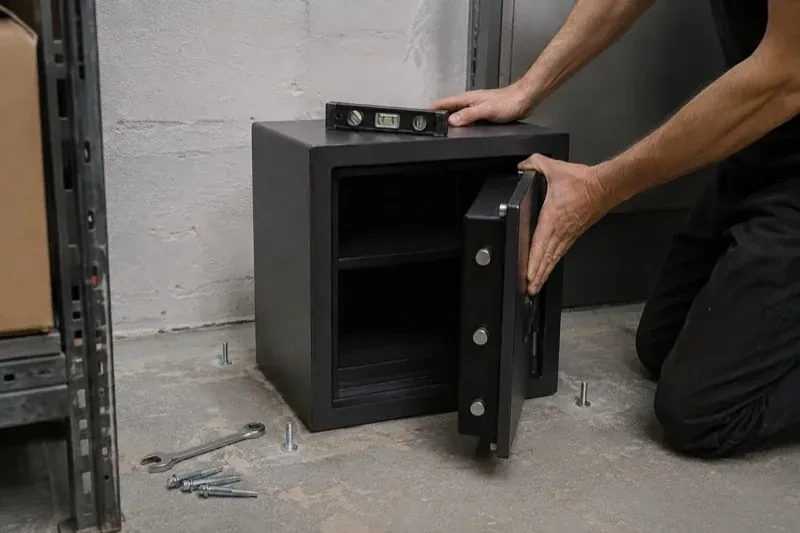
Once the safe is on site, it is moved into position with a hand truck, dolly, or rigging suited to its weight, protecting door frames and flooring along the way rather than dragging it across a room. It is set level using shims where the floor is slightly uneven, since a safe that sits even a little off level can bind its own bolt-work over time. The final position also leaves enough clearance for the door to swing fully open and for anchor bolts to be reached from underneath or behind.
Bolt-work that keeps moving smoothly
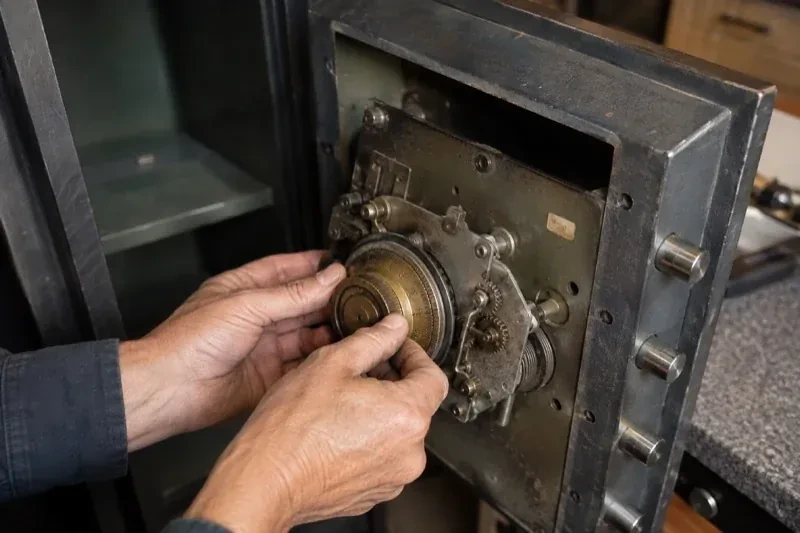
The internal mechanism that throws and retracts the bolts benefits from the same kind of attention a door lock gets, on a longer cycle. A dry or purpose-made bolt-work lubricant, applied every year or two depending on how often the safe is opened, keeps the mechanism from stiffening with old grease or picking up rust in a damp room. Household oil is generally the wrong choice here, since it tends to attract dust and grit rather than shed it the way a purpose-made lubricant does.
Safe Installation & Servicing
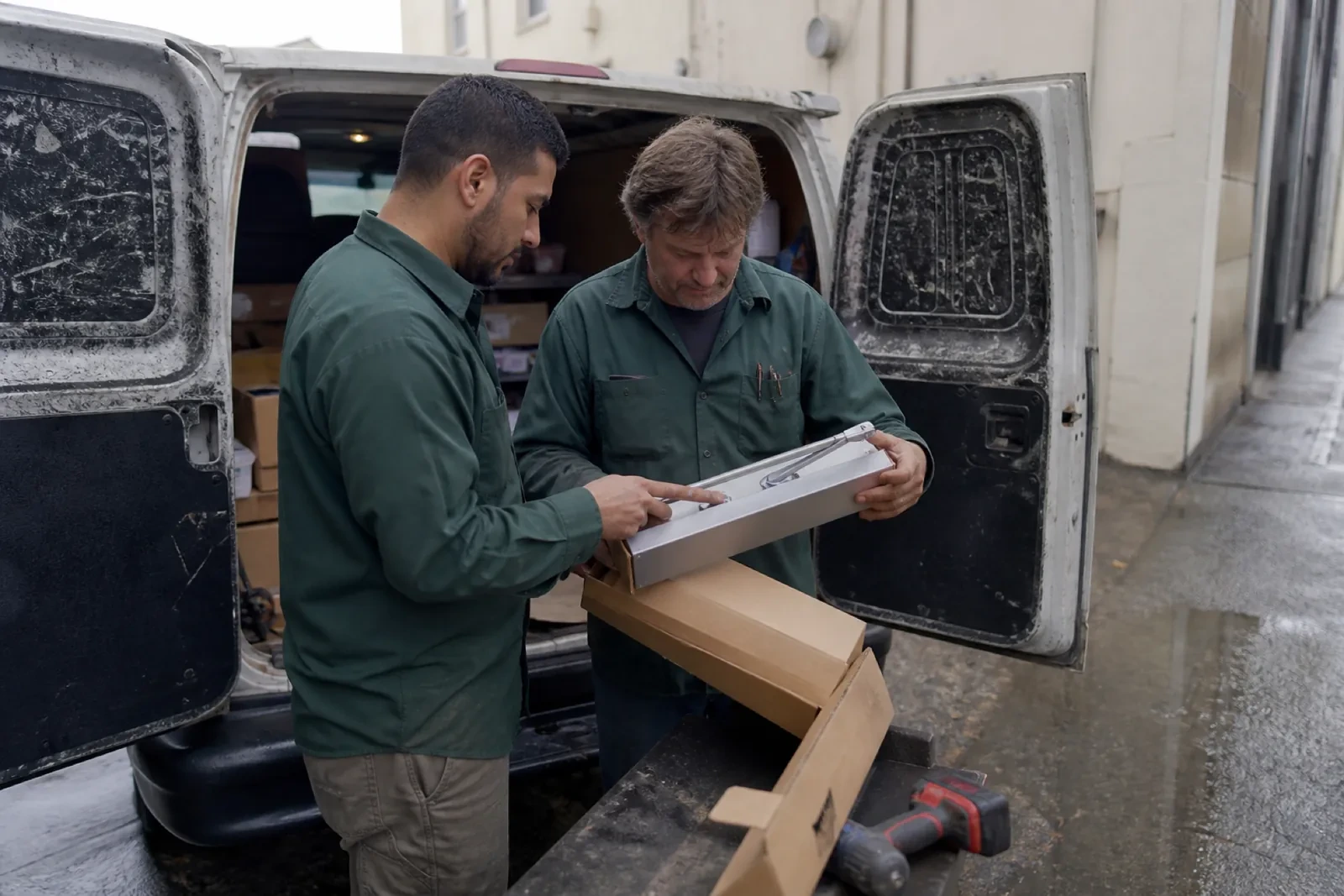
In the van
Bolt-work lubricant
Moving dolly and floor protection
Nine-volt backup battery
Rated safe (burglary and fire)
Level and floor shims
Safe Installation & Servicing
What affects the quote
Lock type and number of users
A mechanical dial lock with one combination is a simpler setup than an electronic keypad supporting several separate user codes for different staff members or household members.
Floor or wall construction
Solid concrete, a wood subfloor reaching into joists, and tile each call for a different anchoring approach and different hardware, and the substrate is confirmed before any drilling begins.
Access route to the final position
Stairs, narrow doorways, tight corners, and whether an elevator or loading dock is involved all affect how the safe gets to its spot and how much handling that route requires.
What to have ready
- Which room or level of the building will it go in?
- When were the batteries last changed, if it is electronic?
- What will the safe mainly store?
Safe Installation & Servicing: questions
QuestionsHow do I prepare the room before a servicing visit?
Clearing a working space in front of the safe, moving anything stacked against or on top of it, and having a rough idea of when it was last serviced all help the visit start smoothly. If the combination or code is still known, having it on hand avoids needing to open the unit by other means first. Nothing more elaborate than that is generally needed beforehand.
Can more than one person have their own code?
Yes, on an electronic keypad that supports multiple users, each person can be given a separate code rather than everyone sharing one, which also makes it simple to remove a single code later without resetting the whole lock. A mechanical dial lock, by contrast, has one combination for everyone who needs it, so a change in who has access there means changing that one combination.
What does a typical installation or servicing visit involve?
The visit opens with a look at what the safe needs to protect and where it will sit, moves into positioning and anchoring for a new unit or bolt-work and lock testing for an existing one, and ends with the lock cycled several times and a combination or code set that only the owner knows. The exact order shifts depending on whether the job is a new installation or ongoing servicing.