Car keys · Georgina
Car Key Replacement
You bought the car privately and it came with a single key on a shoelace.
In plain words
Older vehicles without an immobilizer are a pleasure to key, but whether a given car has one is checked rather than assumed from age, since several early-2000s vehicles already shipped with a factory immobilizer. Where a car genuinely needs only a blade, it is cut to the factory code or to a reading of the lock rather than copied from a worn original, so it seats cleanly in an ignition that has seen twenty winters. Where the ignition wafers are tired, the locksmith can say so and service the cylinder in the same visit. The result is a key that turns like the car was new, without the daily jiggle.
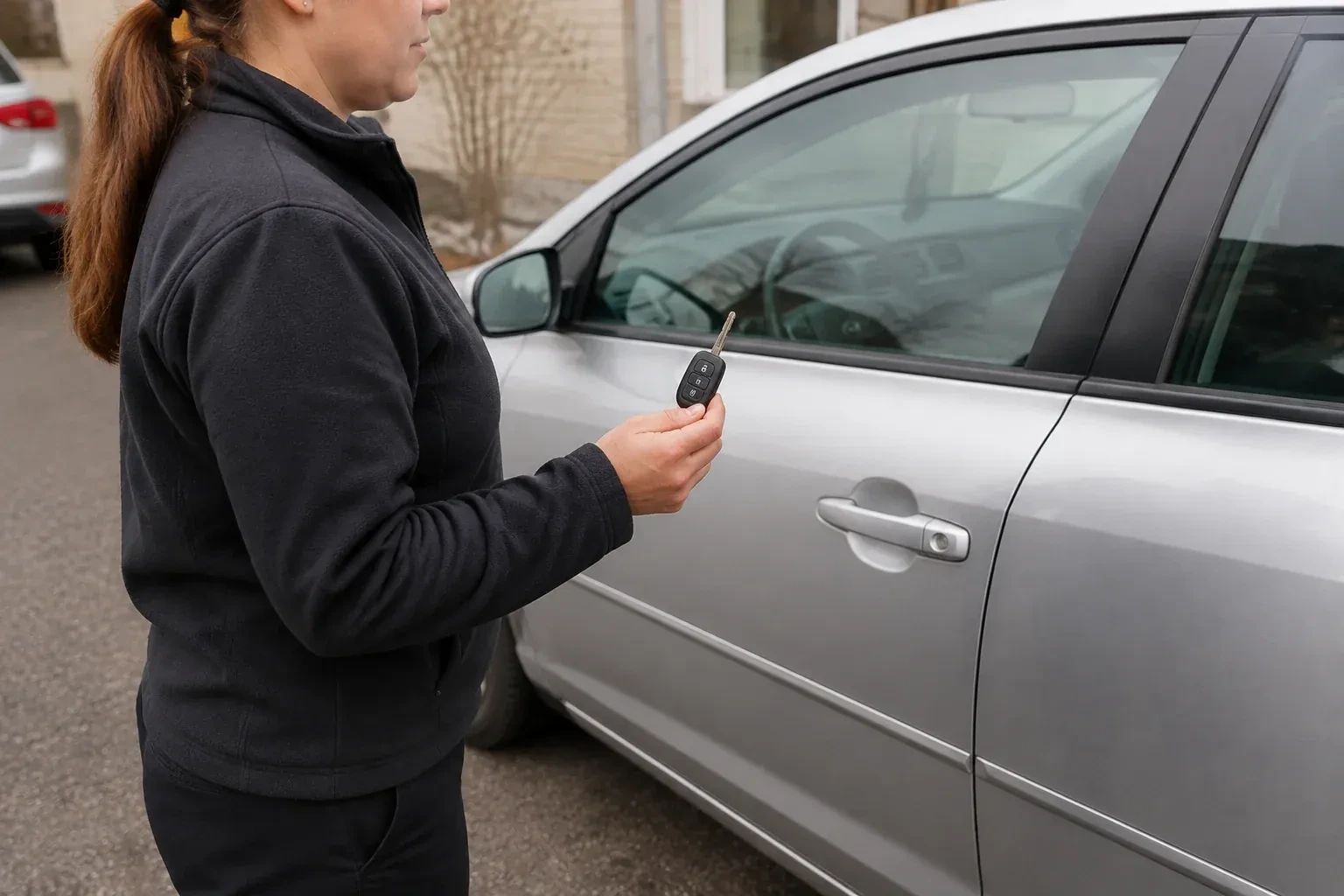
How the visit goesMinus twenty outside, the fob button does nothing, and the door keyhole has a crust of road salt over it because you have not used a metal key in that car since the day you bought it.
Car Key Replacement
How the visit goes
Do you still have one key that works?
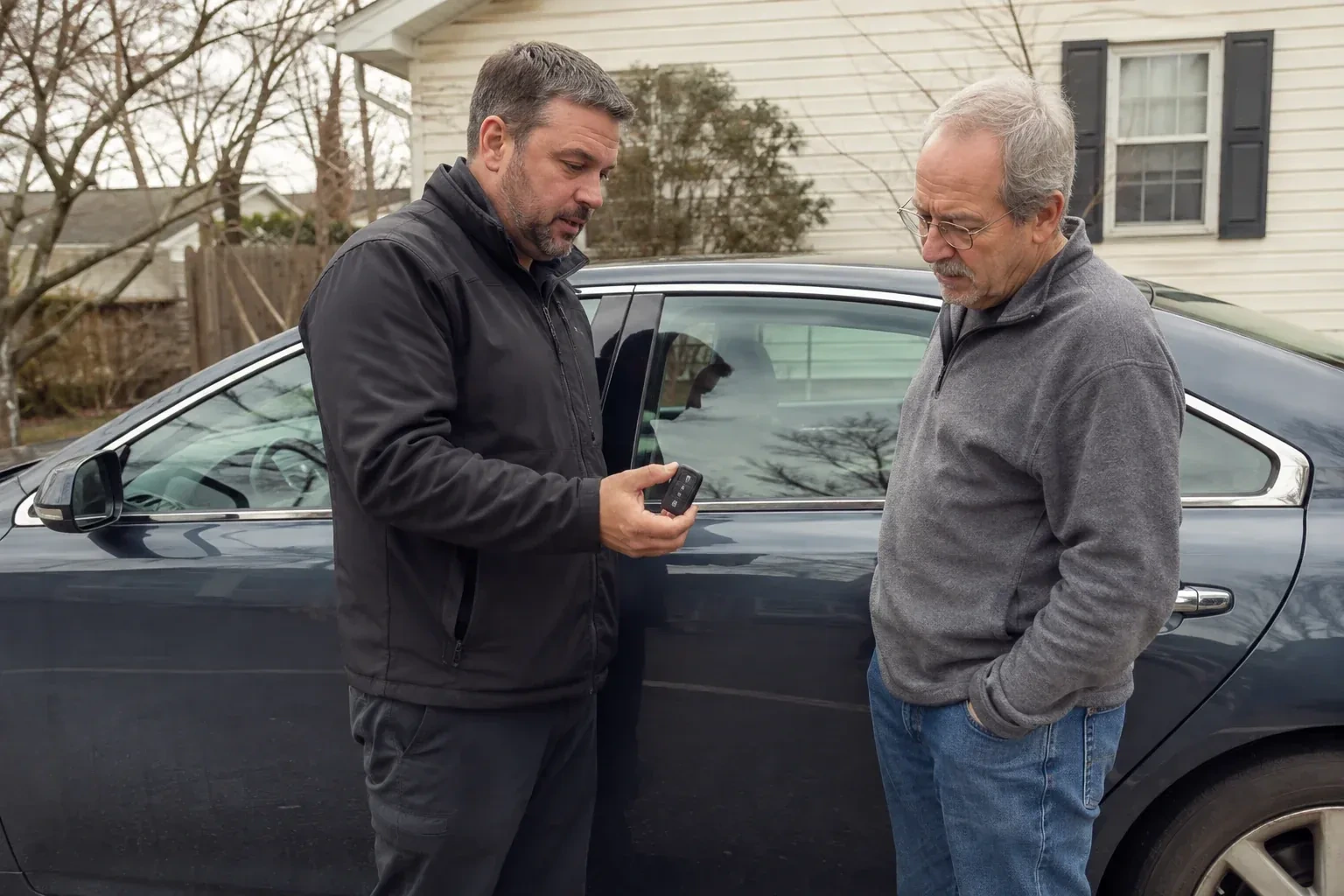
The most important fact after ownership is whether a single working key exists. With one in hand, the visit is an add-a-key: the existing key proves the immobilizer is healthy, the new blade can be checked against it, and programming is usually the shorter routine. With none, it is an all-keys-lost job: the blade has to come from the lock or the code, and the immobilizer has to be reset before new keys are stored. A key that opens the doors but no longer starts the engine counts as no working key for programming purposes, though its blade is still useful as a pattern.
Testing every function before the handover
The visit ends with a checklist rather than a handshake. The blade is tried in the driver's door, the passenger door and the trunk lock, and in the ignition where one exists. The engine is started, allowed to run, shut off and started again. Each button is pressed and watched: lock, unlock, trunk, panic, remote start. On a proximity car, the handles are approached with the fob in a pocket and the start button is tried the same way. The spare goes through the identical routine. Anything that stays silent is sorted out on the spot, and the tally of keys the car recognizes is written down for you.
A record of what your key actually is
A car key has an identity of its own: a blade profile, a transponder type, a remote frequency and a part number, and sometimes a key code printed on a tag. The locksmith notes these for you, along with the count of keys stored in the car, so the next spare can be prepared from the details rather than from scratch. Keep the note with your insurance papers rather than in the car. If the vehicle ever changes hands, the record also lets the new owner have the old keys erased and fresh ones made without guesswork about what the car uses.
Car Key Replacement
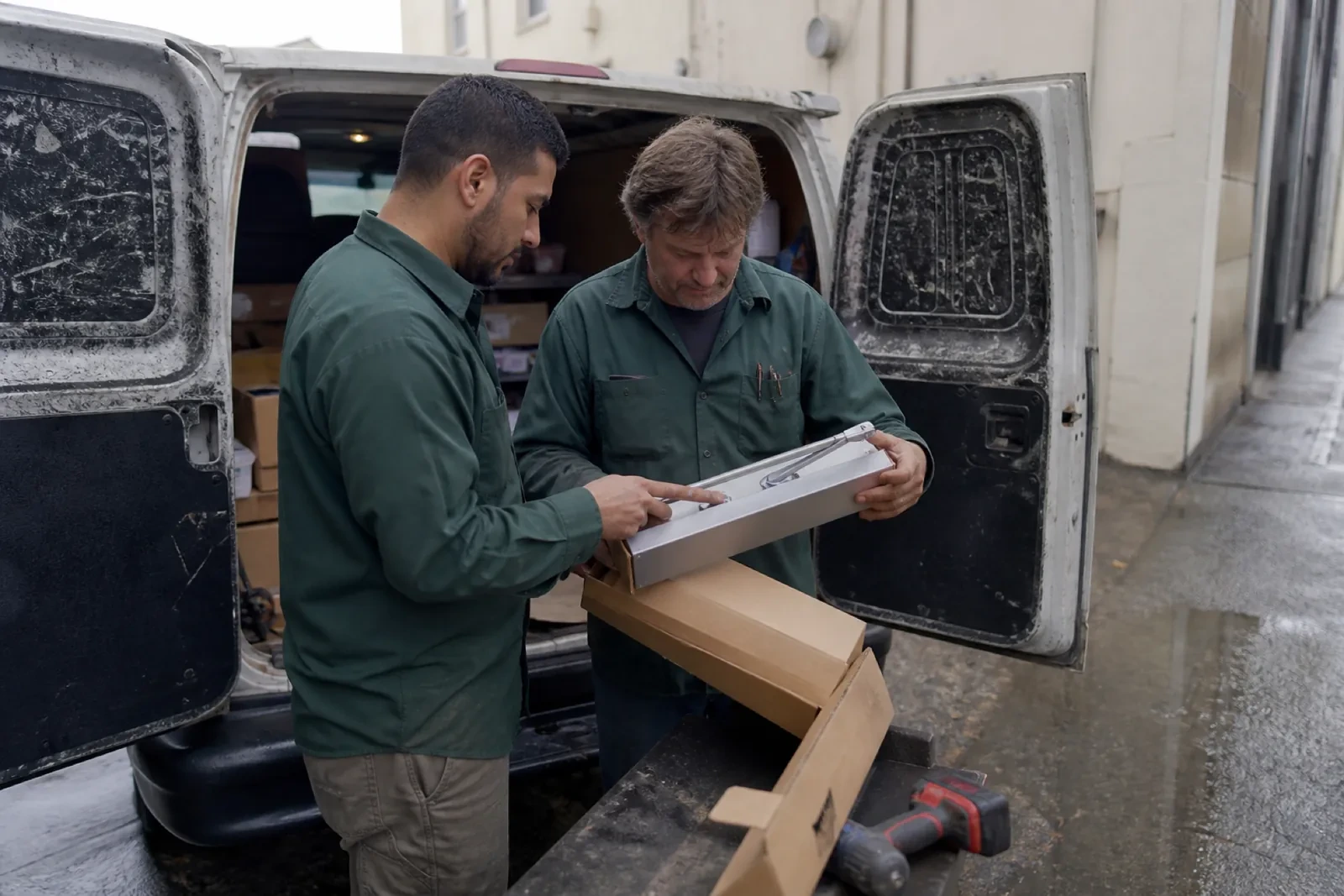
In the van
Remote frequency tester
Vehicle battery maintainer
Security PIN or secure-data access
Remote-head key shell
Code-cutting machine
Car Key Replacement
What affects the quote
Battery and access to the car
A flat vehicle battery needs a maintainer during programming, and a locked car with no key has to be opened before the diagnostic port can be reached. Both are small items that the quote names plainly.
Erasing the keys you no longer hold
Removing lost or stolen keys from the immobilizer during the session is a small extra step, and re-registering the keys you kept follows it. If you want the old keys silenced, say so and it is quoted.
Transponder, remote or proximity
A key with only a chip, a remote-head key with buttons and a full proximity fob are three tiers of hardware and three programming procedures. The quote names which one your car uses.
What to have ready
- Do you have any key that still starts the car, or are they all gone?
- What buttons did the old key have: lock, unlock, trunk, panic, remote start?
- Is the car registered in your name, leased, or owned by a company?
Car Key Replacement: questions
QuestionsAfter a break-in the doors and ignition are on different keys. Can that be fixed?
Yes. When a door lock is forced and replaced, or an ignition is swapped, the car can end up needing two blades. A locksmith can rekey the replacement cylinder to match the surviving one, so a single key operates every lock again, and cut new keys to that combination. The transponder side is unchanged by the lock work, so your existing programmed keys carry on starting the car once the blades match.
How long should I allow for the visit?
It depends on the starting point. Adding a spare to a car with a working key is often the shortest kind of visit. An all-keys-lost job on a newer vehicle takes longer, because the car has to be opened, the lock decoded, the immobilizer reset and any security timer waited out. Milling a high-security blade and pairing a proximity fob add their own steps. The locksmith gives you a realistic window once the VIN and the situation are known.
What is the small metal blade inside my smart key for?
It is the emergency key. When the fob's battery is flat, or the car's own battery has died and the doors ignore the buttons, the blade unlocks the driver's door mechanically. A small release on the fob lets it slide out. On a replacement fob the locksmith cuts this blade to your door lock and shows you where the keyhole is, since on some cars it hides under a cap on the handle.
Related services
- Spare Car Key DuplicationThe blade on the everyday key has gone shiny and thin along one edge, and lately it needs a wiggle before the ignition catches.
- Key Fob ProgrammingA replacement fob just arrived in its box, shiny and untouched.
- Transponder Key ProgrammingEvery key that ever opened the car is gone at once, one taken with a stolen bag, the spare misplaced months ago and never replaced.