High security · Royal Beach
Safe Installation & Servicing in Royal Beach
Behind the filing cabinets sits a heavy floor safe nobody ever bolted down, left exactly as the last owner set it.
In plain words
A safe carries two separate report cards, and neither one predicts the other. Some burglary ratings describe how long a determined attempt with tools takes to force the door, timed by an independent lab; others are construction classifications based on steel thickness rather than a timed attack. A fire rating describes how hot the interior gets in a timed furnace test, and it matters for paper and for cash, though burglary resistance is usually the bigger concern where cash is involved. Choosing between them, or finding a unit built to both standards, is the first real decision in an installation, and it depends on what will sit inside the safe.
How the visit goesThe till drawer has been holding two days of cash because the new shop never got a proper safe, and a locked drawer under the counter is the only thing standing between that cash and anyone who works late.
Safe Installation & Servicing
How the visit goes
The floor or wall it will sit against
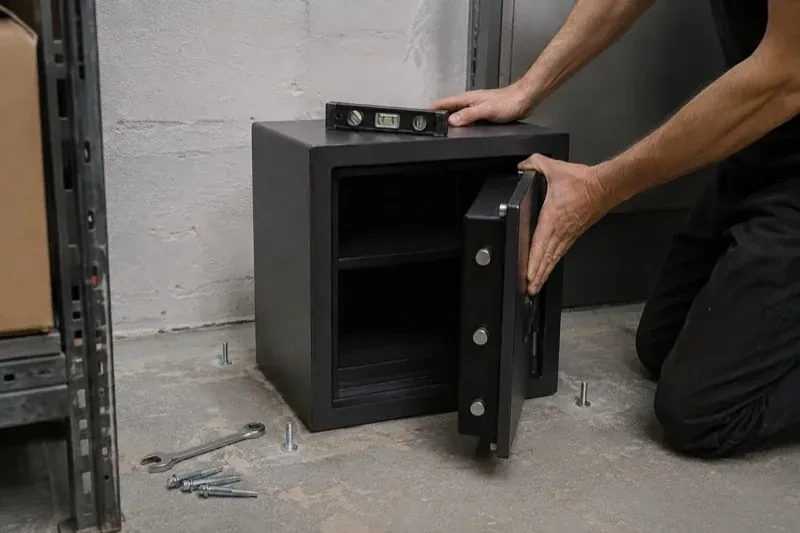
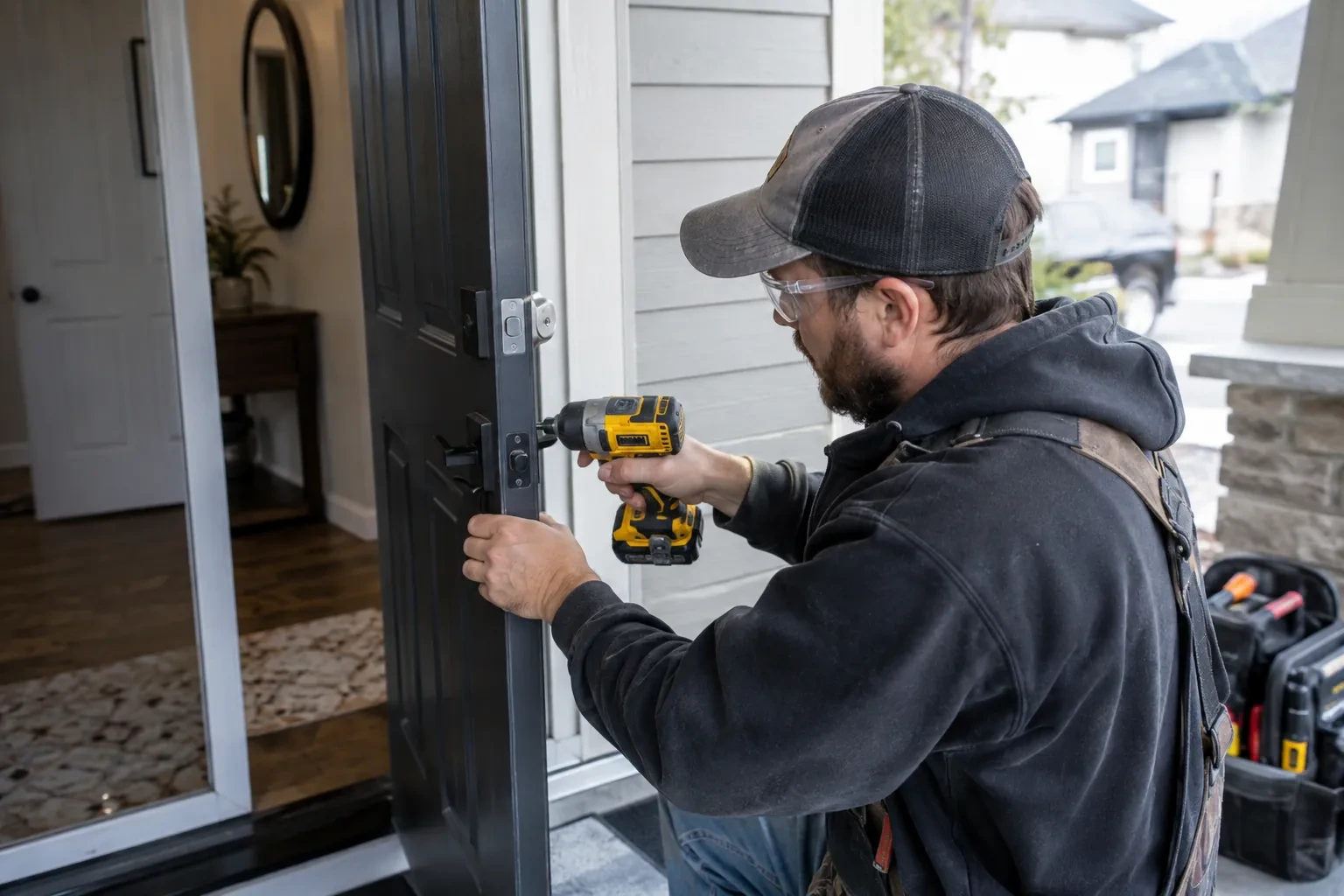
The surface behind the safe decides how it gets anchored, so it is checked before anything is ordered. Solid concrete accepts one style of anchor bolt; a wood subfloor over joists needs a different fastener reaching into structural framing rather than just the surface layer; a tiled floor cannot take a bolt at all without risking a crack around it. The locksmith also looks for slope, dampness, or a cold exterior wall that could sweat in humid weather, since all three affect where the safe should actually stand, not just how it gets bolted down.
Matching the safe to the two ratings
The visit begins by separating two decisions that people often blur together. Some burglary ratings come from an independent lab timing how long a trained attempt with real tools takes to force the door, expressed in minutes of net working time; others are construction classifications based on steel thickness and body design rather than a timed attack. A fire rating comes from a timed furnace test that measures how hot the interior gets, expressed as a temperature ceiling held for a set number of hours. A unit is chosen, or confirmed if it is already owned, against both numbers separately rather than a single vague idea of how secure a safe looks.
Bolt-work that keeps moving smoothly
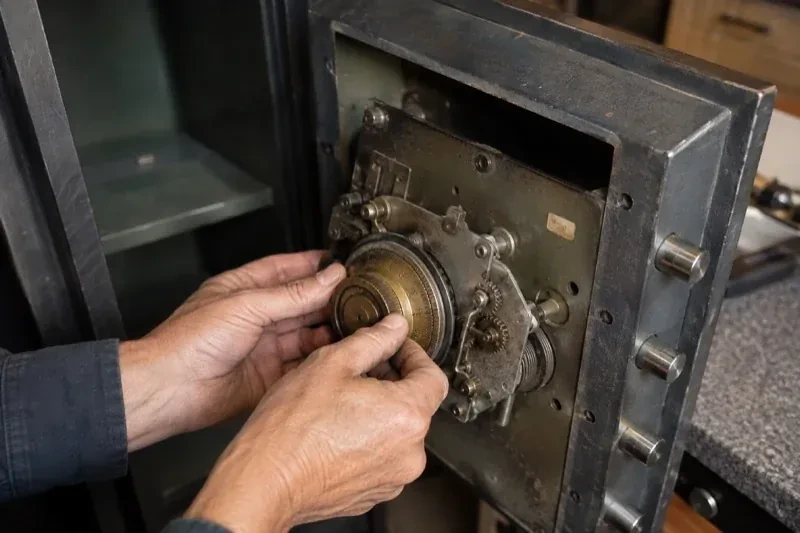
The internal mechanism that throws and retracts the bolts benefits from the same kind of attention a door lock gets, on a longer cycle. A dry or purpose-made bolt-work lubricant, applied every year or two depending on how often the safe is opened, keeps the mechanism from stiffening with old grease or picking up rust in a damp room. Household oil is generally the wrong choice here, since it tends to attract dust and grit rather than shed it the way a purpose-made lubricant does.
Safe Installation & Servicing
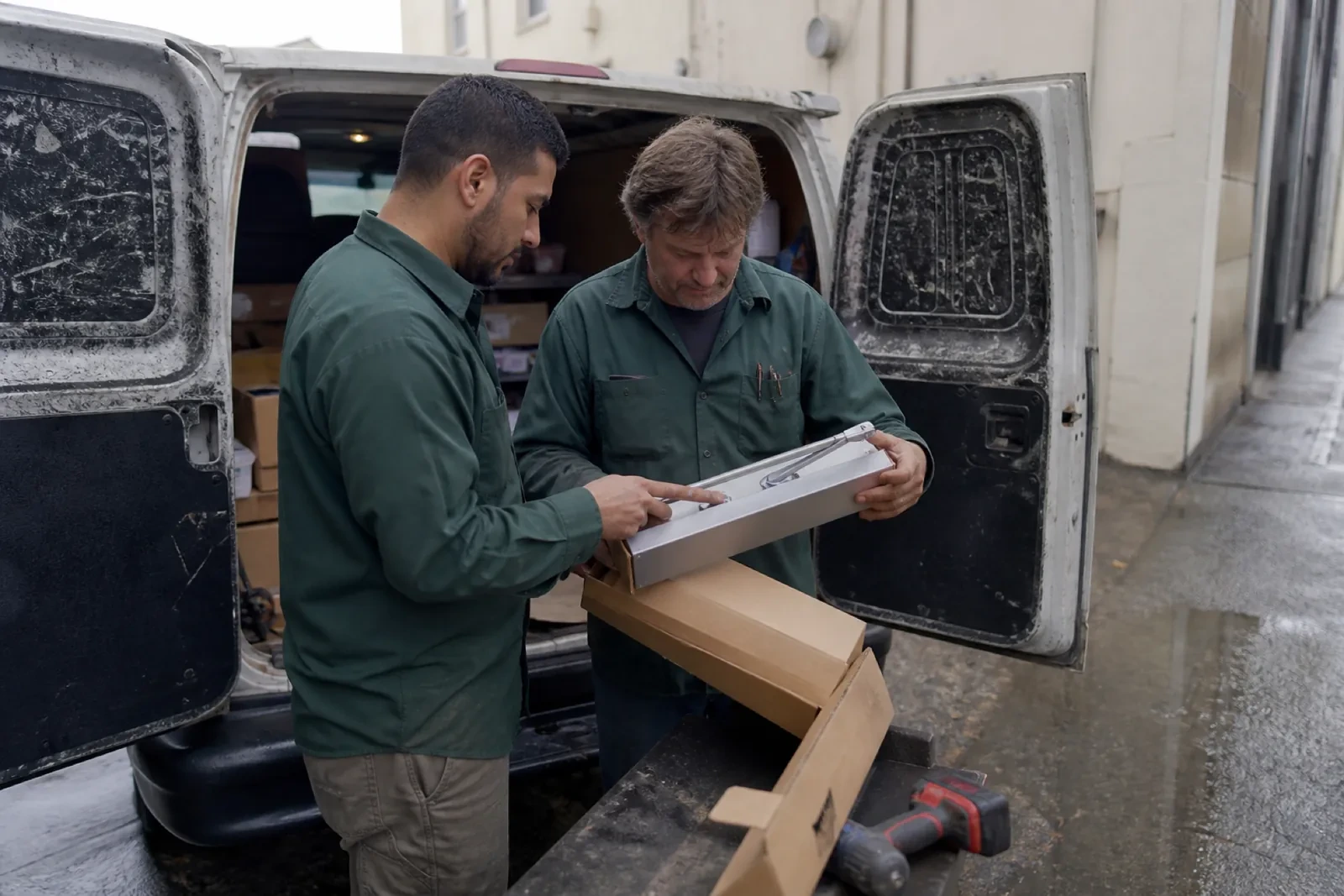
In the van
Bolt-work lubricant
Moving dolly and floor protection
Nine-volt backup battery
Rated safe (burglary and fire)
Level and floor shims
Safe Installation & Servicing
What affects the quote
Documentation requested
Some customers want photographs of the anchoring, a written note of the model and ratings, or both, usually to satisfy an insurer, and preparing that paperwork adds a little time to the visit.
Building access restrictions
A property requiring a booked loading dock, a service elevator reservation, or coordination with building management before a heavy delivery can arrive adds scheduling steps beyond the installation work itself.
New installation versus servicing an existing unit
Fitting a brand-new safe involves positioning, anchoring, and lock setup from scratch, while servicing an existing one focuses on bolt-work, lock testing, and confirming or adding anchoring, generally a shorter list of tasks.
What to have ready
- Roughly how much does the safe weigh, if known?
- Is that floor concrete, wood subfloor, or tile?
- Does an insurer or head office require a specific rating?
Safe Installation & Servicing: questions
QuestionsHow do I prepare the room before a servicing visit?
Clearing a working space in front of the safe, moving anything stacked against or on top of it, and having a rough idea of when it was last serviced all help the visit start smoothly. If the combination or code is still known, having it on hand avoids needing to open the unit by other means first. Nothing more elaborate than that is generally needed beforehand.
Can more than one person have their own code?
Yes, on an electronic keypad that supports multiple users, each person can be given a separate code rather than everyone sharing one, which also makes it simple to remove a single code later without resetting the whole lock. A mechanical dial lock, by contrast, has one combination for everyone who needs it, so a change in who has access there means changing that one combination.
What does a typical installation or servicing visit involve?
The visit opens with a look at what the safe needs to protect and where it will sit, moves into positioning and anchoring for a new unit or bolt-work and lock testing for an existing one, and ends with the lock cycled several times and a combination or code set that only the owner knows. The exact order shifts depending on whether the job is a new installation or ongoing servicing.