Lockouts · Sunkist Beach
Seized & Jammed Lock Opening in Sunkist Beach
The shop's lever handle goes down as usual, but the latch inside the mortise case never pulls back.
In plain words
Many jammed locks are not lock problems at all. Wood doors swell in humid weather and shrink in dry winter air, hinges loosen and let the door drop, and a strike plate that was fine in spring is a few millimetres out by autumn. When that happens the bolt is squeezed in its pocket and the key cannot move it. The locksmith checks this first by loading the door in different directions while working the key, and by comparing how the lock behaves with the door open. If the door is the cause, the opening is gentle and the lasting fix is a hinge, strike or seal adjustment.
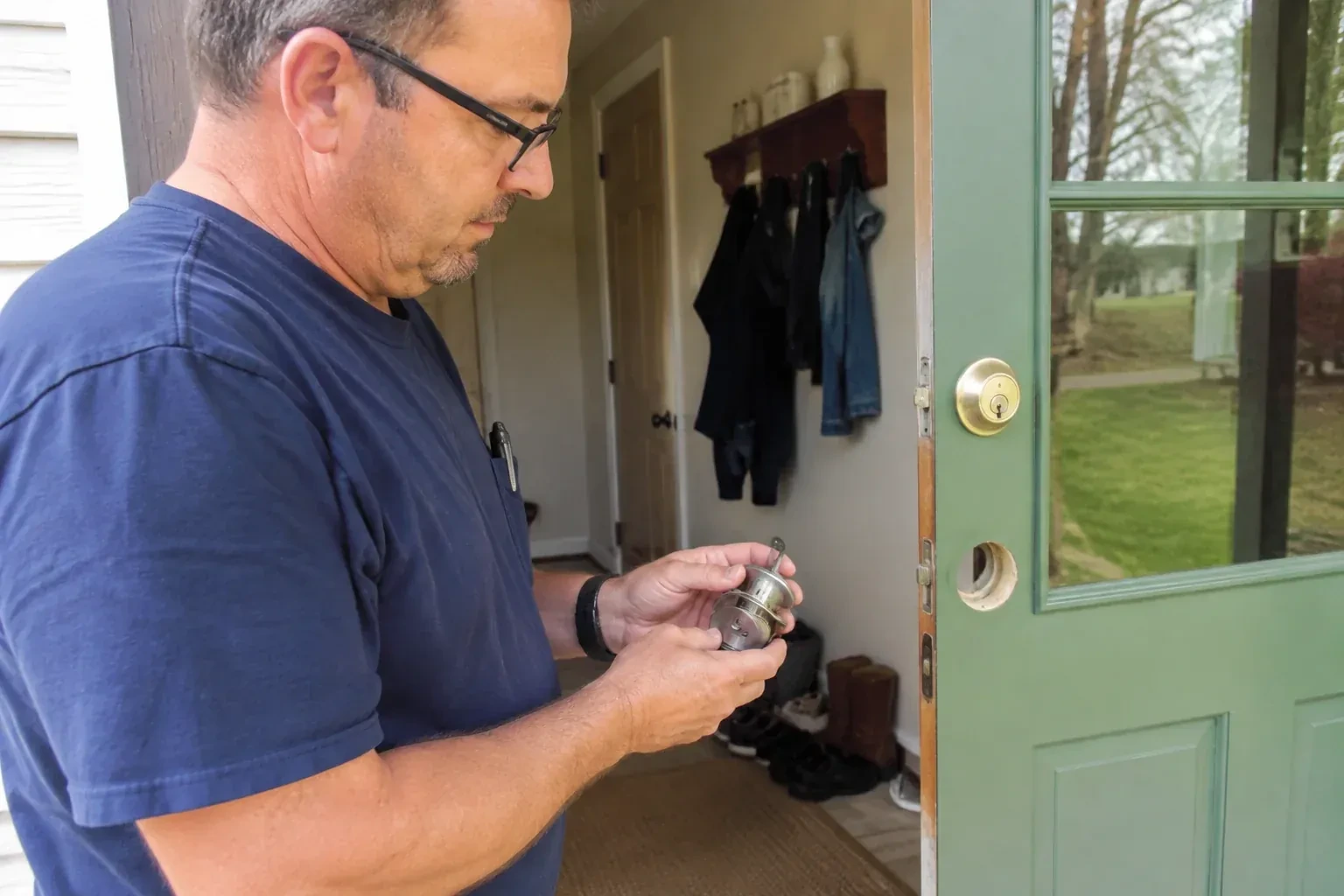
How the visit goesIt is the coldest morning of the winter and the key goes halfway into the side door and stops. There is frost on the face of the cylinder, and the door on the shaded side of the house has done this before.
Seized & Jammed Lock Opening
How the visit goes
Loading the door while the key is worked
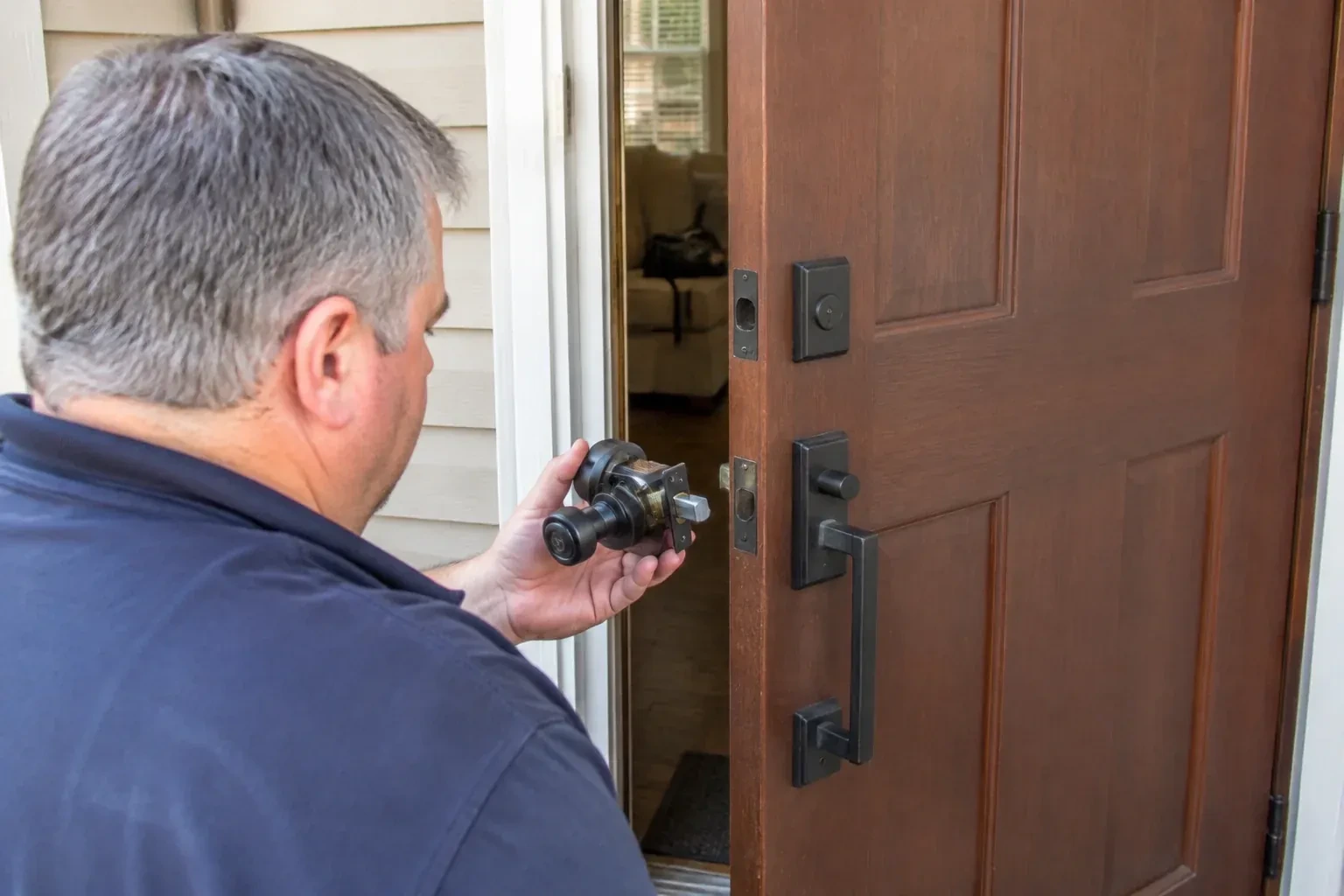
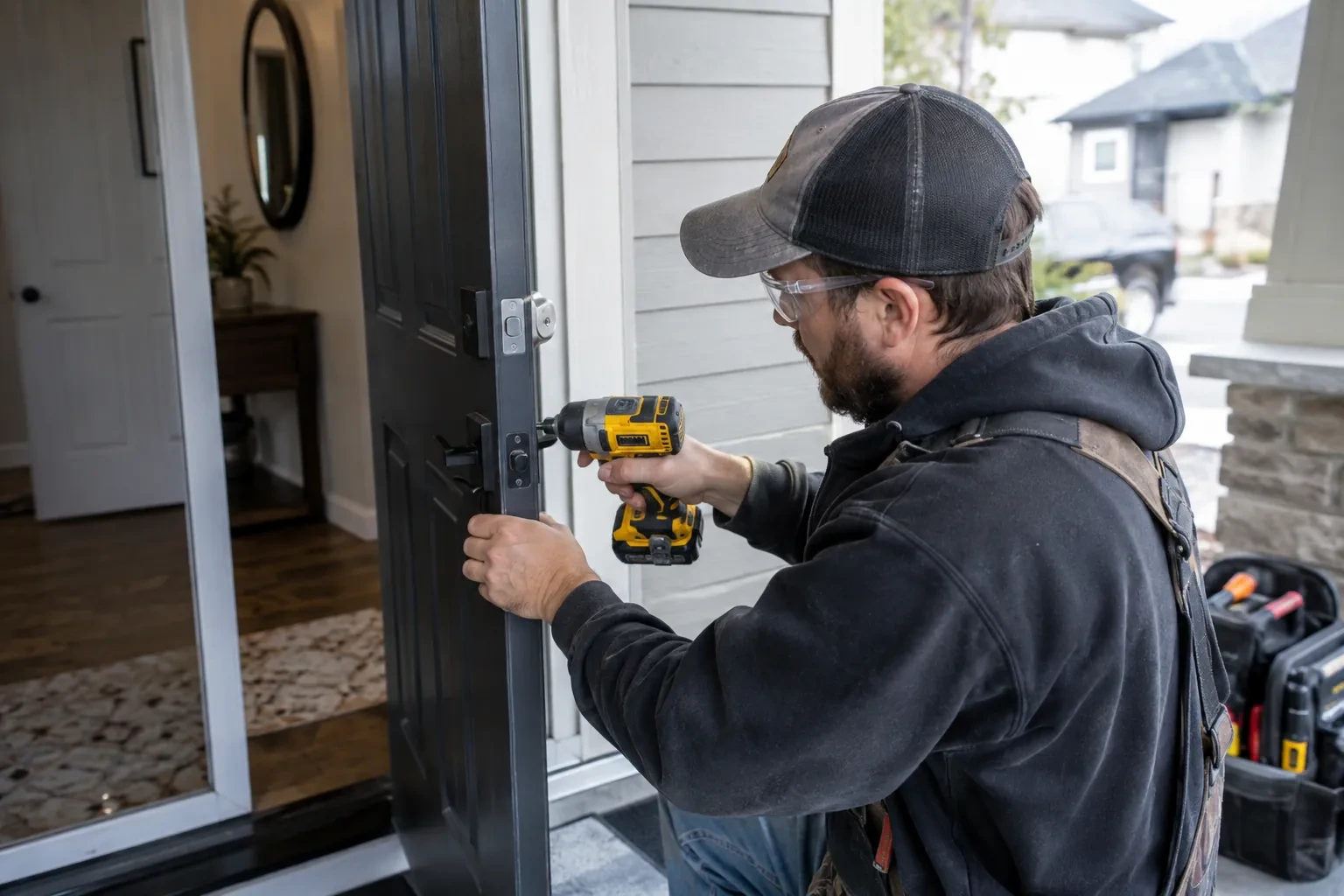
With the lock family narrowed, the locksmith puts a hand on the door. Pushing it into the frame, pulling it out, and lifting on the handle each change how a bound bolt sits in its pocket, and the key is tried gently in each position. If the key frees up under one of those loads, the door is the cause. Where a second entrance is open, the same lock family is compared with the door swung wide, since a bolt that throws smoothly in mid-air and binds when closed has been pinched by the frame. Nothing is forced during this test; it is a diagnosis, not an attempt.
Opening when the tailpiece has failed
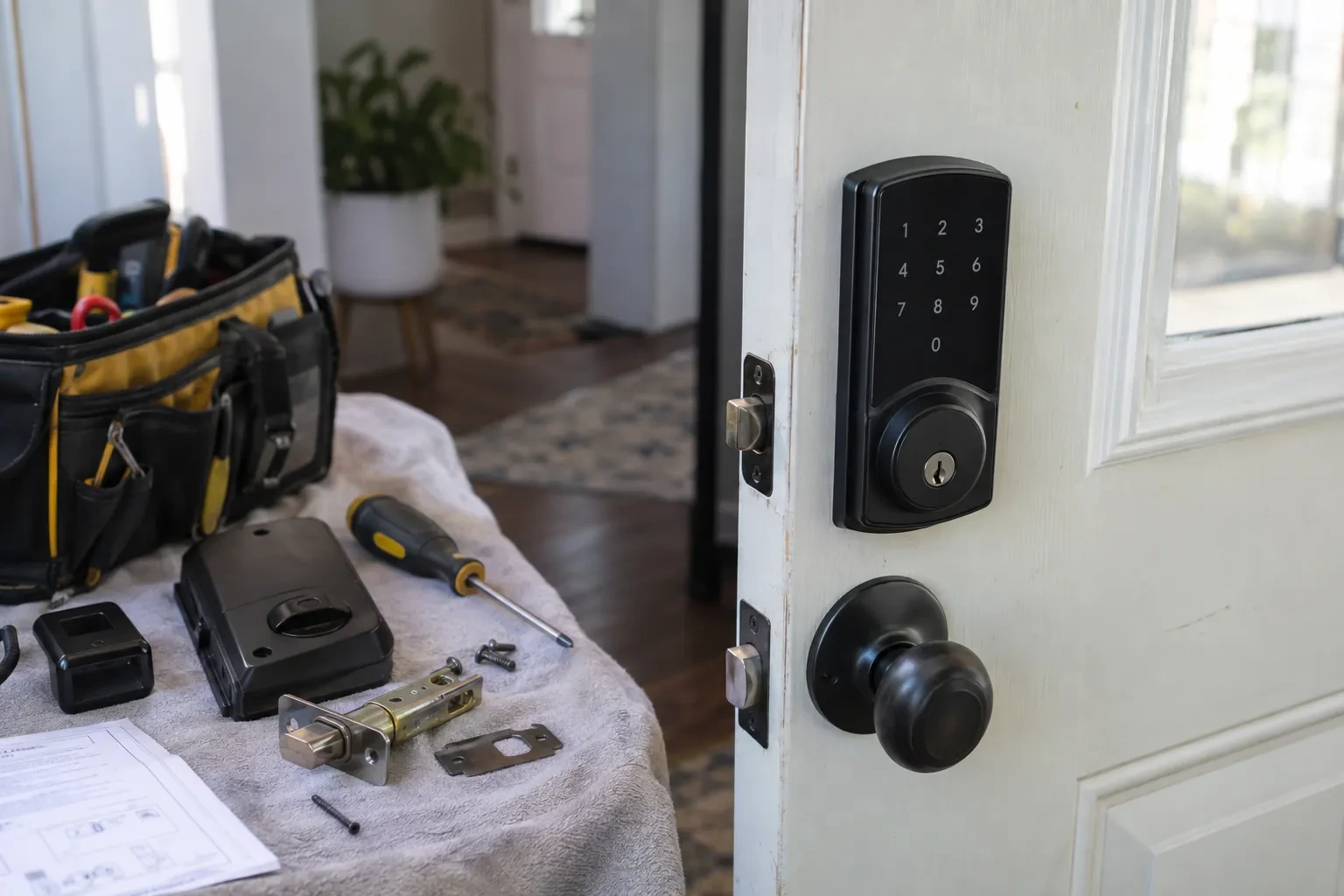
A key that spins freely means the cylinder is fine and the bar behind it, the tailpiece or cam, has broken, slipped or twisted out of engagement. The bolt is then retracted directly through the mechanism rather than through the cylinder, or the cylinder is withdrawn so the locksmith can reach the bolt drive. Once the door is open the old tailpiece is removed and a replacement of the correct length and profile is fitted, since one that is too short repeats the fault and one that is too long binds. The cylinder goes back, the retaining screws are checked, and the bolt is thrown and retracted with the key until it moves cleanly through its full travel.
A lock that turns with two fingers
You leave with a lock that operates the way it did when it was new: the key seats fully, the plug turns without a wiggle, the bolt throws and retracts through its whole travel, and the door closes and locks without a shoulder. The locksmith has cycled it from both sides and with every key, and has shown you where the trouble was, whether that was a gritty keyway, a broken tailpiece or a strike plate a few millimetres out. If you had a habit of lifting the door or pulling it toward you to lock it, that habit is now retired.
Seized & Jammed Lock Opening
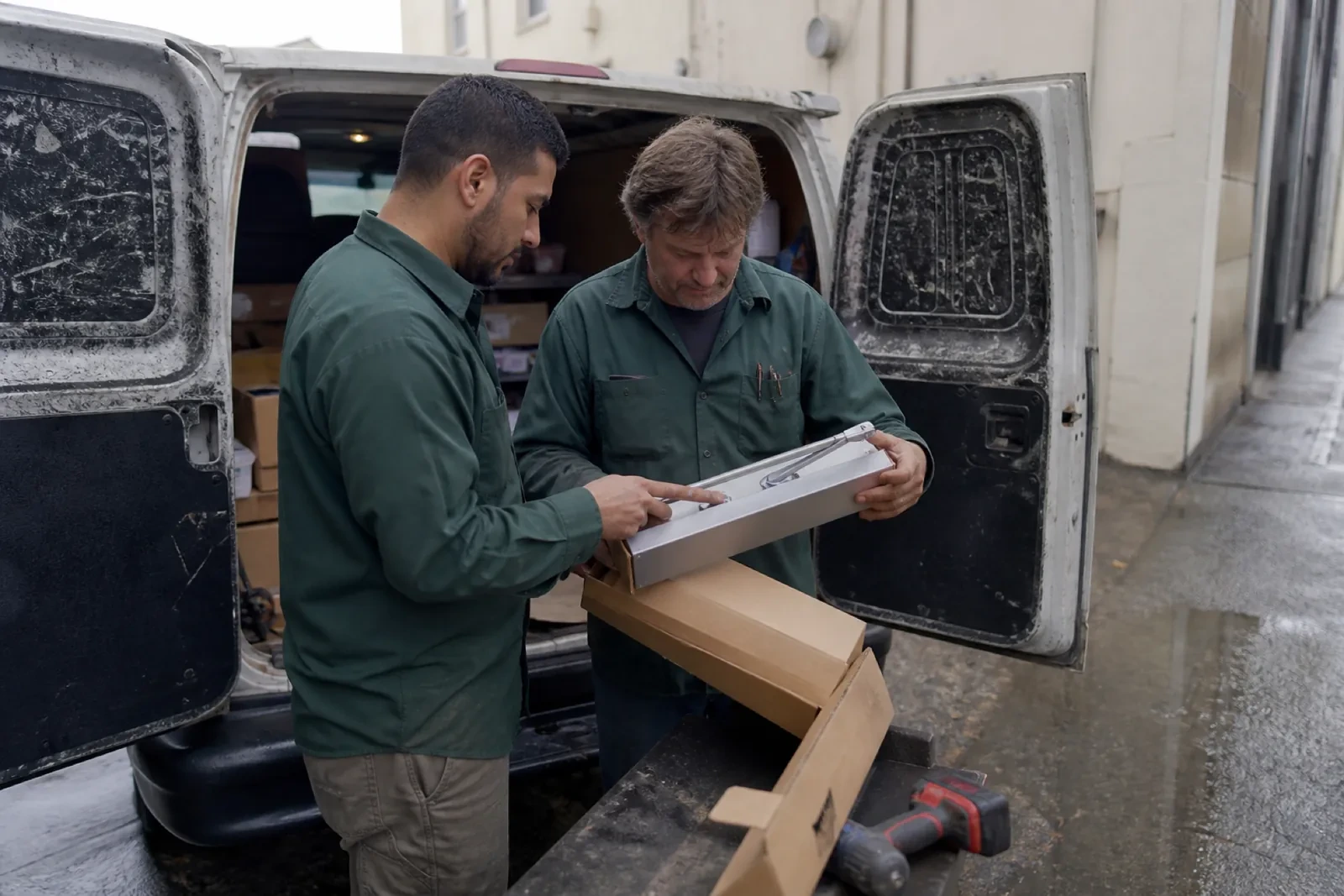
In the van
Lock de-icer
Replacement cylinder
Plug follower and repinning kit
Long hinge screws
Strike plate and hinge shims
Seized & Jammed Lock Opening
What affects the quote
The drive to you
Driving time is part of every call, and a property at the end of a long rural road is a different trip from one a few streets over.
Matching finish and keyway
A replacement that has to match an unusual finish or a restricted keyway takes a specific part rather than a stock one, and the quote reflects the part.
Door and hinge adjustment
When the door caused the jam, hinge screws, shims, a strike move or a deepened bolt pocket are quoted as their own line beside the opening.
What to have ready
- Has there been a thaw and freeze, or a stretch of humid weather, this week?
- Do you have a spare or original key you could try?
- Which side of the building does the door face, and is it near a salted driveway?
Seized & Jammed Lock Opening: questions
QuestionsWhy is it always the shaded side of the building that seizes?
The face of a building that never sees direct sun stays colder and damper, so ice in a keyway lasts days longer there and condensation sits in the cylinder rather than drying off. Wind-driven rain and snow tend to hit the same face. Those doors deserve a keyhole cover, a storm door where one fits, and a lubricant check before the season turns, and they are often the first lock a locksmith asks about.
Can a seized lock be opened without damaging it?
In most cases, yes. A bolt held by the door is freed by relieving the pressure on the door. A cylinder clogged with grit or ice is cleaned and thawed until it turns. A failed tailpiece is bypassed and replaced. The lock stays on the door with its finish and your existing keys. A plug or shell that is worn, damaged, or eaten through by corrosion or earlier forcing is what has to be replaced, and that is explained before any work starts.
How long does a jammed lock opening take?
It depends on which family the jam belongs to. A bolt bound by the door is often freed in minutes and the adjustment afterwards takes a little longer. A seized cylinder needs patient cleaning before it turns and a bench service after, and a frozen one needs thawing time. A tailpiece swap is short once the door is open; a mortise case service is longer. The locksmith gives a sense of the time once the cause is identified at the door.
Related services
- Business Lockout ServiceIt is ten to nine, three staff are on the sidewalk with their coffees, and the key that has opened the glass front door for six years will not turn.
- Broken Key ExtractionThat key had been bending a little for years, and you kept straightening it.
- Break-In Damage Lock RepairThe shop's aluminum door has a bent meeting stile and the hookbolt is jammed half out.