Lockouts · Sunkist Beach
Break-In Damage Lock Repair in Sunkist Beach
The shop's aluminum door has a bent meeting stile and the hookbolt is jammed half out.
In plain words
A break-in repair happens alongside a police file and an insurance claim, and a good locksmith keeps both in mind. Before any hardware is moved the damage is photographed as found: door face, edge, strike, jamb, hinges and glass. The old parts are kept for the adjuster unless you prefer otherwise, and the written record at the end lists what was broken, what was replaced, what was reinforced and what is left for another trade. Insurers ask policyholders to document losses, keep damaged property and keep receipts, and this visit produces all three. You choose who does the repair; the locksmith makes it easy to show what it took.
How the visit goesThe shop's aluminum door has a bent meeting stile and the hookbolt is jammed half out. The alarm did its job and the display is untouched, but the entrance will not close properly and opening time is hours away.
Break-In Damage Lock Repair
How the visit goes
Lock, frame or door: which one failed
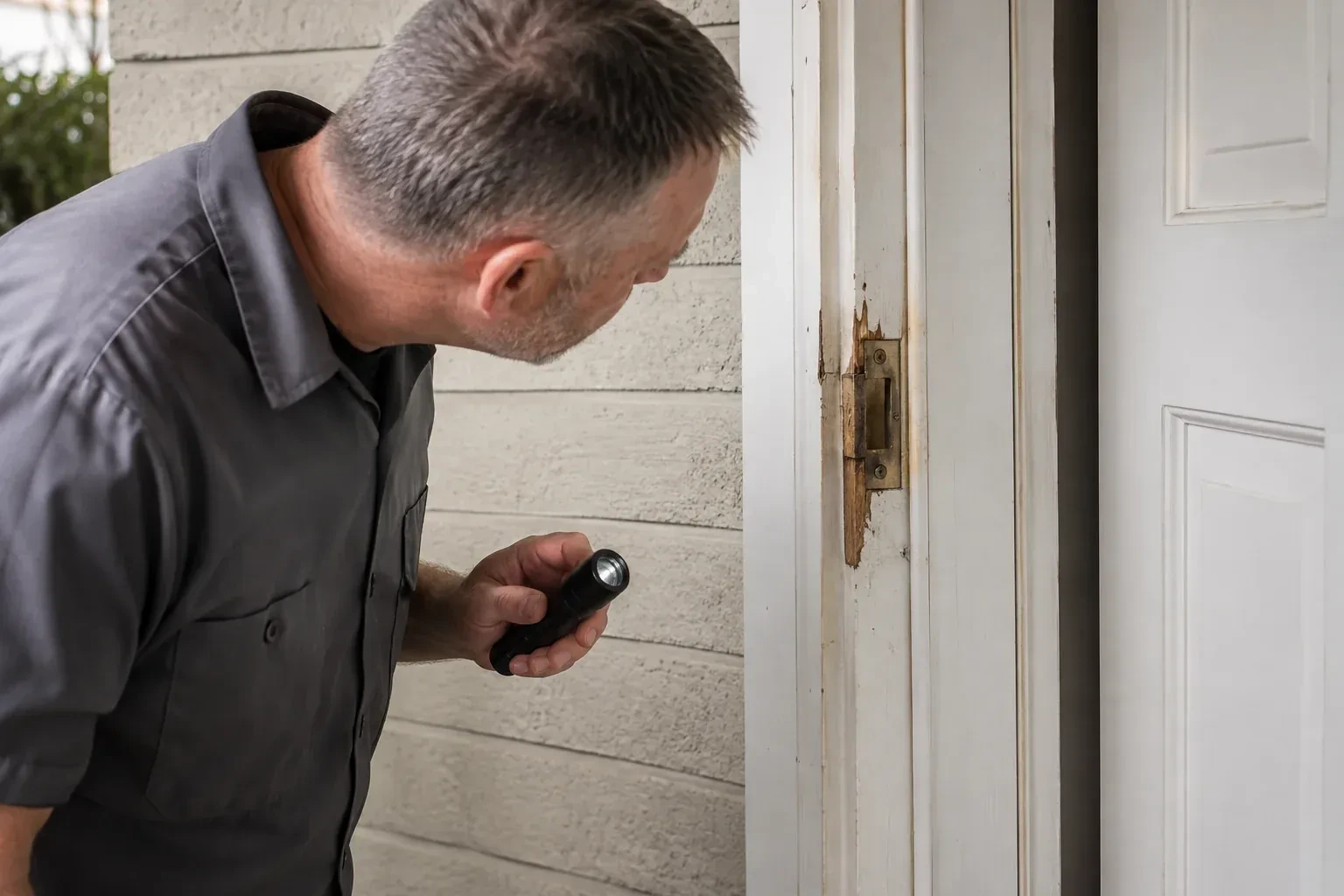
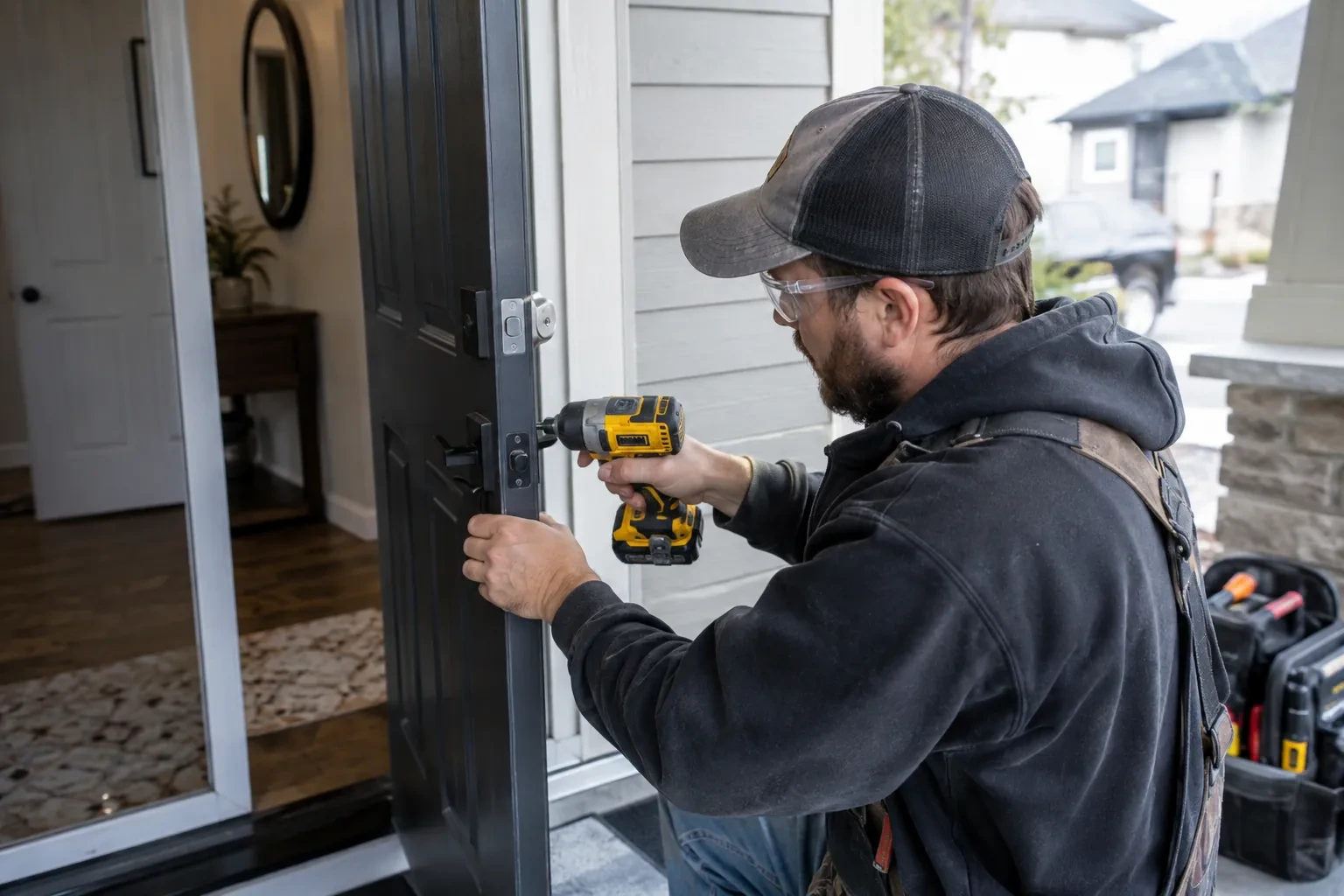
Three components can fail in a forced entry and they are repaired differently, so the locksmith sorts them out before quoting. Lock failure is a broken cylinder, bolt or latch and is answered with hardware. Frame failure is a torn strike or split jamb and is answered with a boxed strike, repair plates, long screws and sometimes new wood. Door failure is a crushed edge, a split around the bore or a bent hinge leaf and is answered with edge reinforcement or, when the slab itself is broken, a door installer. Naming which of the three happened, and often all three, shows you what the locksmith completes tonight and what is handed to another trade.
Rekeying what a taken key fits
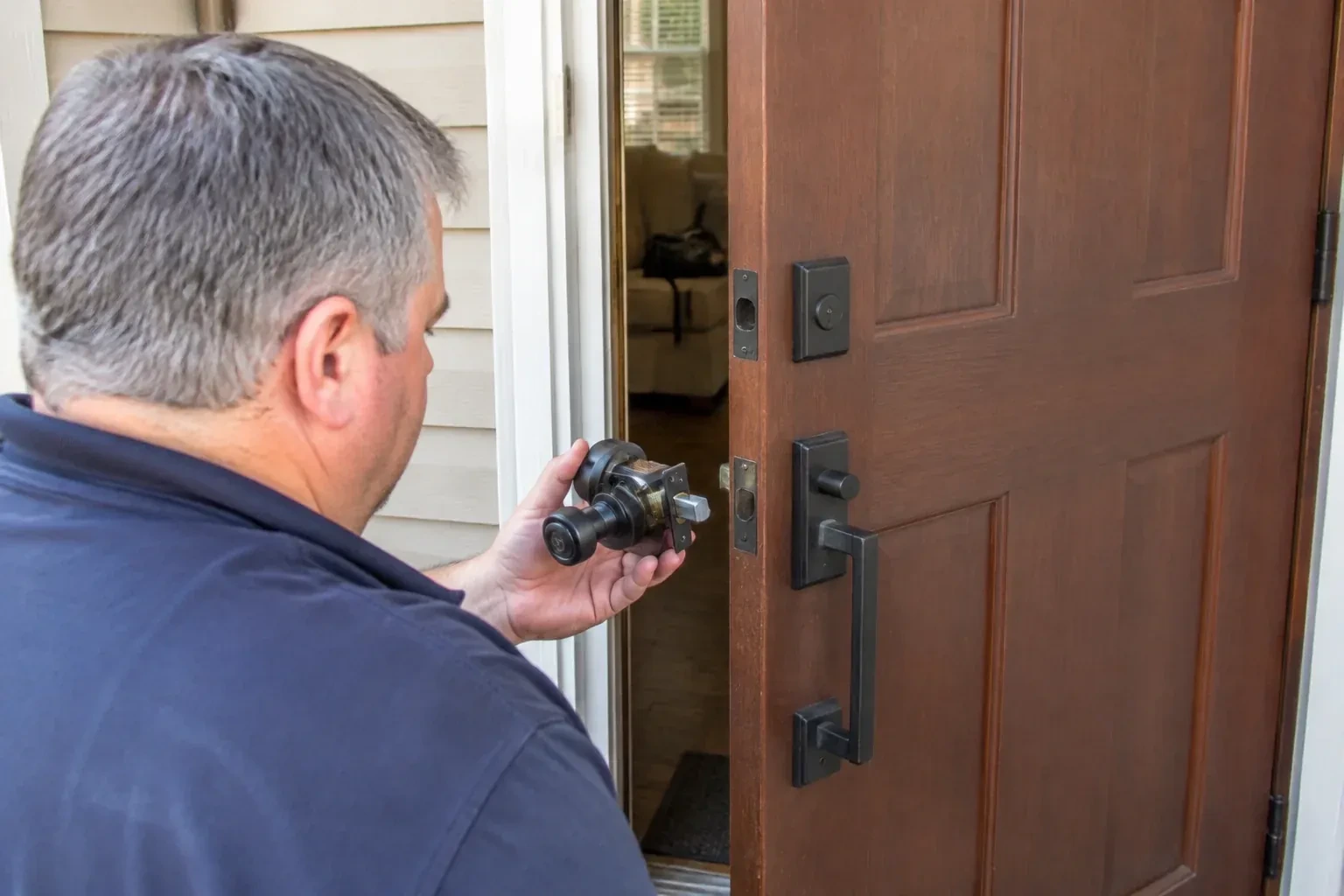
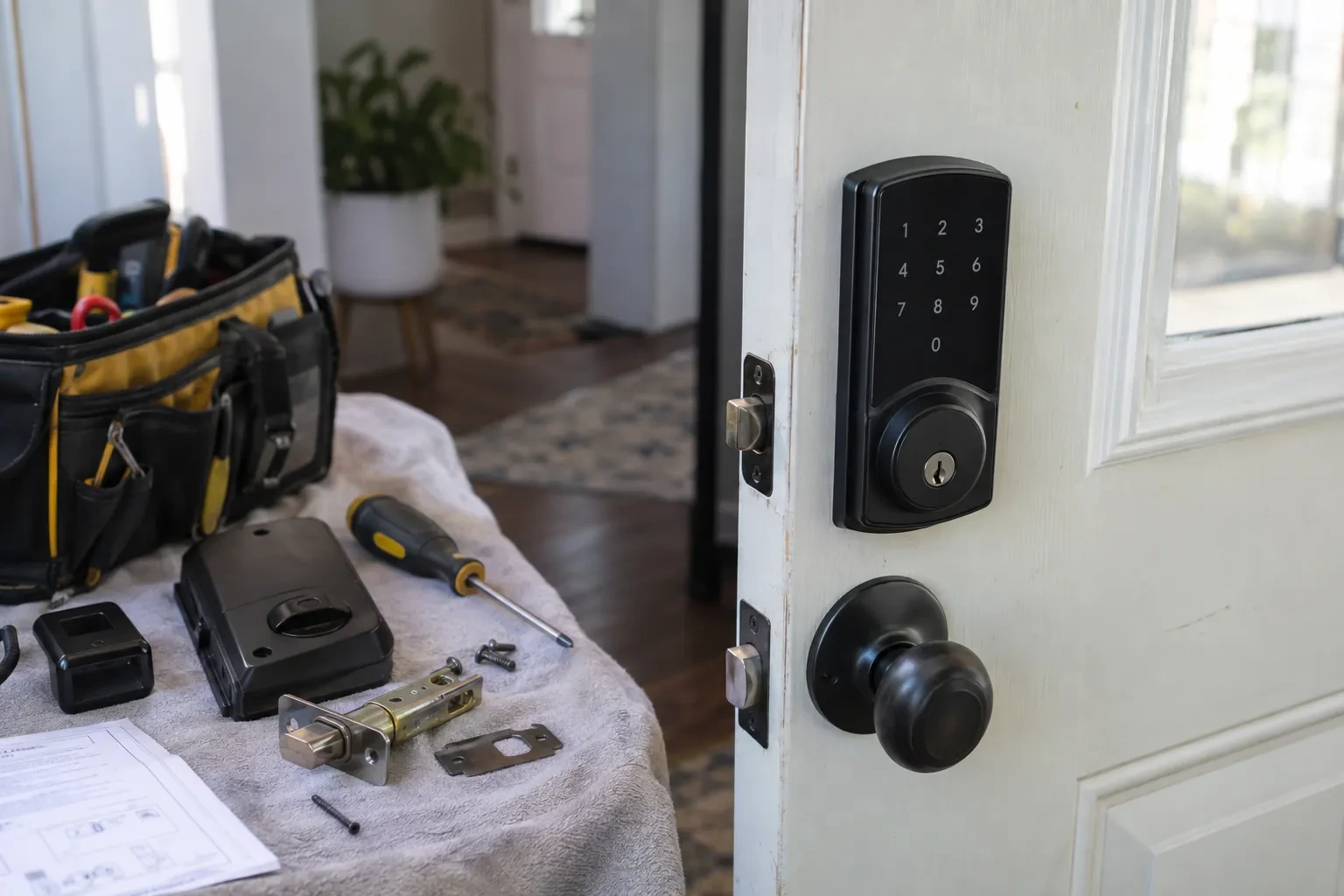
Every cylinder that a missing key could open is rekeyed or replaced before the locksmith leaves. On a serviceable pin-tumbler cylinder, the plug is slid free with a follower so the springs stay put, the bottom pins are exchanged for a new combination and a fresh key is cut; a cylinder that cannot be rekeyed this way is replaced instead. Front, back, side and garage doors are brought onto one new key where their keyways and systems allow it, and the mailbox and padlocks are handled too. Remotes for a garage opener that left in a stolen car are erased from the opener and a new one programmed. The old key still fits the keyway; it simply turns nothing anymore.
Watching the repair settle
Wood that has been split and glued back, and screws that have been driven into fresh pilot holes, settle over their first few weeks. Check after a month that the bolt still throws without effort and that the strike and hinge screws are snug, then repeat at each change of season, since humidity swells doors in summer and shrinks them in dry winter air. A door that starts to need a shoulder, or a bolt that begins to catch on the strike lip, is asking for a small adjustment before it becomes a problem. Whatever lubricant and interval that new cylinder's own maker specifies keeps the key turning cleanly.
Break-In Damage Lock Repair
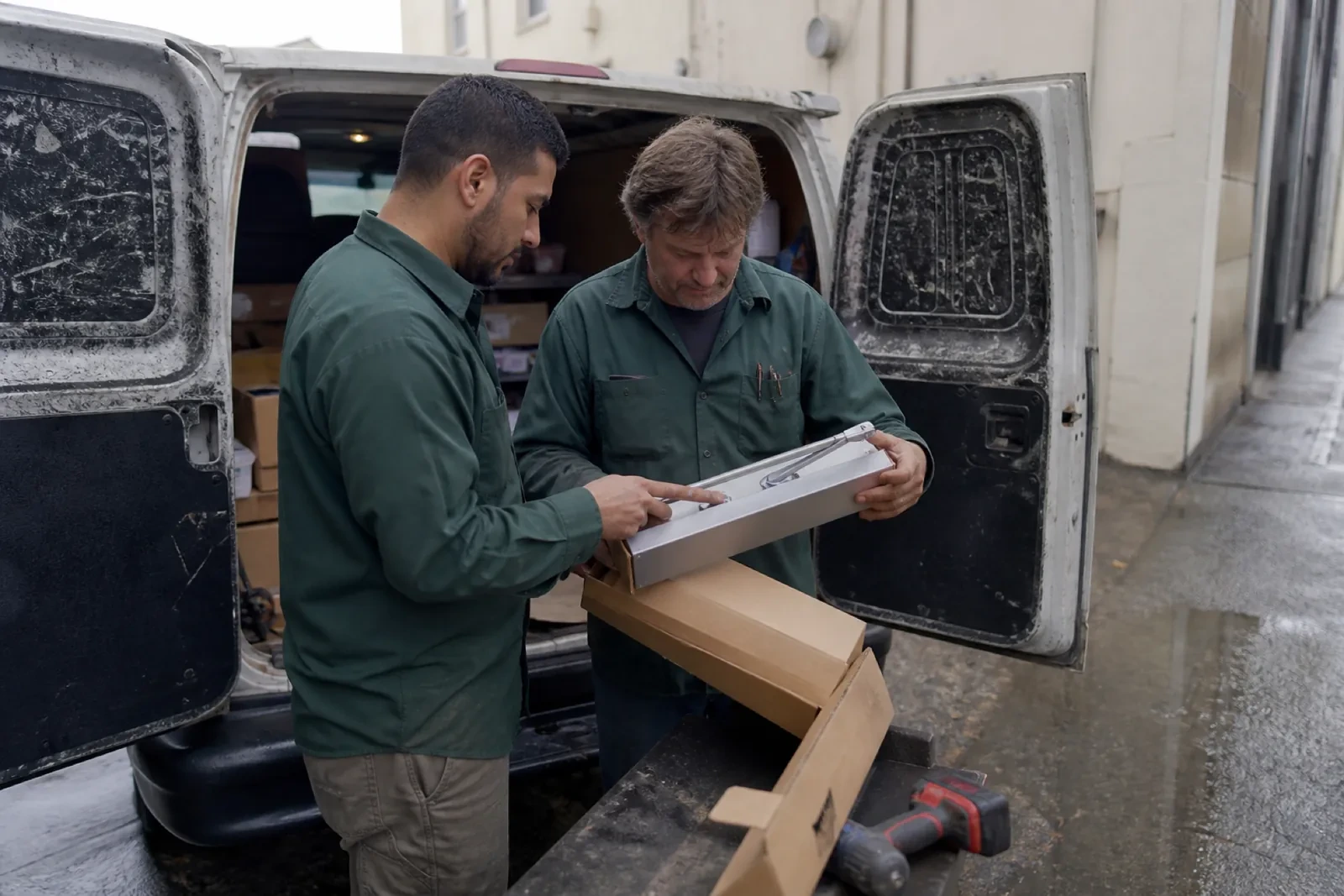
In the van
Three-inch strike and hinge screws
Hinge reinforcement plate
Grade 1 deadbolt with one-inch throw
Plywood and cleats for boarding
Jamb repair plate
Break-In Damage Lock Repair
What affects the quote
Distance to the property
Travel is part of every emergency call, and a property well outside the usual service area involves more driving time, which appears in the quote.
Lock failure or frame failure
Replacing a lock is hardware and fitting time. Rebuilding a strike side with a boxed strike, epoxy and long screws into the stud is carpentry as well, and is quoted as its own line.
Keys cut
New keys are cut from the fresh pinning and counted separately: enough for each adult, the dog walker and a trusted neighbour, however many you decide you need.
What to have ready
- Have you photographed the damage as you found it?
- Is there glass beside the door or in it?
- What kind of lock was on the door: knob, lever, deadbolt, mortise or keypad?
Break-In Damage Lock Repair: questions
QuestionsShould I call the police before the locksmith?
Yes. Call the emergency number if there is any chance the intruder is still there, and the non-emergency line of your local police service otherwise. A break and enter is reported by phone rather than through the online forms used for minor property damage. Ask for the occurrence number, since your insurer will want it. Once the police have released the scene, or told you they are not attending, the locksmith can begin.
The intruder pried open our sliding patio door. Can it be made secure?
Yes. The panel goes back on its track and the broken latch is replaced, then the weaknesses a slider is born with are addressed: anti-lift blocks in the upper channel so the panel cannot be raised off its rollers, a foot bolt or pin lock through the frame at the bottom, and an auxiliary keyed lock if the latch alone is flimsy. A bowed frame may need a door installer, with the opening secured until they come.
How do I check that the repair is holding over the following months?
Once a month for the first season, throw the deadbolt with the door closed and feel for drag or a stop short of full extension, and press on the strike and hinge screws with a screwdriver to confirm they are snug. Repeat at each change of season, since wood moves with humidity. A door that starts needing a shoulder, or a bolt that catches on the strike lip, wants a small adjustment early rather than a repeat of the original problem.
Related services
- Business Lockout ServiceIt is ten to nine, three staff are on the sidewalk with their coffees, and the key that has opened the glass front door for six years will not turn.
- Broken Key ExtractionThat key had been bending a little for years, and you kept straightening it.
- Seized & Jammed Lock OpeningThe shop's lever handle goes down as usual, but the latch inside the mortise case never pulls back.