Change or rekey · Sunderland
Vintage Mortise Lock Service in Sunderland
The old skeleton key still fits the keyhole, but it now needs a jiggle, a lean on the door and a little luck before the bolt moves.
In plain words
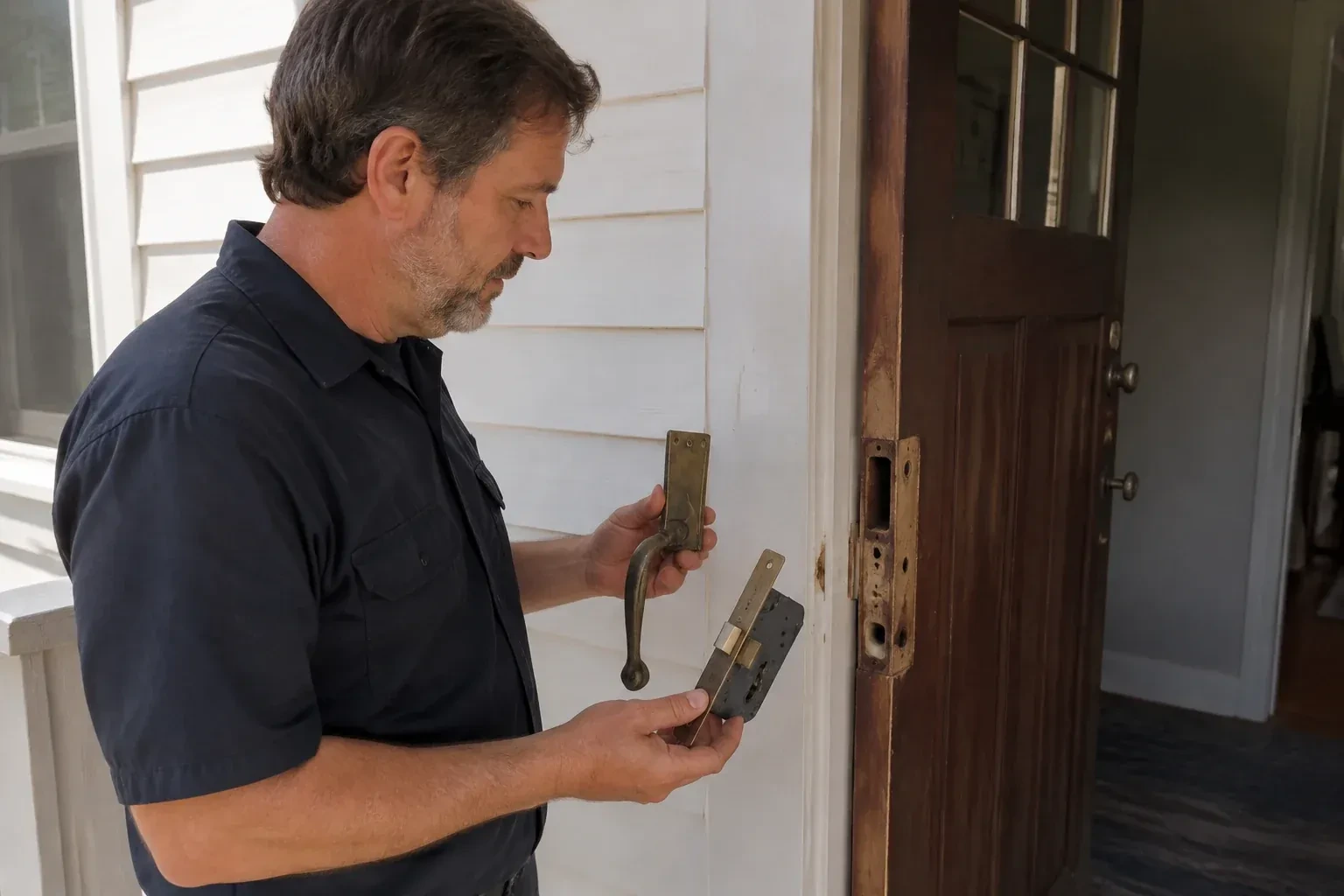
The trim on the door face is the other half of the lock. The knobs ride on a square spindle that passes through the hub of the case, held by small set screws, and the escutcheons cover the spindle and keyholes. Slack in a knob, a knob that pulls off in your hand, or a thumb-turn that spins without moving the bolt usually traces to a worn spindle, a stripped set screw or a hub whose square has rounded. The service replaces spindle and screws, matches a hub or lever from stock or makes one, and fits everything so there is no free play before the latch starts to move.
How the visit goesSomeone painted the door years ago without removing the hardware. The faceplate, the strike and the little thumb-turn are all under several coats, the deadbolt scrapes when it moves, and the knob is stiff enough to leave marks on your hand.
Vintage Mortise Lock Service
How the visit goes
Condition of the wood around the pocket
The mortise pocket and the screw holes in the door edge carry the whole lock, so their state is part of the assessment. The locksmith probes the faceplate screws for grip, looks for cracks running from the pocket into the stile, and checks whether an earlier repair enlarged the pocket or packed it with something soft. Stripped holes, a split edge or a case that shifts when the knob is turned change the plan: dowelling and re-drilling, a hardwood filler, or longer screws may be needed before the rebuilt case can be trusted. Finding this now avoids surprises once the lock is back in the door.
Springs, levers and followers
Springs are the usual culprits and the easiest fix. Broken coil and flat springs are matched from stock by length, wire gauge and shape, and fitted so the latch snaps out and the knob returns to level. A worn or cracked lever is matched from a donor case where one exists; where it does not, a replacement is filed from stock to the original's profile, which is slow, careful bench work rather than magic. A rounded hub is replaced or bushed. When every part moves as it should, the case is closed and cycled by hand with the cover on until the action is smooth and even in both directions.
Watching the door through the seasons
The lock is aligned to the door as it hangs today, and a solid wood door in an older home will move again. Through a humid summer it swells, through the heating season it shrinks, and each year the hinges settle a fraction. Twice a year, close the door and try the latch and bolt; if either has started to scrape or needs the door lifted, the strike wants a small adjustment or the hinge screws want snugging, which is a five-minute job. Doing that early keeps the rebuilt case from being strained, and it is the single habit that makes a vintage lock last another few decades without fuss.
Vintage Mortise Lock Service
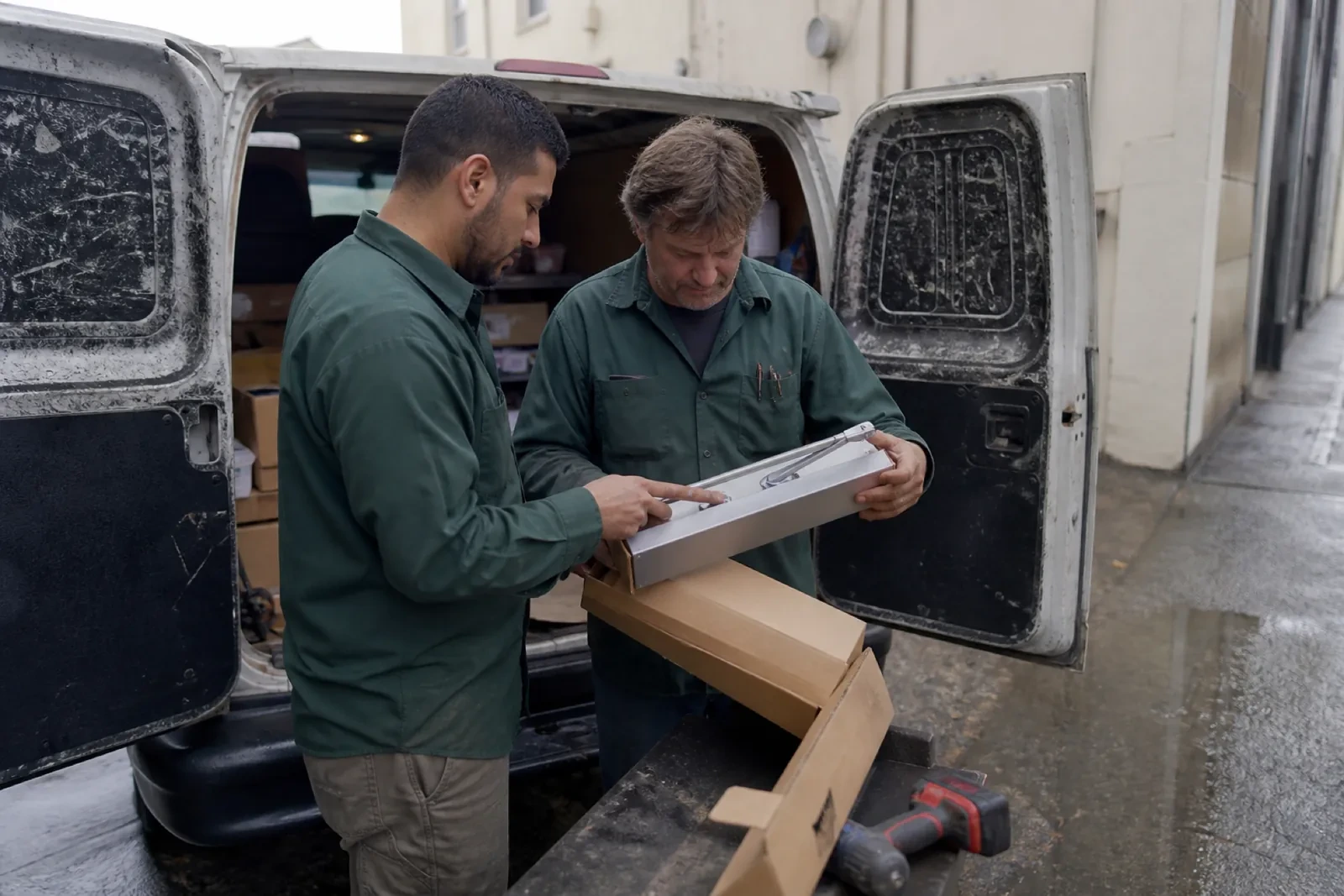
In the van
Reproduction mortise case
Warding files
Dry graphite or PTFE lubricant
Cylinder set screw
Hardwood dowel and wood glue
Vintage Mortise Lock Service
What affects the quote
Extras you choose on the day
A high-security cylinder, a lockbox for a spare bit key or a separate modern deadbolt above the original are optional additions. None is required to make the old lock work, and each is priced as its own line.
Condition of the wood
Stripped screw holes, a loosened pocket or a split at the door edge need dowelling, shimming or gluing before the case can be trusted. That woodwork is quoted once the locksmith has seen the pocket empty.
Whether the door has to come off its hinges
Some mortise cases can be serviced with the door hanging in place, while a tight jamb or a stubborn case sometimes means lifting the door off its hinges onto a level bench. That step is identified once the case is open and the repair needs are clear.
What to have ready
- Is the deadbolt keyed from the inside as well as the outside?
- Is the property designated as a heritage building?
- How many keys would you like to have afterwards?
Vintage Mortise Lock Service: questions
QuestionsMy home is a designated heritage property. Does that change anything?
It reinforces the choice to service rather than replace. Where a property carries a heritage designation, changes affecting listed features can need extra sign-off, and original door hardware is occasionally among those features. A rebuilt mortise case with its original trim is preservation rather than alteration, and the locksmith's written record of what was retained and what was replaced is useful for your file.
Can a modern cylinder be fitted to my old mortise lock?
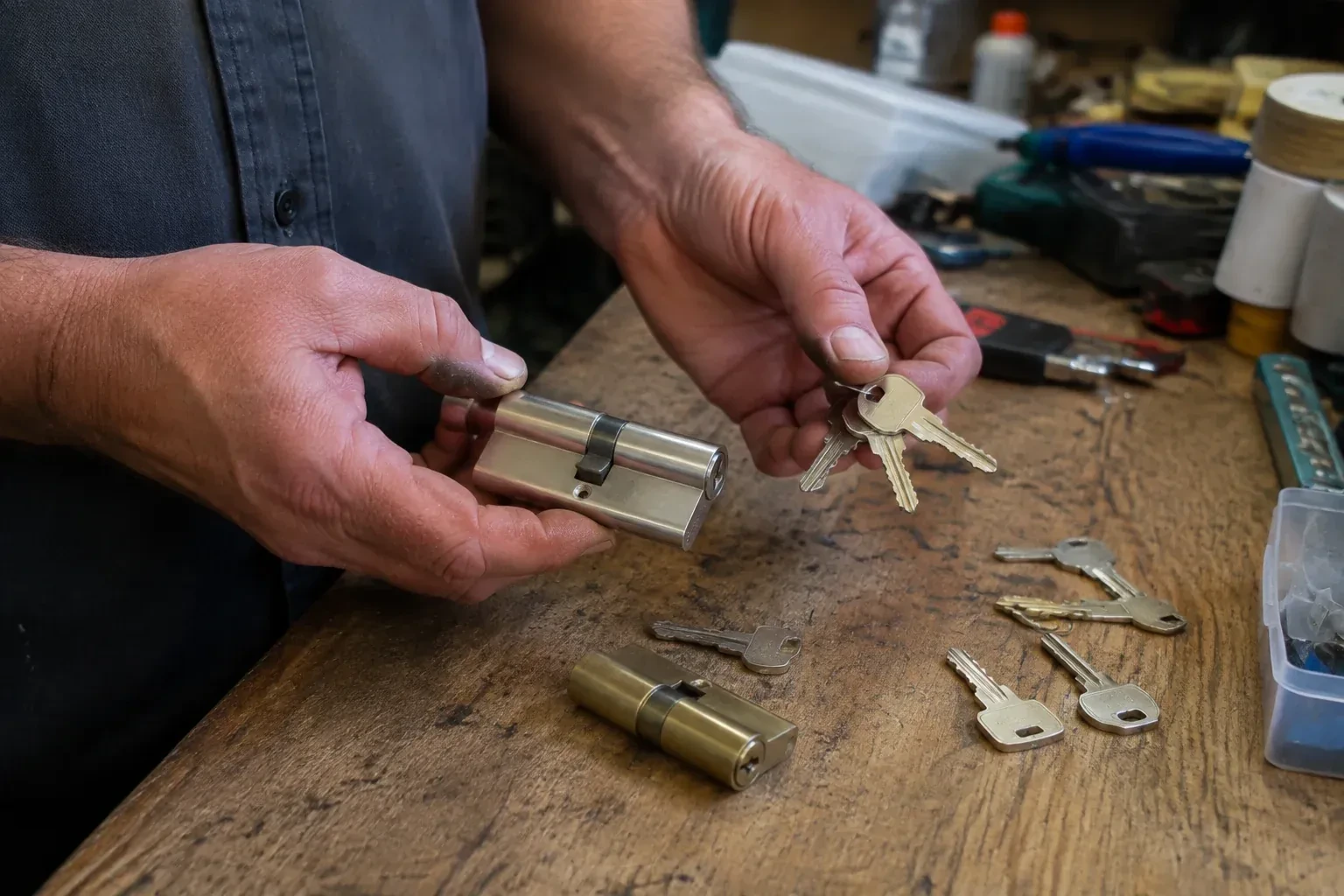
Often, on cases that already take a threaded cylinder. Mortise cylinders are made in standard thread sizes and lengths with different cam shapes, and a new one is selected to match the case and the door thickness. That gives you keys cut on a machine and the option of keying the door alike with the rest of the house. A bit-key case has no cylinder to swap; its keys are made on the bench instead.
Is it worth repairing an old mortise lock instead of replacing it?
Usually, yes. The mechanisms are simple and robust, and what fails is nearly always a spring, dried grease or wear on one part, all of which are repairable on a bench. Replacing the lock with a modern cylindrical set means boring a large hole through the door stile and filling the old pocket, which is more work and changes the door for good. A rebuilt case keeps the original trim and keeps the door intact.
Related services
- Deadbolt InstallationThe front door has a handsome lever and a keyed knob, and that is all.
- Lock Replacement & UpgradeThe lever on the side door droops toward the floor and rattles in your hand.
- Smart Lock InstallationThe kids get home before you do and the spare key has been lost twice this school year.