Car keys · Virginia Beach
Motorcycle & Scooter Keys in Virginia Beach
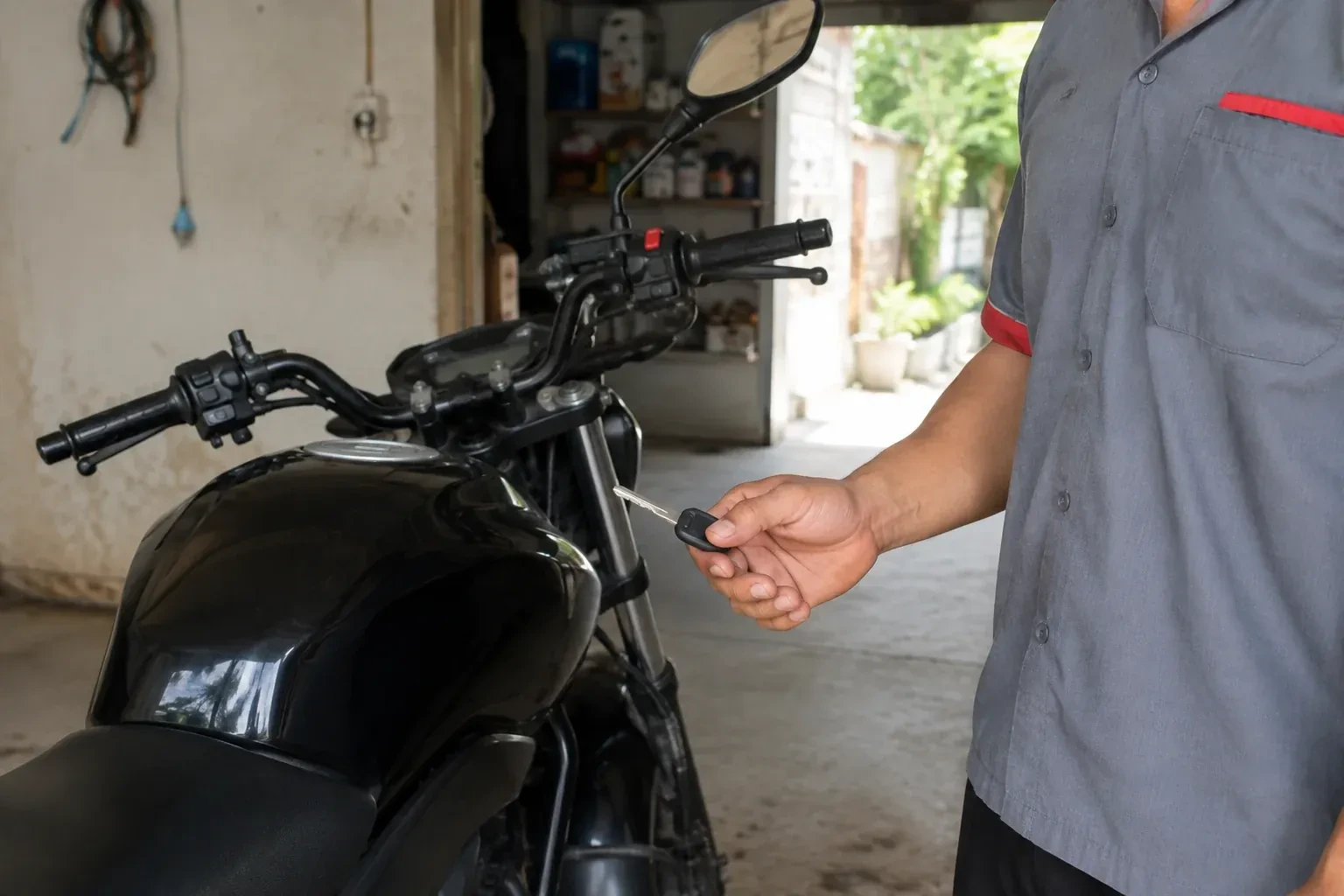
Two keys came with the scooter: one for the ignition and steering, an entirely different one for the seat and the storage compartment underneath it, so opening the seat means carrying twice the metal.
In plain words
A machine bought without a full history often arrives with one worn key and no idea what, if anything, opens the seat or the fuel cap. Key service in that situation starts by identifying every lock on the machine and testing whichever key came with it against each one, then decoding or cutting whatever the existing key does not already cover. The result is a full, known set of keys for the machine rather than a single blade of uncertain origin.
How the visit goesTwo keys came with the scooter: one for the ignition and steering, an entirely different one for the seat and the storage compartment underneath it, so opening the seat means carrying twice the metal.
Motorcycle & Scooter Keys
How the visit goes
Where the current key situation stands
The next question is about the key itself rather than the lock. A key lost somewhere away from the machine is a different situation from one still at home but broken, and a key that has simply worn thin over years of use is different again from a copy that never cut cleanly in the first place. Each answer changes the approach: a broken or worn key can often be read directly, a lost key means working from the lock alone, and a poor duplicate is more reliably replaced from a proper code than copied again.
Cutting from an existing key
When a working key exists, even a spare or a worn original, the more direct route is to read its cuts on a code machine or trace them by hand and cut a fresh blank to match. The new key is checked against the old one under a light before it goes anywhere near the ignition, since a slight misread shows up as a key that almost turns but does not quite lift every wafer. Cutting from a known key is usually the shorter part of the visit, leaving more time for any other locks that need the same treatment.
The old key is no longer a concern
Where locks were rekeyed rather than simply cut around, whoever holds an old key is left with a blade that fits the keyway but normally will not turn the plug once it is rekeyed. That is worth mentioning to anyone who previously had access to the machine, such as a former co-owner or a shop that kept a copy on file, since the new combination makes their old key no more useful than a spare piece of metal. Keeping the new keys distinct in a bag or on a labelled ring avoids mixing them up with anything cut before the visit.
Motorcycle & Scooter Keys
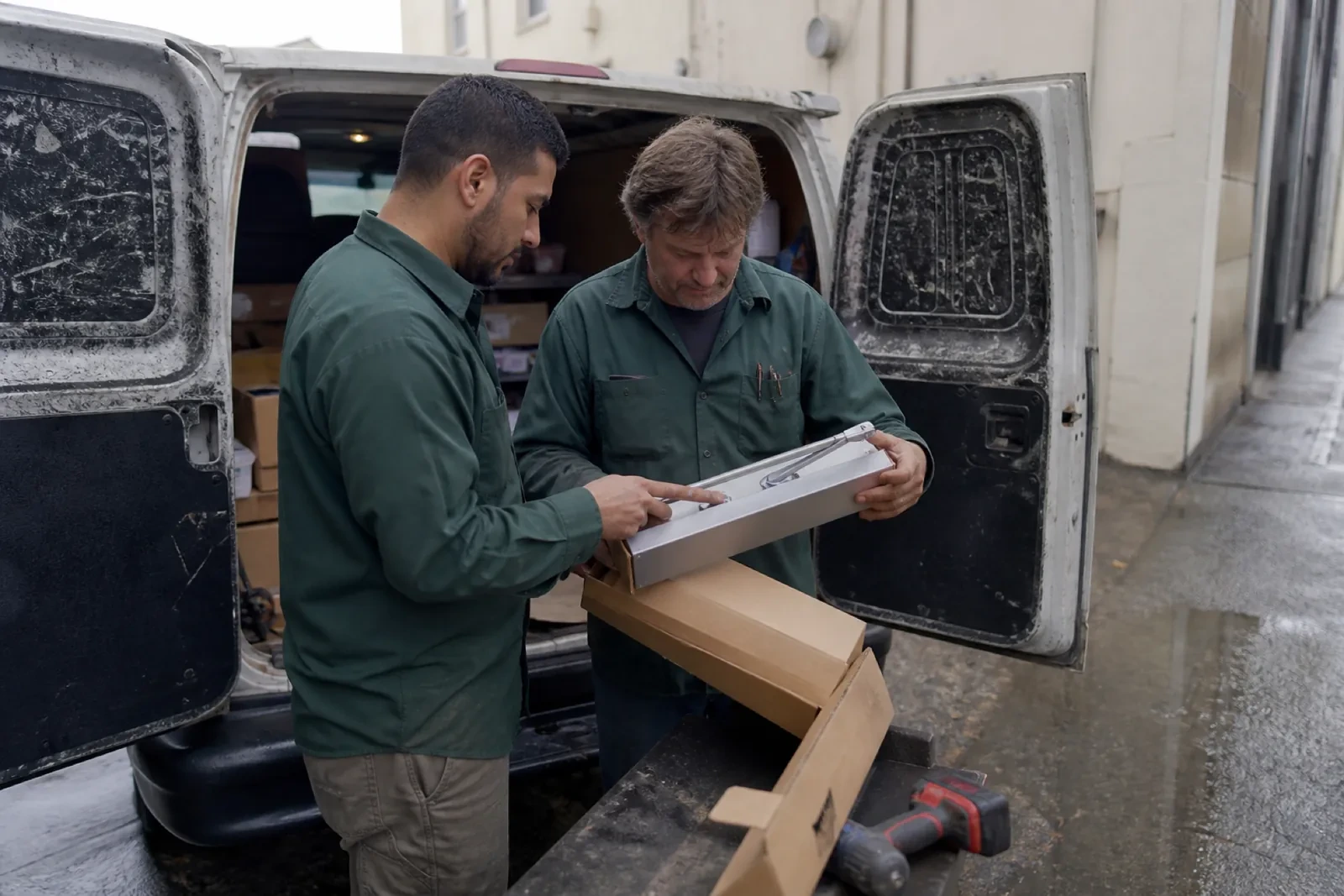
In the van
Transponder programming unit
Wafer lock decoder
Contact cleaner
Code-cutting machine
Motorcycle key blanks
Motorcycle & Scooter Keys
What affects the quote
Transponder and fob hardware
A transponder key needs a chip and, on some systems, a fob shell in addition to the cut blade, and that hardware is a separate line from a plain mechanical key.
Whether a working key already exists
Whether a working key still exists changes the job considerably: cutting or duplicating from one is the more direct route, while decoding a lock with nothing to reference takes longer and shapes the time reflected in the total.
Condition of the steering lock
A steering lock that turns freely adds little to the visit. One that has seized from weather or disuse needs patient freeing before any key can be tested against it, which takes extra time.
What to have ready
- Which locks need to be included: ignition, seat, fuel cap, storage?
- Was the machine bought used, and how many keys came with it?
- Do you have a key already, even one that works poorly?
Motorcycle & Scooter Keys: questions
QuestionsCould a key from one motorcycle ever accidentally open a different one?
It is uncommon but not impossible, since wafer locks have a limited number of combinations and manufacturers reuse keyway profiles across models. This is one reason manufacturers space their depth increments further apart than the lock's tolerances strictly require, to cut down on accidental matches. It is also why a locksmith reads the specific lock in front of them rather than assuming a key that looks similar will behave the same way.
Do all motorcycles have an immobiliser these days?
Not all of them. Many machines built in roughly the last two decades carry a transponder chip and an ignition module that checks it, but plenty of smaller-displacement bikes, scooters and older machines still use a purely mechanical lock with no electronic layer at all. The locksmith checks for a coil around the ignition barrel and asks how the engine behaves with the current key to tell which type is on hand.
Do I have to have the original key for you to cut a new one?
No. When every key for the machine is gone, the locksmith reads the lock directly, working out each wafer's depth by picking and reading the cylinder or using a decoder built for that keyway, and cuts a fresh key to the code that comes out of that reading. It takes longer than copying an existing key, since every wafer is read individually, but it produces a key that matches the lock rather than a guess.
Related services
- Car Key ReplacementYou bought the car privately and it came with a single key on a shoelace.
- Spare Car Key DuplicationThe blade on the everyday key has gone shiny and thin along one edge, and lately it needs a wiggle before the ignition catches.
- Key Fob ProgrammingA replacement fob just arrived in its box, shiny and untouched.