Commercial · Cannington
Commercial Rekeying in Cannington
The drawer behind the counter holds a tangle of keys with tape labels: front old, side, Dave.
In plain words
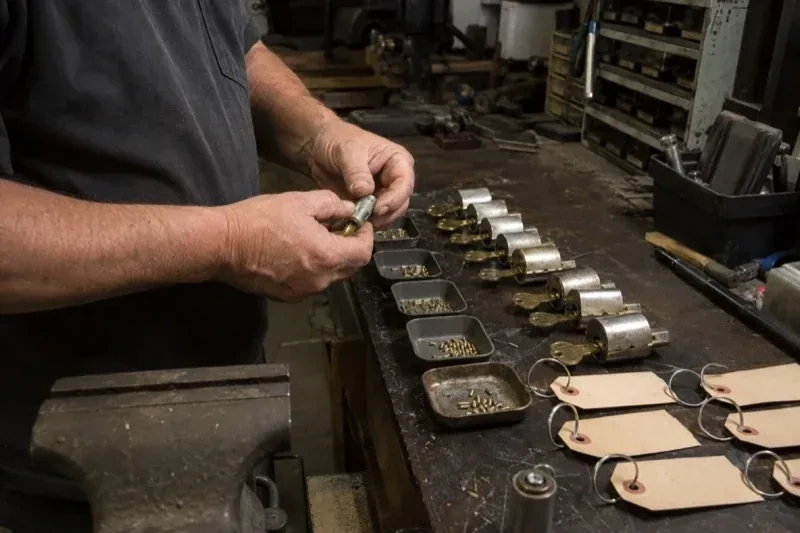
A commercial rekey is planned around the trading day. The locksmith agrees a window, often after close or before opening, and works door by door so the premises is never left without a locking entrance. Cylinders come out, are repinned at a bench in the van or on a counter, and go back in; interchangeable cores are simply swapped for freshly combinated ones. Each door is tried with both new and old keys before the next is started. New keys go to whoever opens up in the morning, and a written chart of doors and key groups stays with the manager.
How the visit goesThe office has been reshuffled twice since the locks were last touched. Reception can open the server room, the warehouse crew has a key to accounting, and the chart that once explained who could open what has not been seen since the move.
Commercial Rekeying
How the visit goes
Choosing the window and the order of doors
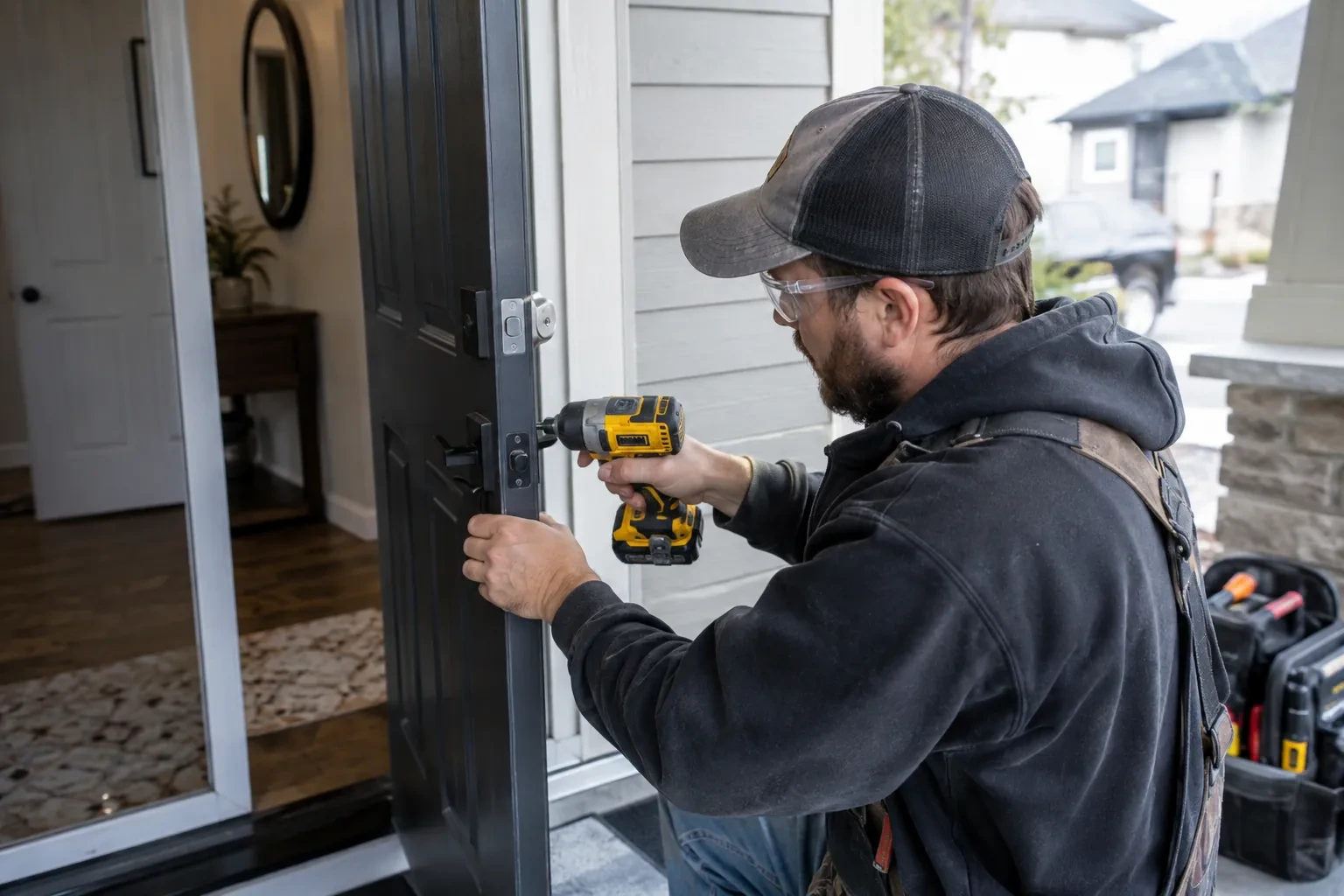
The last part of the assessment is practical: when can the work happen, and in what order. A retail shop may prefer the hour after closing; a restaurant, the mid-morning lull; a warehouse, the gap between the last outbound truck and the night shift. The locksmith also asks about deliveries, the cleaning crew, the alarm monitoring company and anyone else who holds a key and needs a new one before their next visit. From this comes a sequence, typically the doors staff use least first and the main entrance last, so there is always a working, lockable way in and out while the cylinders are being changed.
Pinning the master and change keys
When the plan includes a master, each cylinder is pinned to accept two keys: its own change key and the master above it. Thin master pins sit in the pin stacks so the plug can turn at both the change key's height and the master's; master keying can also create extra, unintended combinations, so the locksmith charts the system to keep those from lining up with someone else's key, and the manager's key opens its whole group and nothing beyond it. A well-built system leaves unused combinations in reserve, so when the business adds a door or a department next year the new cylinder joins the plan without disturbing the keys already in people's pockets.
Keys counted into named hands
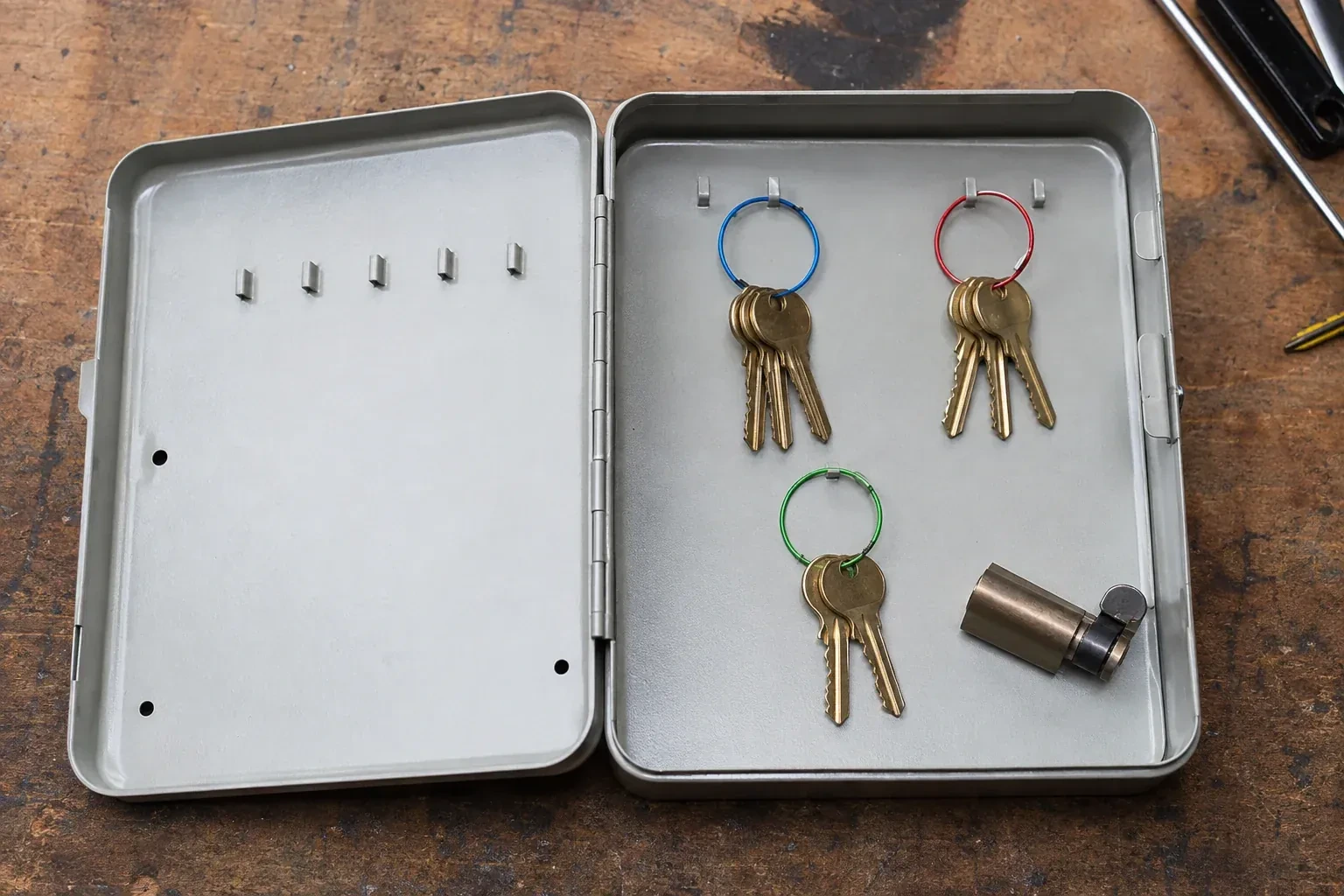
Alongside the chart comes a key register: each key's stamped code, the person it was issued to, the date, and a line for the date it comes back. Filling it in as keys are handed out on the first morning takes ten minutes and pays off at every departure afterwards, because the question becomes 'return key A-07' rather than 'did she have a key?'. Spare keys are counted too and kept somewhere locked rather than in the drawer where the old tangle lived. When the register and the chart agree with the keys on the hook, the business knows exactly who can open it, which is the whole point of the exercise.
Commercial Rekeying
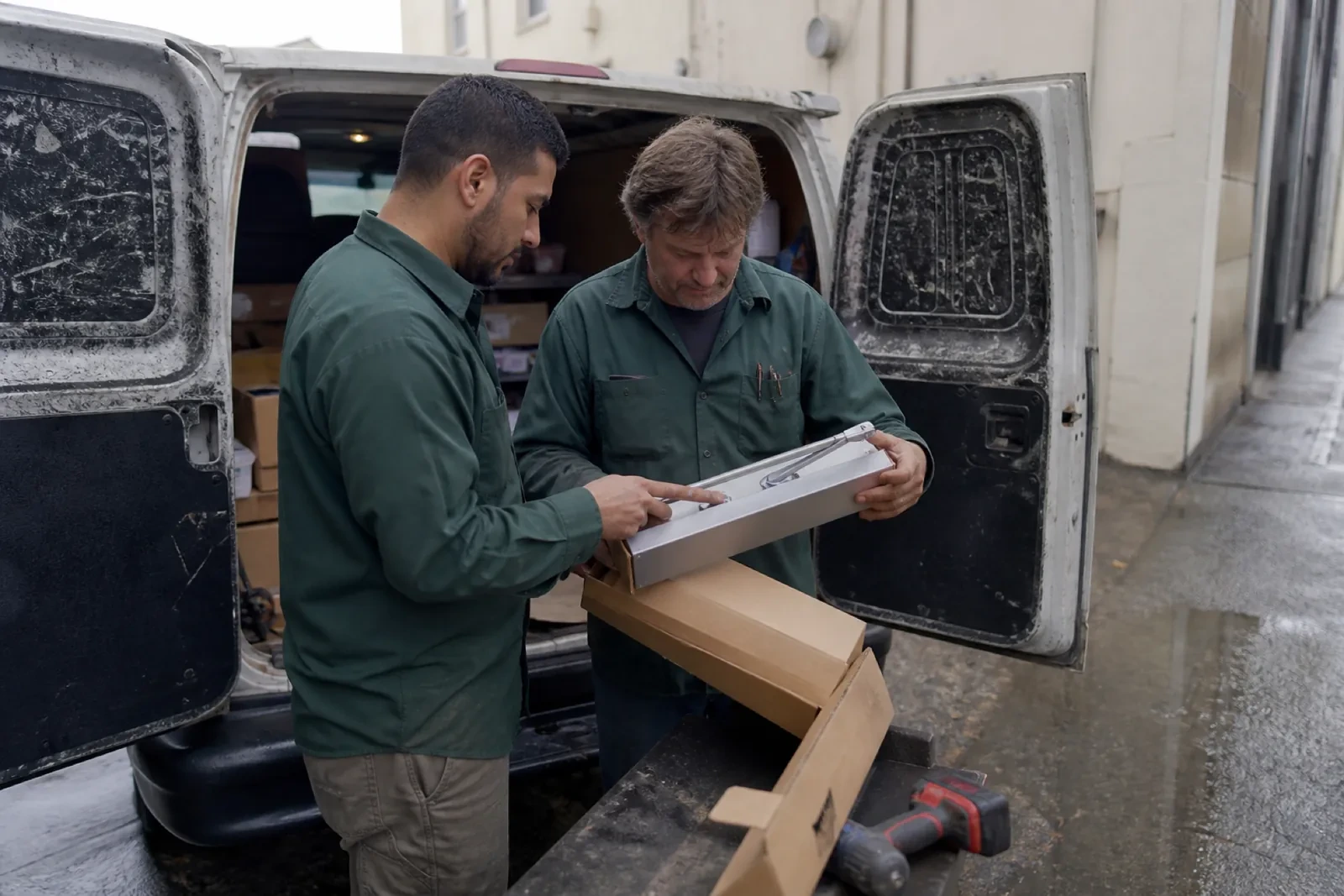
In the van
Interchangeable cores and control key
Dry graphite or PTFE lubricant
Key stamp set and tags
Mortise cylinder set screws and cams
Master pins
Commercial Rekeying
What affects the quote
Restricted keyway
Moving to a patented, restricted keyway means new cylinders or cores rather than a repin of the old ones, and the blanks themselves carry a higher price than standard keys.
Interchangeable cores versus repinning
Cores swapped with a control key are the shortest work on site, while cylinders that must come apart on a bench take longer. Supplying spare cores for the manager to hold is priced as its own line.
Number of cylinders
The count of openings drives the quote more than anything else: each cylinder is removed, repinned, refitted and tested individually, so a three-door shop and a twelve-office suite are very different jobs.
What to have ready
- Do you want one key for everything, or separate groups with a master?
- Are any cylinders stiff, loose or hard to turn at the moment?
- Are any of the locks interchangeable cores, and where is the control key?
Commercial Rekeying: questions
QuestionsWill rekeying affect our alarm system or card readers?
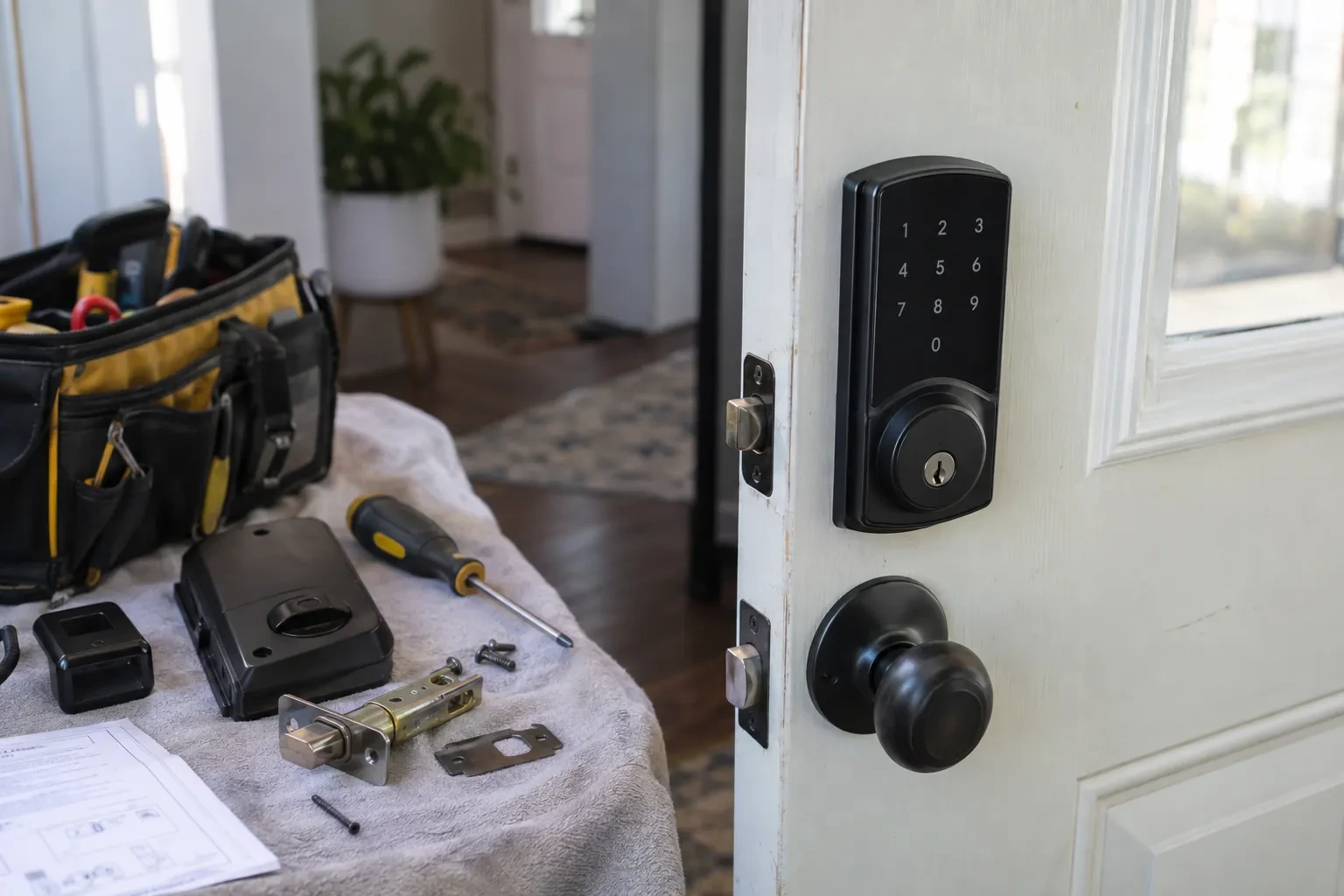
Mechanical rekeying leaves electronics alone: alarm panels, card readers and keypads keep their codes and credentials. What changes is the list of people holding keys, and it is worth updating the alarm company's keyholder list and retiring the codes of anyone who has left at the same time, since keys and codes usually walk out together. Where a door has both a card reader and a keyed override, the override cylinder is rekeyed with the rest.
What is the difference between rekeying a business and replacing its locks?
Rekeying keeps every lock on the door and changes only the pins inside the cylinder, so a new key works and the old ones stop. Replacing swaps the hardware itself. Commercial cylinders are made to be repinned many times, so rekeying suits any lock in sound condition and leaves the levers, trim and door untouched. Replacement is chosen door by door for cylinders that are worn, corroded or too light for what they protect.
How long should we set aside for a commercial rekey?
It depends on the count and the mix. A shop with a front door, a back door and a stockroom is a short visit; an office suite with a dozen lever sets, a master key plan and a mailbox takes a good part of a day. Interchangeable cores are the shortest of all, since they are swapped rather than repinned on site. The locksmith gives a time estimate at the assessment, once every cylinder has been counted.
Related services
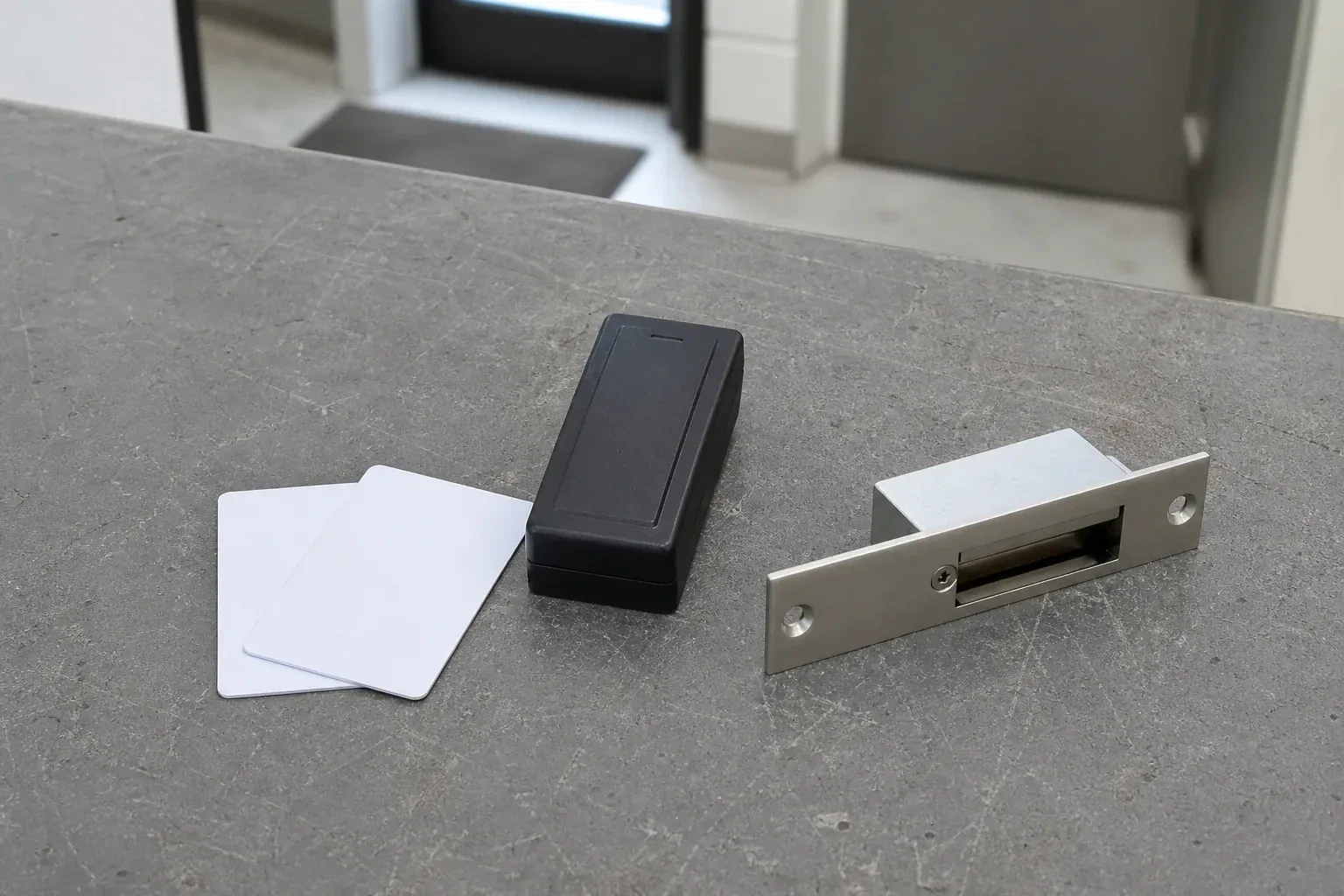
- Access Control InstallationThe keypad on the side door has started sticking on cold mornings, codes get shared instead of reset, and half the staff still remember a code you meant to retire two hires ago.
- Panic & Exit HardwareTwo doors used to swing as a pair at the community hall entrance, but one leaf has started closing before the other, catching the astragal and leaving a gap wide enough to worry the caretaker.
- Commercial-Grade Lock ReplacementHead office wants every branch keyed alike under one system, and half the locations are still running whatever lockset the original contractor happened to install years ago.