
Commercial · Beaverton
Master Key System Design in Beaverton
A dental office wants the front desk to lock up at night without ever holding a key to the room where patient records and controlled supplies are stored.
In plain words
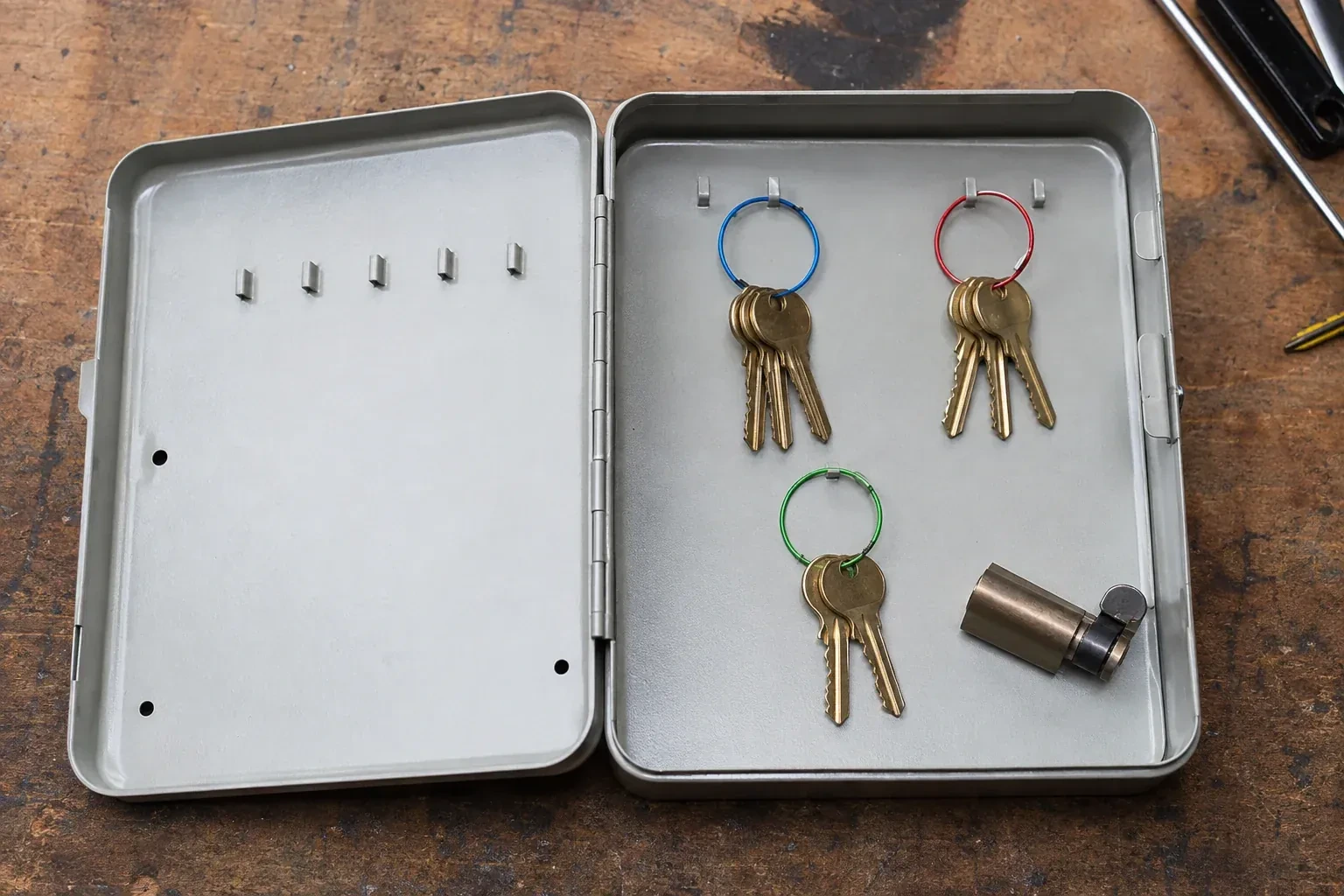
Many commercial properties end up with keys copied from other keys over years of staff changes, until nobody can say with confidence what a given key actually opens. Master key system design starts from the opposite direction: an approved list of roles and openings comes first, and the keying follows it. Doors that genuinely need to share access are grouped under a sub-master; doors that do not stay on their own key. Once the hierarchy is agreed, the cylinders are pinned to match it, tested lock by lock, and handed over with a plain record so the business always knows which key belongs where.
How the visit goesA new hire at the shop gets handed whatever spare key happens to be in the drawer, and it turns out to open the stockroom, the back office and the safe room all at once. The owner realizes nobody actually decided who should open what.
Master Key System Design
How the visit goes

Who needs to open what
Before any hardware is chosen, the locksmith records the organization's actual shape: which roles, departments or shifts need access to which doors, including exceptions such as a bookkeeper who needs the records room but not the loading dock. This map is built with the owner or manager, not guessed from existing keys, since existing keys often reflect years of ad hoc copying rather than any real plan. The output is a plain list of who should open what, which becomes the target the rest of the design is measured against, well before a single cylinder is touched or a key is cut.
Bringing electronic and mechanical access into one plan
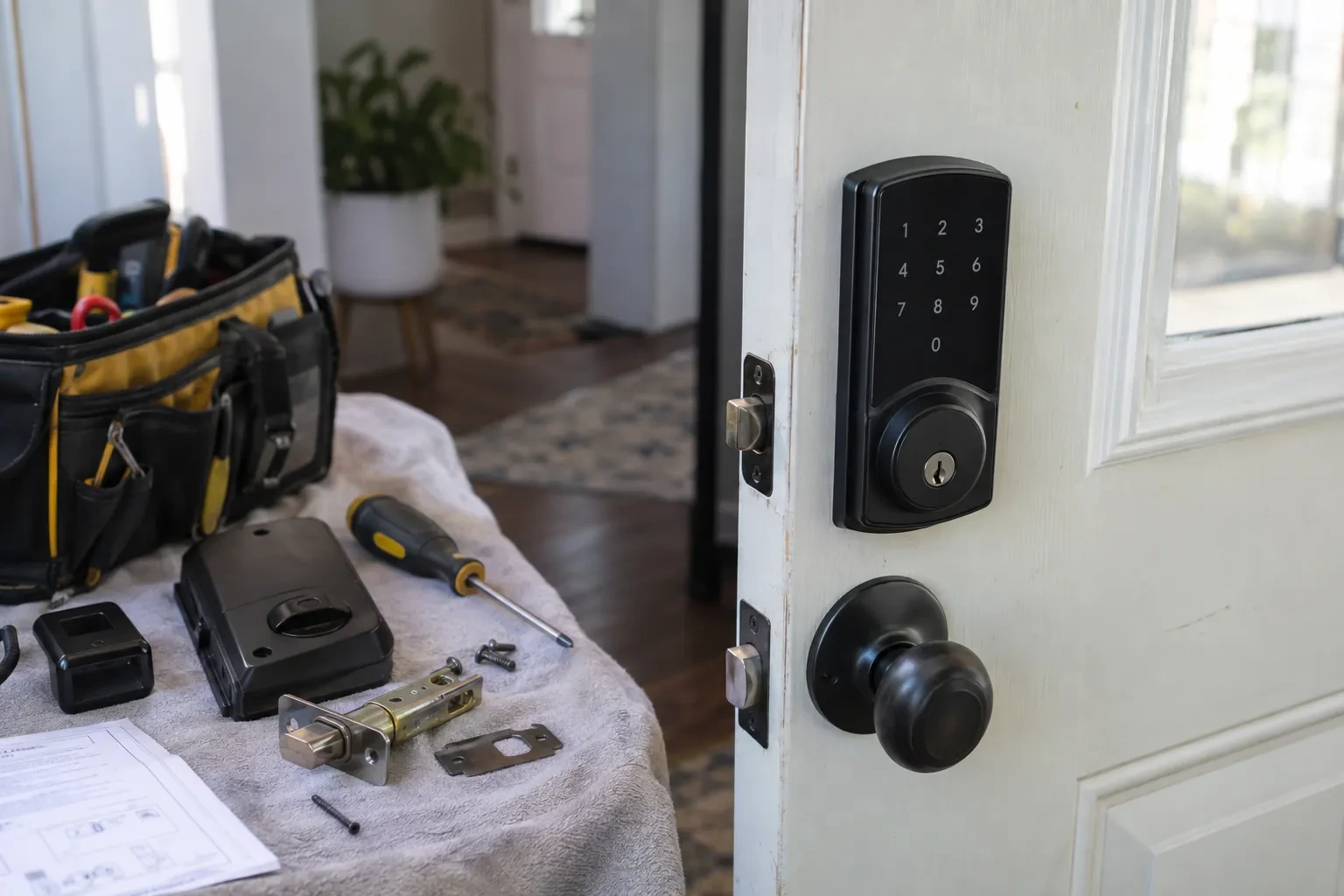
Where a property mixes mechanical cylinders with keypad or card-based doors, the mechanical hierarchy is designed to line up with the electronic access groups rather than run as a separate, unrelated system. A department that sits at one sub-master level on the mechanical side is kept at a matching level on any electronic doors it also uses, and any mechanical override cylinders behind an electronic lock are pinned into the same chart as every other door, so one document still describes the whole property.
Care that keeps the hierarchy intact
A little routine care keeps a master key system working the way it was designed. Cylinders should get whichever lubricant the cylinder maker actually recommends, since that varies by manufacturer and some rule out graphite while others call for a light oil, and a key that starts needing a wiggle is worth attention before it is forced or breaks off. None of this maintenance touches the pinning itself, so the hierarchy stays exactly as documented on the chart through years of ordinary use.
Master Key System Design
In the van
Cylinder decoders
Master pin kits
Bench test fixture
Plug follower and key gauge
Key cutting machine

Master Key System Design
What affects the quote
Compatibility of existing hardware
Cylinders that can join the new hierarchy without modification keep the project smaller. Hardware that is mismatched, worn or built on an incompatible keyway needs replacing to fit cleanly into the plan, and that replacement hardware is a separate line from the design and pinning work.
Collecting and retiring old keys
Gathering up old keys that are being replaced, confirming they no longer operate any cylinder, and retiring them from circulation is a small additional step some businesses want included, separate from the core design and cutting work.
Documentation and chart detail requested
A simple chart listing levels and holders is the baseline. Some businesses want a more detailed record, cross-referenced by department, room number or staff role, which takes additional time to prepare and is quoted as part of the documentation work.
What to have ready
- Is a top-level master needed, and for how many people?
- Are any doors part of a shared or condominium-controlled building system?
- Roughly how many doors need to be part of the system?
Master Key System Design: questions
QuestionsCan cleaners or contractors get limited access without a master key?
Yes. A change key or a narrow sub-master covering only the areas they service is the usual approach, rather than handing over a level that reaches further than the job requires. Where the property uses keypad or card access alongside mechanical keys, a time-limited or role-specific electronic credential can serve the same purpose without a physical key changing hands at all.
How is the key chart kept private?
The chart is handed to a named administrator rather than left as loose paperwork, and it is stored somewhere only that person can reach, separate from day-to-day office records. It is not published, circulated widely or kept alongside general building documents. When the administrator role changes hands, custody of the chart moves with a signed acknowledgement rather than being passed along informally.
Who should hold the top-level master key?
As few people as the business can genuinely operate with. Every additional holder is another way a full-access key can be lost, borrowed or copied without anyone deciding that should happen. A useful test during design is asking, for each proposed holder, whether they need to open every single door on the property or only a defined group; the second answer usually points to a sub-master instead.
Related services
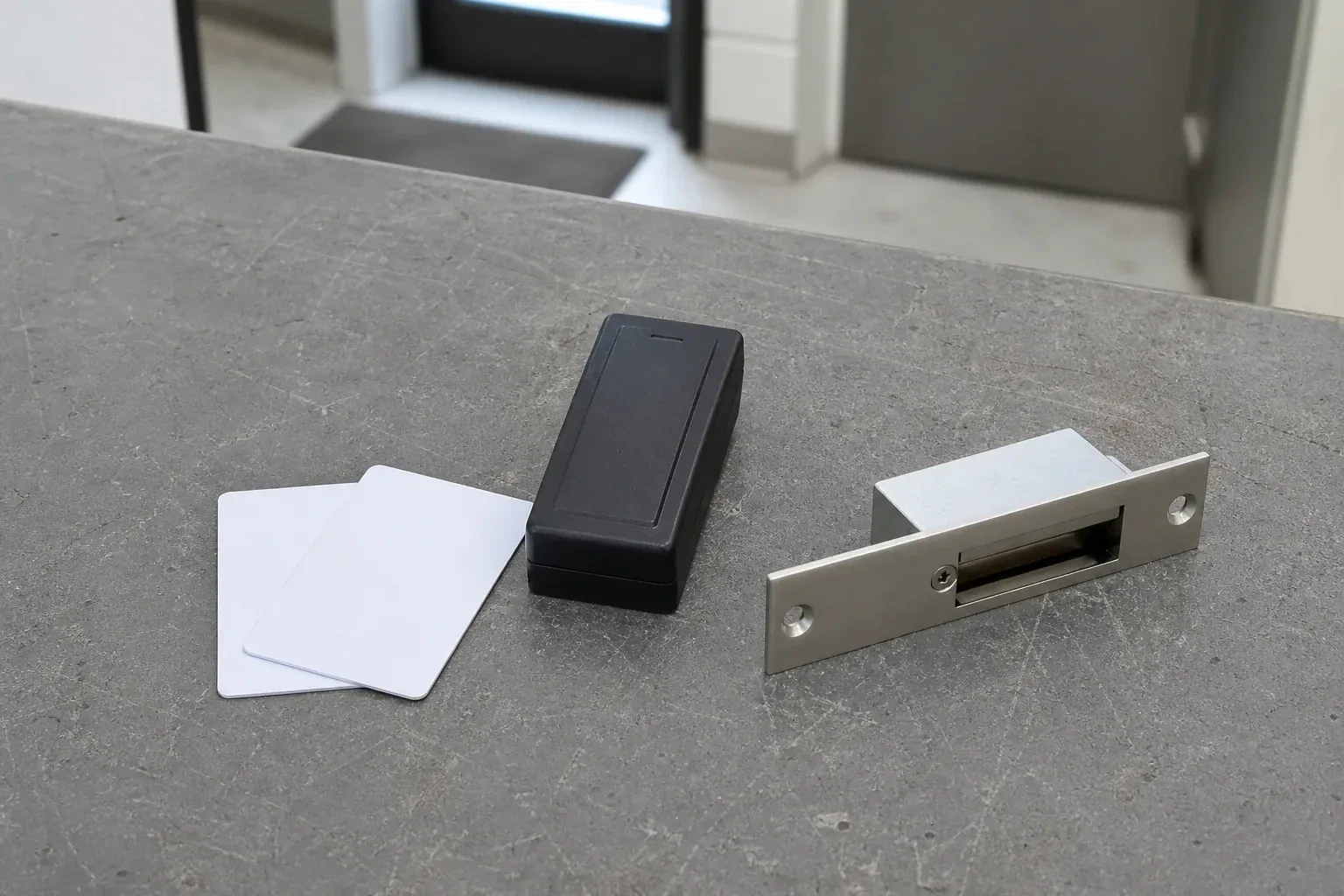
- Access Control InstallationThe keypad on the side door has started sticking on cold mornings, codes get shared instead of reset, and half the staff still remember a code you meant to retire two hires ago.
- Panic & Exit HardwareTwo doors used to swing as a pair at the community hall entrance, but one leaf has started closing before the other, catching the astragal and leaving a gap wide enough to worry the caretaker.
- Commercial-Grade Lock ReplacementHead office wants every branch keyed alike under one system, and half the locations are still running whatever lockset the original contractor happened to install years ago.