High security · Pefferlaw
Safe Opening & Combination Change in Pefferlaw
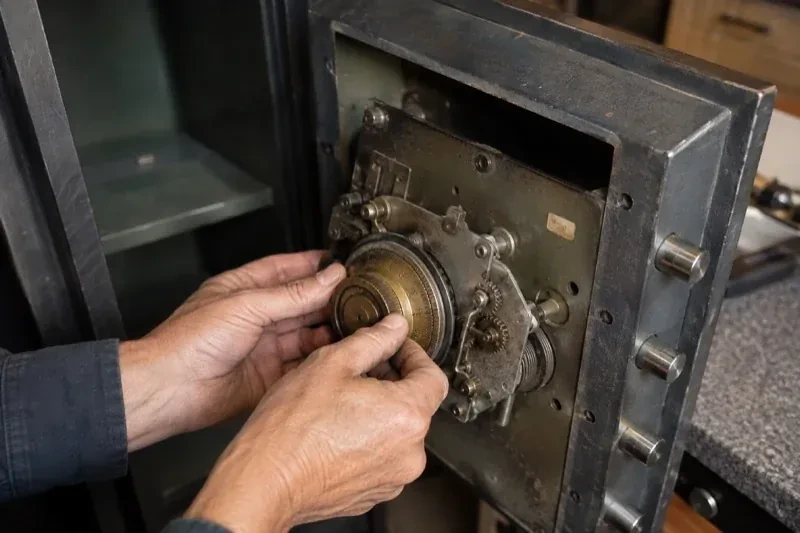
Decades of daily use have left the law firm's old dial safe drifting: the numbers line up close to where they should, never quite enough to drop the bolt.
In plain words
A safe built to protect firearms is opened with the same care as any other, but the aftermath gets one extra look: once the door is open, the storage arrangement inside is checked against what the applicable federal rules for secure firearms storage expect, since a business handling those items answers to those rules whether or not the lock itself needed attention. The combination is then reset the same way it would be for any commercial safe.
How the visit goesDecades of daily use have left the law firm's old dial safe drifting: the numbers line up close to where they should, never quite enough to drop the bolt.
Safe Opening & Combination Change
How the visit goes
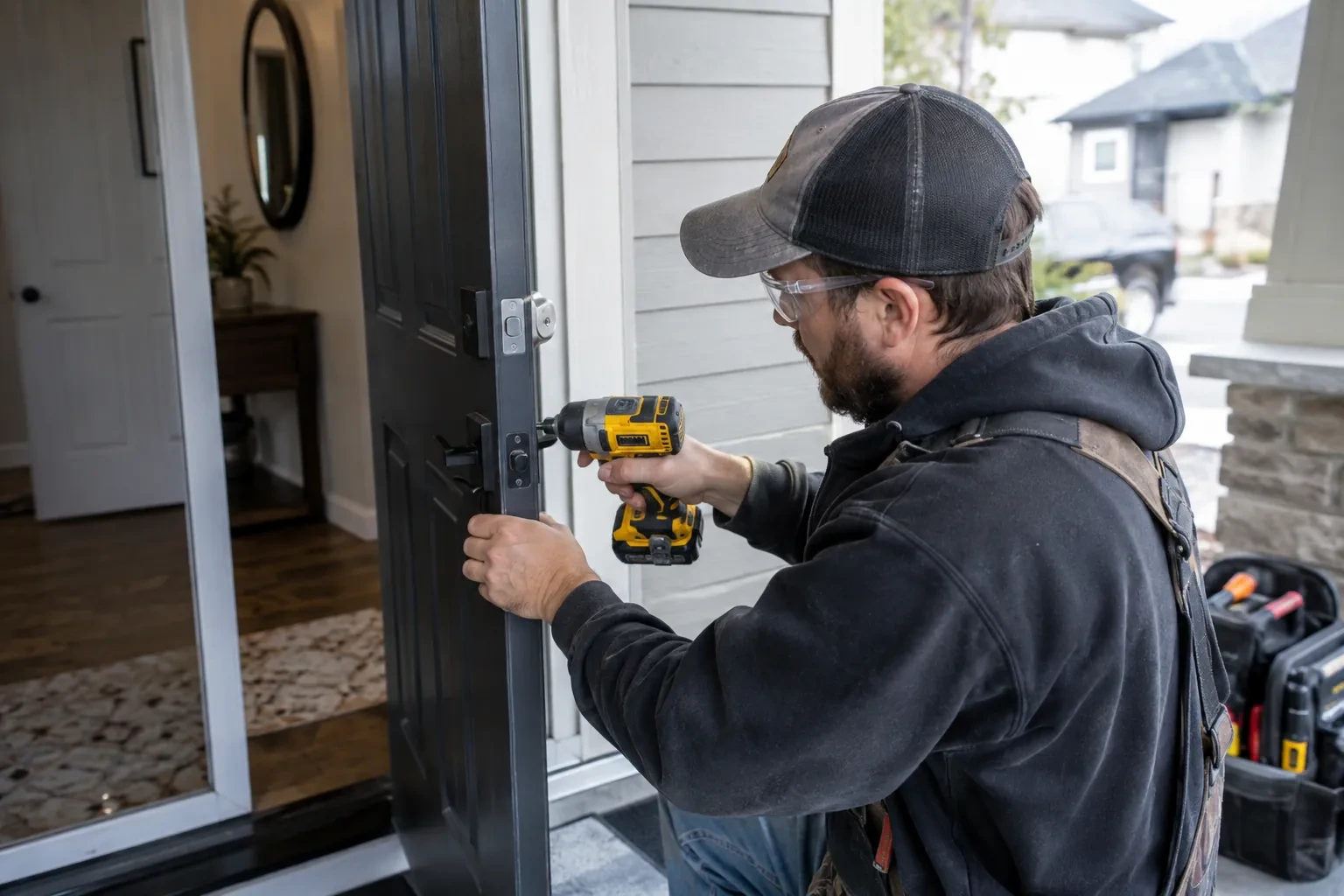
Mechanical dial or electronic keypad?
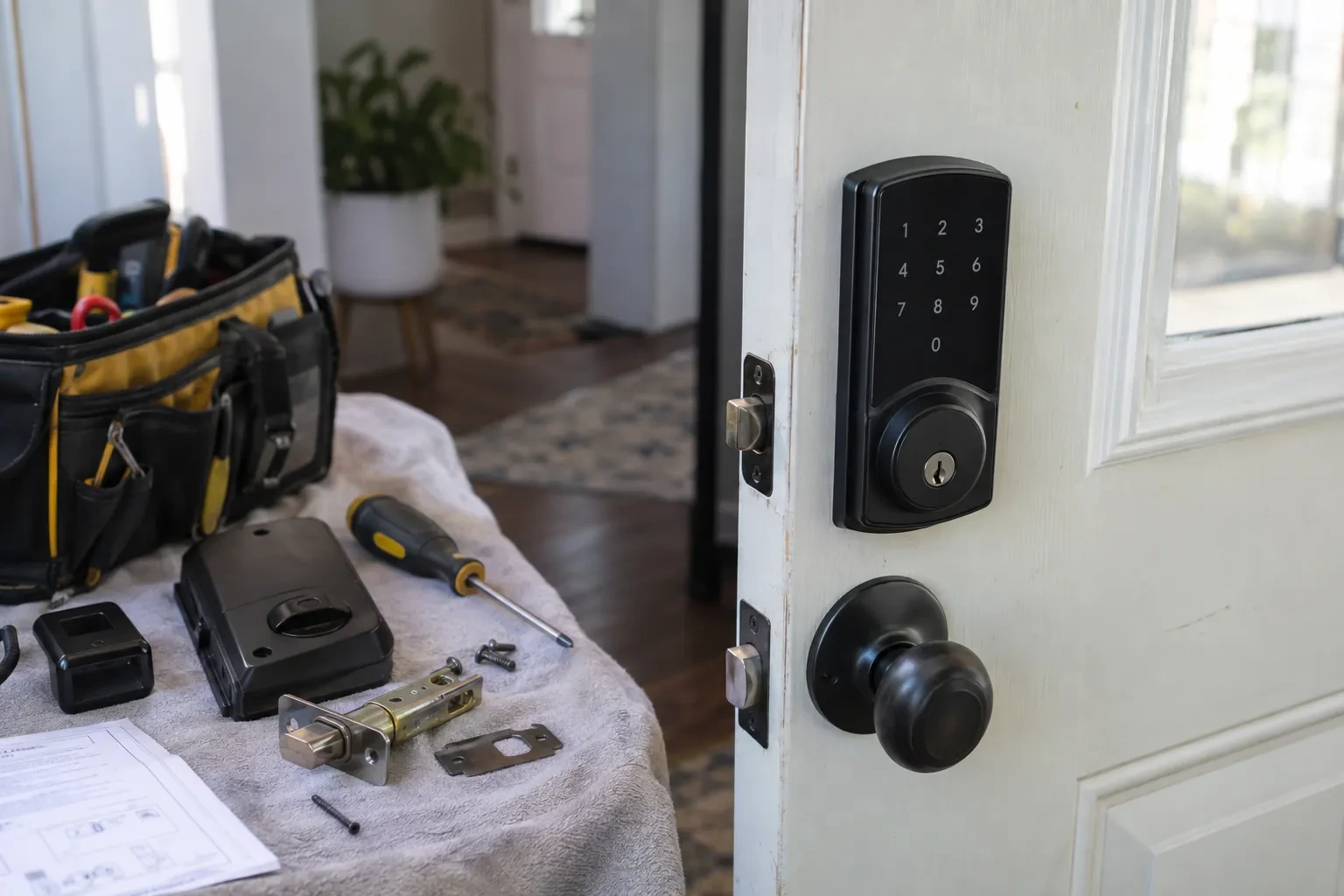
The two lock families are opened in entirely different ways, so telling them apart comes early. A mechanical dial relies on a wheel pack turned into alignment by hand, reading resistance and feel rather than any battery or circuit. An electronic keypad instead depends on a stored code and a power source; some models add a reset or override sequence, though many need that connection made at the lock body inside the container rather than from outside. Some commercial safes carry both, a keypad for daily use with a mechanical dial as a backup, and each half is assessed on its own terms. Confusing the two wastes time trying an approach the lock was never built to respond to.
Least invasive first, on every safe
Opening a safe is planned around the specific lock, its condition and what recovery options it actually has: manipulation or decoding for a mechanical dial, a manufacturer reset or override path for an electronic keypad where one exists, and drilling where the gentler routes are unavailable or exhausted. This order exists because a safe's lock, dial ring and case finish are the hardest parts to replace cleanly, so any method that leaves them intact is worth the extra time it takes. Working through the ladder in order, rather than jumping to the most direct option, is what keeps the great majority of safes leaving the visit with their original lock still in place.
A plan for the day this happens again
Most safes that needed a reset today will need one again eventually, whether from a future staff change, a forgotten code, or simple wear on an aging lock. Deciding now who is responsible for passing the combination along when roles change, keeping a written record somewhere secure, and having the safe's model and service history noted somewhere accessible all make the next visit shorter and simpler than this one. None of this is required before the locksmith leaves, but a few minutes spent on it now is the difference between a short reset next time and starting from an unknown safe all over again.
Safe Opening & Combination Change
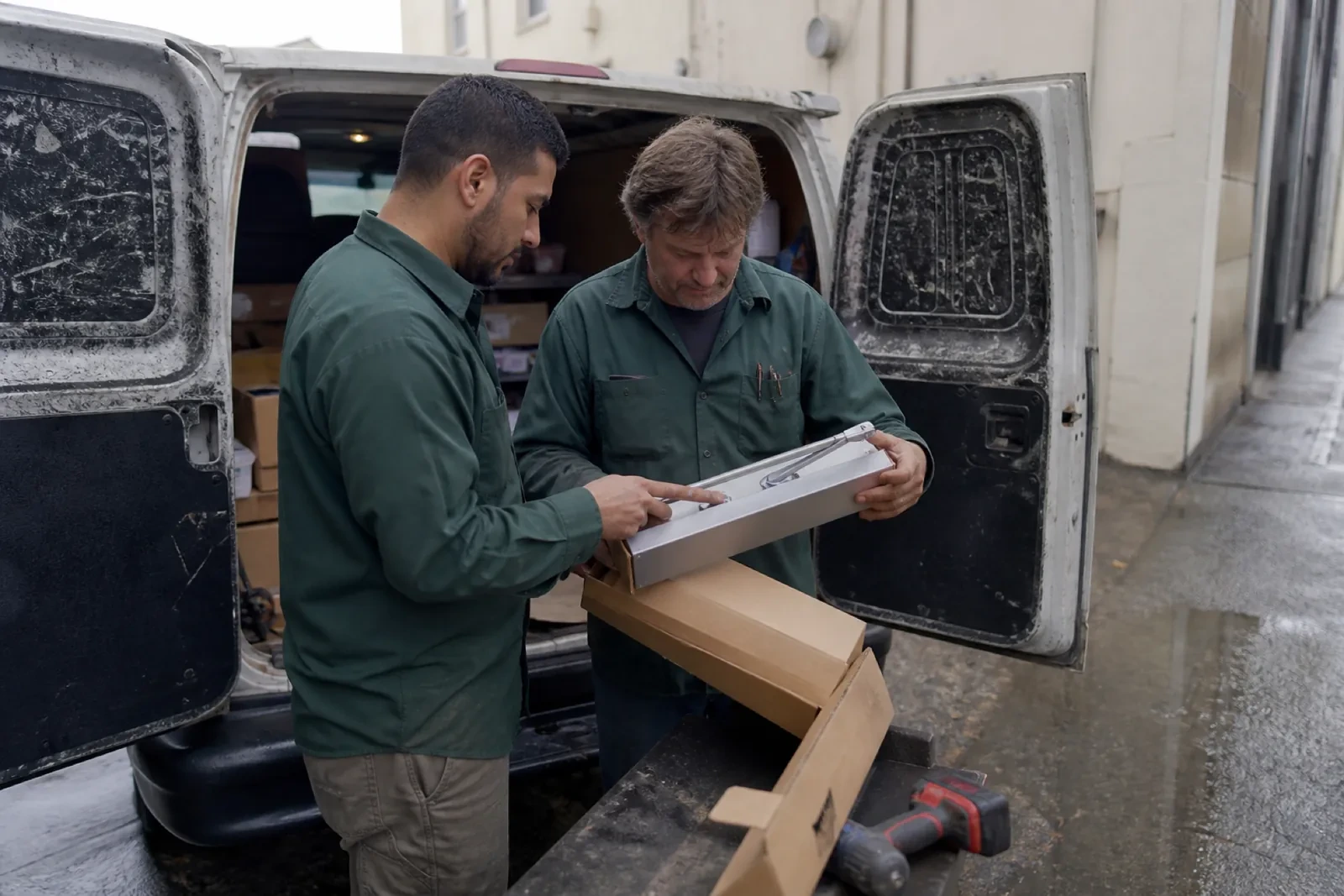
In the van
Manipulation and tension tools
Drill rig and carbide bits
Spindle and drive cam
Combination change key
Replacement wheel pack
Safe Opening & Combination Change
What affects the quote
Bolt work or handle repair beyond the lock itself
A jammed bolt, corroded linkage or broken handle found during the assessment is quoted as its own item alongside whatever combination or lock work was originally requested.
Any upgrade chosen during the same visit
Moving to a higher-rated lock, adding a second user code, or fitting an anti-relock plate is optional and priced as its own line whenever an owner chooses it.
Lock type: mechanical dial, electronic keypad or key
Each lock family calls for different tools and a different amount of time on site, and a safe with more than one lock, such as a keypad backed by a mechanical dial, involves assessing both.
What to have ready
- Roughly how old is the safe, if you had to guess?
- Is there a data plate or any paperwork you can find?
- Does the keypad light up or make sounds when pressed?
Safe Opening & Combination Change: questions
QuestionsWhen does a locksmith decide to drill a safe instead of opening it another way?
Drilling is chosen when the gentler options for that specific lock, manipulation and decoding on a mechanical dial, or a manufacturer reset or override on an electronic one, are unavailable or have not worked, rather than following one fixed order on every safe. It is also the answer when the lock has genuinely failed, such as a seized wheel pack or a dead circuit board with no working override. The decision is explained before drilling starts, not discovered afterward.
Can you help with a safe found in an inherited or estate property with no records at all?
Yes. The locksmith identifies the safe directly from its hardware, brand plate if one survives, and physical layout, then proceeds with the same manipulation, decoding or reset options used on any safe with an unknown history. Documentation such as a will, an executor's letter or a property transfer establishes your authority to have it opened.
Do you need to see proof that I own the safe before opening it?
Yes, and it is meant as a protection rather than a hurdle. For a business, identifying yourself as the owner, manager or an authorized employee is usually enough. For an estate, a secondhand purchase or a change of ownership, a bill of sale, transfer document or executor's paperwork fills the same role. This step protects whoever actually has a claim on what is inside the safe, which includes you.